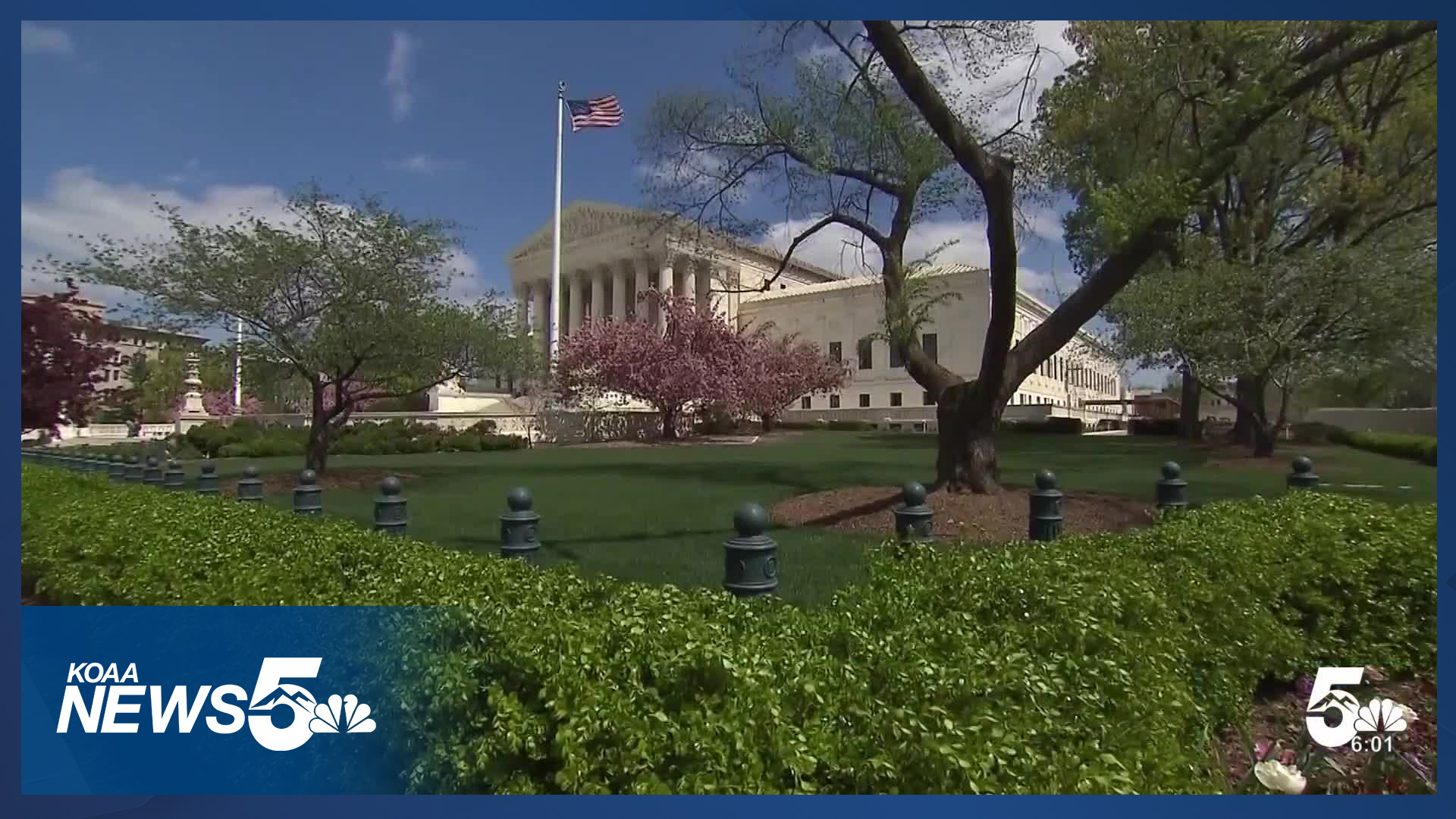


COLORADO (KOAA) — Colorado Springs found itself at the center of national headlines Tuesday morning as the Supreme Court ruled 8-1 against a Colorado law banning conversion therapy for LGBTQ youth in the state.
The case came about from a Colorado Springs counselor, Kaley Chiles, who argued the law prevented her from having conversations with patients struggling with gender and sexual identity.
“I am overjoyed that today's decisive win for free speech, families, and common sense will protect counselors like me,” Chiles said in a news conference Tuesday, “families must have counseling options, including options that allow kids to genuinely talk about experiencing discomfort with their bodies without the state dictating an outcome.”
Colorado passed its ban on conversion therapy for minors in 2019. Lawmakers worked over several years to pass the law. One of the prime sponsors of the 2019 bill was Daneya Esgar, a state representative from Pueblo.
“When I initially heard about the ruling today I was really distraught and saddened,” Esgar said, “we specifically made sure, that the law did not ban conversations, conversations could take place it’s when the actual act of conversion therapy came into the picture we wanted to stop that dangerous practice.”
The ruling came down 8-1, unusual given the current makeup of the Supreme Court. Justice Kentanji Brown Jackson was the lone dissenting vote. One of the arguments against Colorado's law was that it would open up the ability for state's to also ban gender affirming therapy for children.
"There's a lot of different reasons people voted the way they did," Esgar said, "and I think it's telling of the world we're living in right now, today. I think it's telling of the rhetoric that's the on national stage, the rhetoric that's even locally in politics versus really doing what's best for kids."
"It sends a message that viewpoint discrimination is egregious. The eight justices that joined the court's opinion all recognize that this is viewpoint discrimination," Jim Campbell, Chief Legal Counsel for Alliance Defending Freedom which represented Chiles,
Campbell also said the ruling will change how she operates her practices.
“We do think that this will lead to allowing Kaley to be free,” Campbell said. He added when a client would come into her office, bringing up gender and sexuality, it wasn’t something she engaged in, “she would shut them down because of this law, but now she's able to have those conversations. She's able to help those young people to achieve the goals that they've set for themselves.”
The ruling does not end the law in Colorado immediately, the case will now go back to a lower court where the supreme court has asked the court to apply “strict scrutiny”, a stronger standard of reviewing cases.