

MONUMENT, Co. — Getting your sprinkler system ready for winter takes more than turning it off. Water left inside can freeze, expand and damage pipes, valves and other components.
Tony Hockemeyer, with Castle Rock Lawn and Sprinkler, walked News5 through the process, starting inside before moving outside to clear water from each sprinkler zone.
What can homeowners do themselves?
Start by locating the shutoff for your irrigation water supply. If you know how to operate it, shutting that supply off is a first step, but it does not remove the water already in the system.
Learn More in the Video Player Below
The shutoff may be in a basement, crawlspace, or underground valve box. Do not force a valve that will not turn.
If freezing weather is approaching before a professional can arrive, Hockemeyer says homeowners familiar with their system can use its drain points to release some water.
That can buy time, but it is not a complete winterization. Drain locations and procedures vary by system, so homeowners who are unsure should have a professional identify them.
Hockemeyer also cautions that a leaking shutoff valve can allow a drained line to refill during winter.
What should you leave to a professional?
Hockemeyer recommends having a professional handle the sprinkler blowout, which uses compressed air to push remaining water out of the lines.
Tony first cleared the supply line between the indoor shutoff and the outdoor backflow assembly. Then he worked through the sprinkler zones individually.
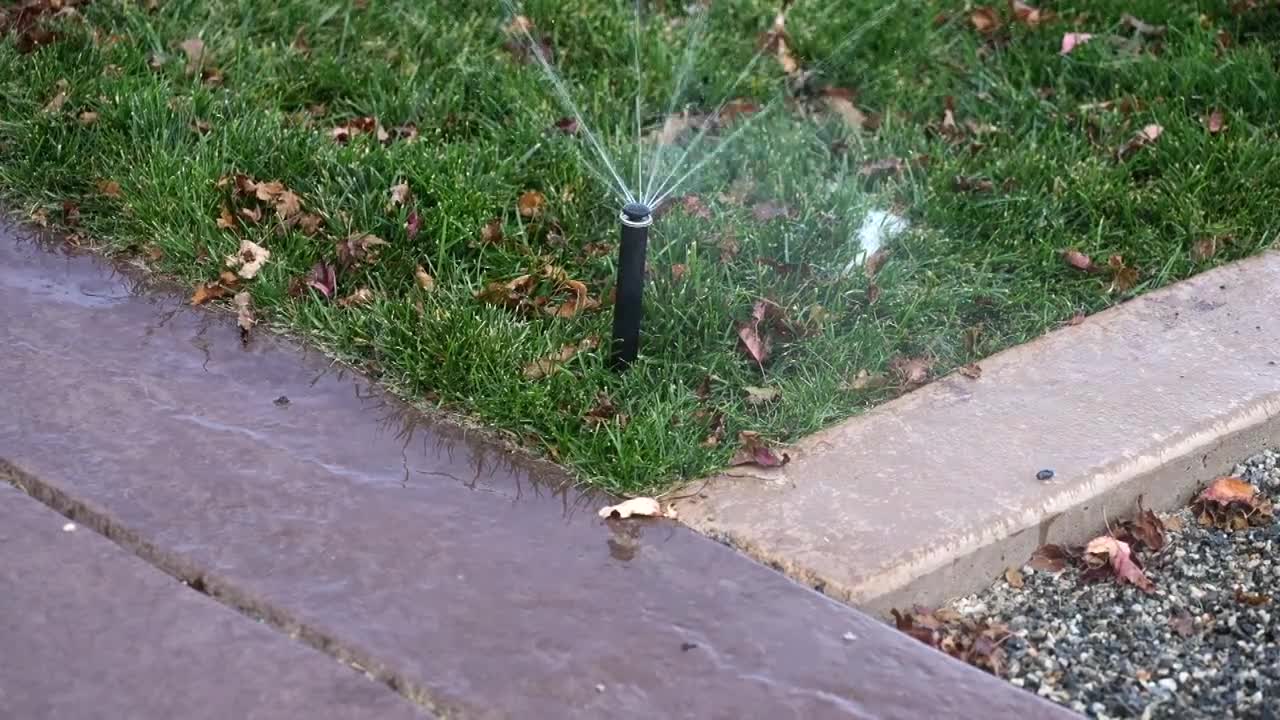
“Basically, the zones are going to turn on one at a time. And we're going to evacuate all the water,” he said.
The equipment needs to match the system. Hockemeyer cautions that an undersized garage compressor can produce mist at the sprinkler heads while leaving water behind.
How long does it take?
Hockemeyer says many residential systems in the area take about 30 to 45 minutes to winterize, though larger systems or those with drip irrigation can take longer.
For homeowners, turning off the water is a start. Clearing what remains helps keep winter weather from turning into a repair bill come spring.