



Joanna Fix was in her early 40s when she began noticing something was different. It wasn’t primarily memory loss.
Fix experienced extreme fatigue and problems with executive functioning, symptoms she said she did not initially associate with Alzheimer’s disease. She was 48 when she received a clinical diagnosis of Alzheimer’s. Now 58, Fix has spent the past decade learning how to navigate life with the disease while helping others understand that an Alzheimer’s diagnosis does not mean life is over.
“People think when you get an Alzheimer's diagnosis, you're immediately in the hospice stage, and that is just not the reality,” Fix explained.
Fix said she believes the stigma surrounding Alzheimer’s has prevented some people from seeking answers and support.
“Getting an early diagnosis and understanding what we are dealing with and what we can do now to help slow that progression is one of the most important things you can do,” she added.
Fix encourages people who are experiencing symptoms to seek information locally and determine what may be causing them, whether it is Alzheimer’s disease, Lewy Body dementia, vascular dementia, frontotemporal dementia or another condition.
“Once you know, then the light's green,” Fix said of getting a clearer picture of what you're dealing with after a proper diagnosis. “When you don't know... you're sitting at a red light for what feels like forever, just hoping and praying that this will pass. It's not going to pass, but it can be manageable.”
Finding consistency on the road
Fix and her husband, Forrest, have found one way to make life more manageable: an RV that allows them to travel while maintaining a familiar environment.
“What it does for her is it keeps the environment constant and predictable, which is important,” Forrest said.
For Joanna, that consistency can determine how her day unfolds.
“It's not just helpful, it is a mandate,” she said. “I mean, it literally changes whether I have a good day or a terrible day, which means he's going to have a terrible day too.”
The RV also allows the couple to visit family across the country and continue making memories together. Joanna said familiar experiences can provide a sense of comfort, even when other memories become harder to access.
“What people might not realize is that they haven't lost these memories,” Forrest said. “People with Alzheimer's, they've lost access to them and not even permanent access sometimes, just temporary or partial.”
Joanna said long-term memories can sometimes remain accessible through familiar experiences, including camping, watching sports or spending time with family.
“Those are things you can count on,” she said of feelings in place of photos. “Those are, those are in there. Those aren't touched.”
The couple has already accumulated plenty of memorable moments on the road, including a trip through Florida that took them down an unexpected dirt road and another night when strong winds forced them to keep the RV slides closed.
Joanna said those difficult experiences can become meaningful in their own way.
“I think you remember the things that you've survived,” she said while laughing and recalling the moment.
Turning experience into support
Joanna is also using her experience to help others living with Alzheimer’s and their families.
She and others recently launched a support group at a local Veterans of Foreign Wars post that is led by someone living with Alzheimer’s. The group is primarily focused on serving veterans but is not turning people away. Joanna said she wanted to create a space where people with the disease could share what actually helps them navigate everyday life.
“We don't want the caregivers to be separated from the care receivers,” she said. “We want everyone to feel valued and to actually get impactful information that helps them as soon as they go home from one of these groups.”
She said even small changes can make a difference, such as slowing down conversations, using fewer words and making eye contact.
“You don't have to have, you know, a PhD in dementia,” Fix said. “God already gave you everything you need to be successful with your heart, with this disease, and everyone can be successful on this journey.”
Fix also encourages people to seek information from organizations such as the Alzheimer's Association rather than trying to navigate the disease alone online.
“The support is out there,” she said. “We are just waiting for you to reach out and we're ready and willing and excited.”
After a decade of living with Alzheimer’s, Fix said she does not view her life as something that has ended. She said using her experience to help others has given her purpose.
“I am living my best life,” Fix said. “I'm the happiest I've ever been. I'm busier than I've ever been.”
And she has a message for anyone who has recently received an Alzheimer’s diagnosis or is afraid to seek an answer.
“Your life isn't over,” Fix said. “You just have a new one starting.”
Joanna recommends the public keep an eye on the VFW District 5 Facebook page for updates on her support group. Click here to follow.
WALK TO END ALZHEIMER'S IN COLORADO SPRINGS:
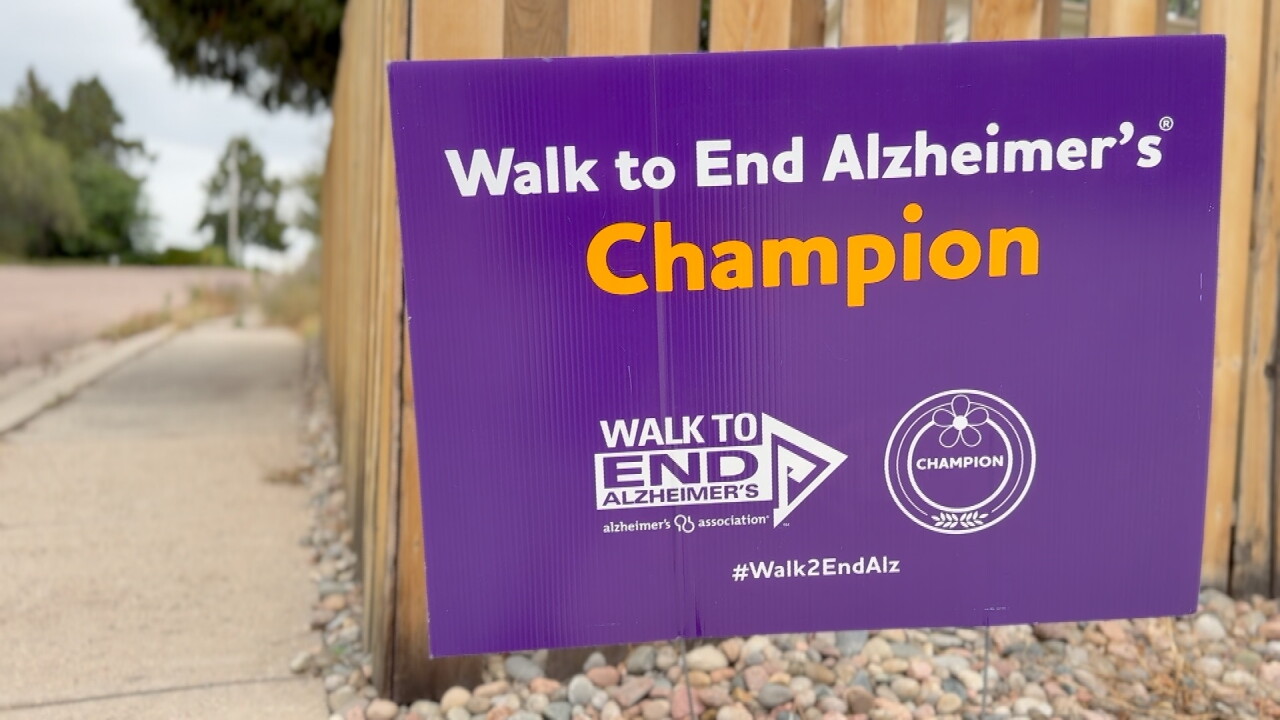
The 2026 Walk to End Alzheimer's - Colorado Springs takes place on Saturday, September 26, 2026, at Memorial Park. Click here to register.
-Registration / Check-in: 8:30 AM
-Flower Ceremony: 10:00 AM
-Walk Start: 10:15 AM
WALK TO END ALZHEIMER'S IN PUEBLO:
The 2026 Walk to End Alzheimer's in Pueblo, Colorado will take place on Saturday, October 3, 2026, at the Pueblo Riverwalk. Click here to register.

Right to Hunt and Fish? Amendment 83
____
Watch KOAA News5 on your time, anytime with our free streaming app available for your Roku, FireTV, AppleTV and Android TV. Just search KOAA News5, download and start watching.
