

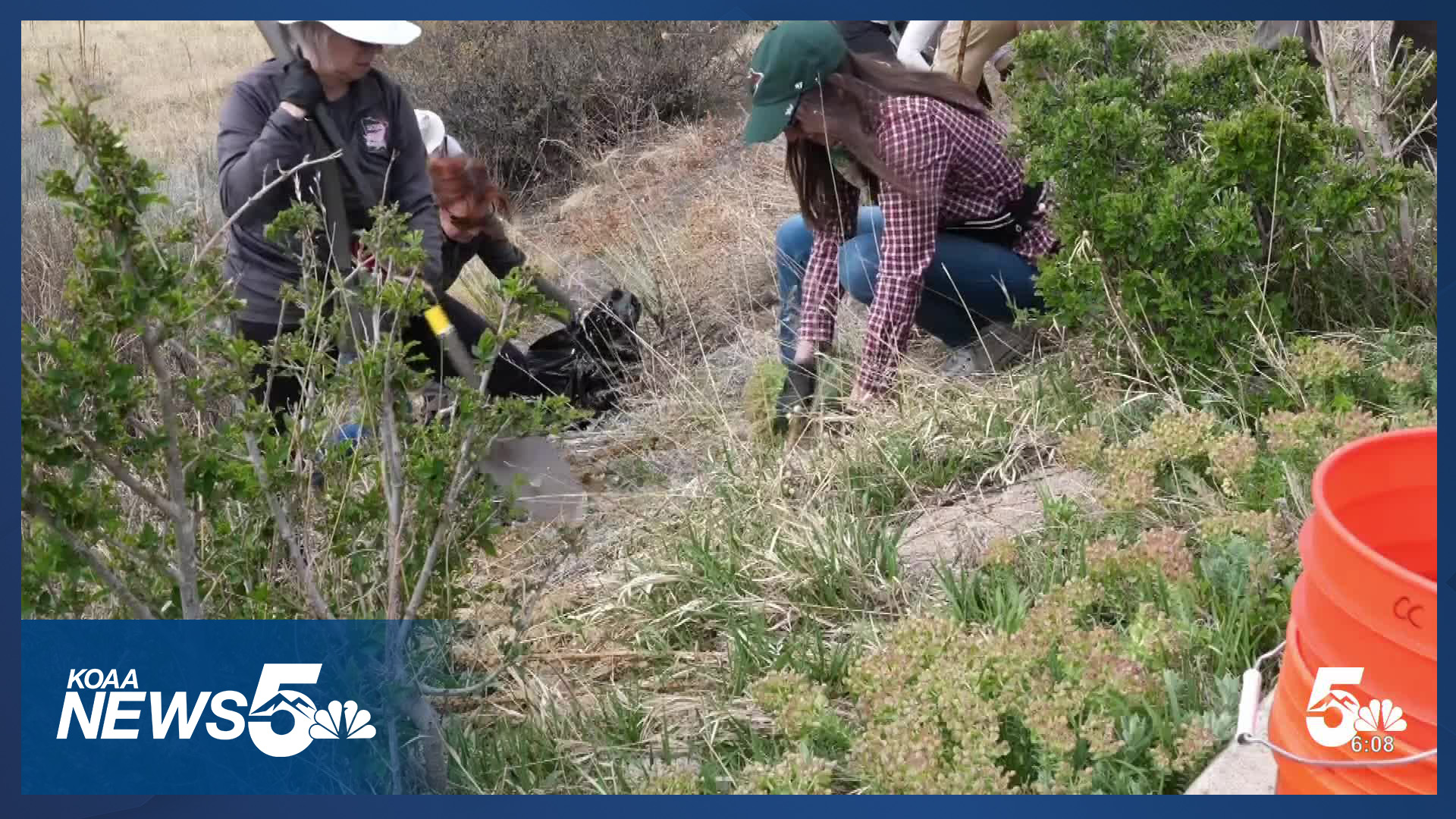


COLORADO SPRINGS, Colo. (KOAA) — An Earth Day project on Colorado Springs' Westside brings attention to an issue that threatens Colorado's native environment. Volunteers worked to eradicate a noxious plant called Myrtle Spurge.
"It does kind of create, they refer to it as a carpet, so which kind of smothers out the resources for other plants that are natural to the area," volunteer Allison V. said.
"Learning about what invasive species are, what they do to the land," said volunteer Kendra.
Identifying the noxious plant is only one part of the lesson for volunteers. They also get a safety briefing from stewardship experts with the Palmer Land Conservancy, who are leading this Earth Day project.
Volunteers need to wear long sleeves, eye protection, and gloves because the plant can be caustic on the skin.
"They're instructing us to identify it and pull it as far down the root as possible," said Allison V.
"This white substance bubbling up here is a milky sap that can burn you, so it can also be a public health hazard to some degree if you know kids or pets were to be exposed to this," said Andrew Dreelin, Palmer Land Conservancy, Land Stewardship Manager.
The plant was introduced to Colorado as an ornamental landscaping plant. When it spread out of control beyond yards, it became a threat to Colorado's native plants.
A map through the Early Detection and Distribution Mapping System pinpoints Myrtle Spurge infestation locations in Colorado, showing the most prevalent area in Colorado Springs is the Westside.
"Some of our volunteers actually found some myrtle spurge in an area that we weren't aware of yet, and that's really, really helpful information for us in terms of our stewardship because now we have another area that we can target," said Dreelin.
Public understanding is important to the eradication of this and all invasive species.
"You're almost like a spy giving valuable information to the land managers who can then use that to, you know, address the invasive species that are coming in," said Dreelin.
"Definitely gives you a different lens when you're out hiking on the trails trying to figure out what's a native species, where's an invasive species, and just being cognizant and aware," said Kendra.
There are online resources from Colorado Parks and Wildlife and the Colorado Department of Agriculture that list invasive plant species in the state, where they are, how to identify them, and why they need to go.
"This story was reported on-air by a journalist and has been converted to this platform with the assistance of AI. Our editorial team verifies all reporting on all platforms for fairness and accuracy."
___

Right to Hunt and Fish? Amendment 83
____
Watch KOAA News5 on your time, anytime with our free streaming app available for your Roku, FireTV, AppleTV and Android TV. Just search KOAA News5, download and start watching.
