



PUEBLO, Colo. (KOAA) — By any measure, Pamla and Doug Sterner are unlikely change makers.
Neither began with political power, institutional backing, or national influence. Yet together, the Pueblo couple helped transform their hometown into “America’s Home of Heroes,” inspired federal legislation protecting military honors, and built one of the nation’s largest databases of military valor awards.
Their story is one rooted in empathy, persistence, and a belief that ordinary people can make extraordinary change.
Watch our full report on this story in the video player below
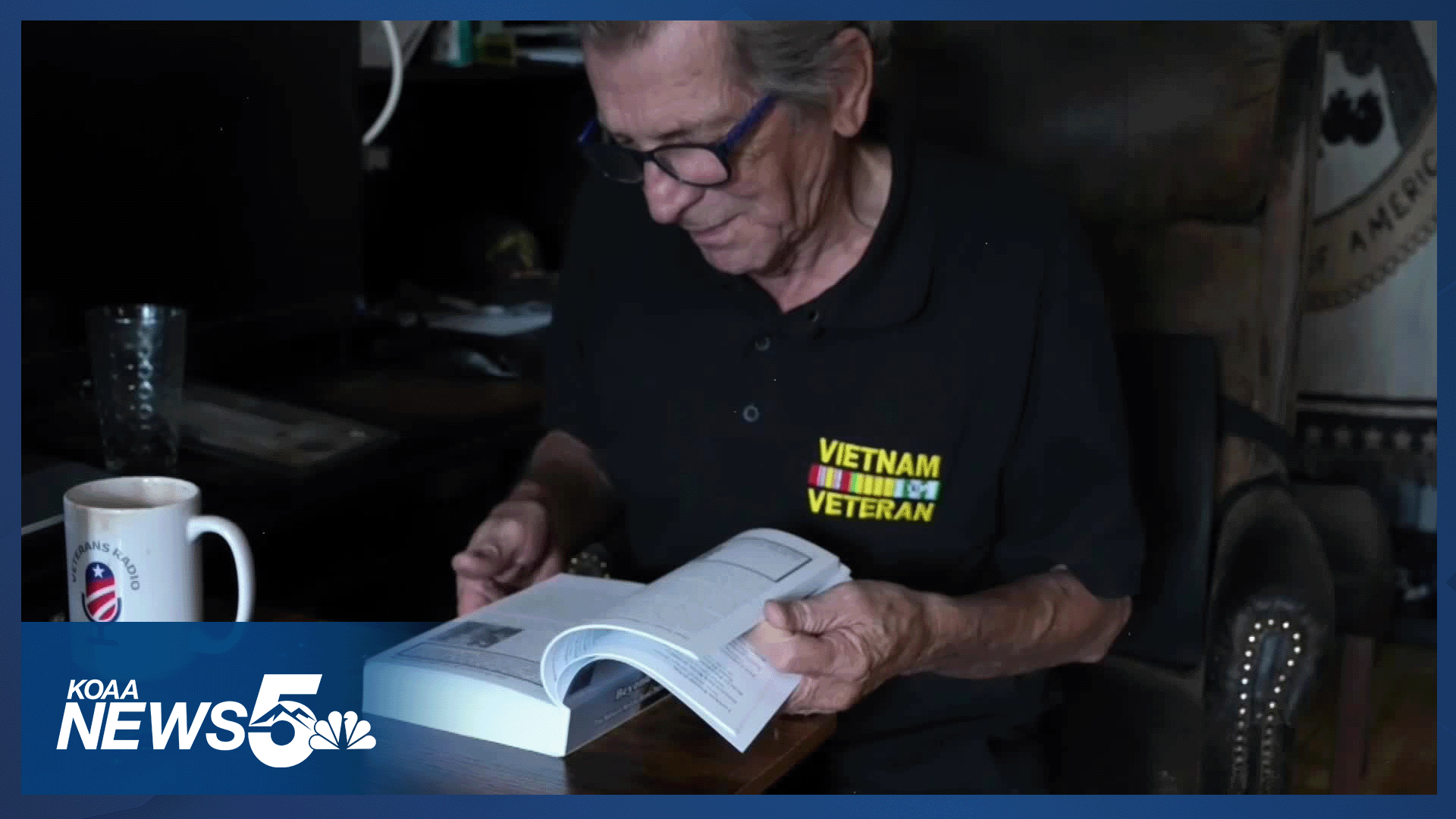
Doug Sterner describes himself as a military historian. Pamla Sterner sees herself differently.
“I guess I’m kind of a community activist,” Pamla said. “I don’t think anybody is beneath us, giving them a second, third, fourth chance.”
That mindset has guided decades of community work in Pueblo, Colorado, from helping struggling families to advocating for veterans and preserving military history.
Doug says many veterans, especially decorated heroes, rarely speak openly about what they experienced.
“The real heroes don’t talk about what they did,” he explained. “Heroism doesn’t happen on a good day. It happens on the worst day of your life.”
Because of that, he believes historians and storytellers carry a responsibility to preserve those stories for future generations.
Pamla’s philosophy is simpler: if you cannot solve every problem, do something anyway.
“One of my favorite quotes is: if you can’t feed 100 starving people, then just feed one,” she said. “You still can do something.”
The couple’s community efforts began in the early 1990s with an idea inspired by children who could not afford rides at Pueblo’s City Park.
Doug was managing low-income apartments at the time and organized a private event at the park for local families. During the gathering, Pamla noticed children outside the event watching from a distance.
“She started sneaking the other kids in so they could enjoy it,” Doug recalled with a laugh.
On the drive home, Pamla proposed something much bigger: making City Park free for everyone in Pueblo for one day.
In 1992, they made it happen.
The Fourth of July celebration included free rides, free zoo admission, transportation for families, pony rides, and even limousine rides for children who had never experienced one before. According to local estimates, roughly 7,000 people attended.
But the following year, the Sterners wanted to add a patriotic dimension.
Doug contacted Medal of Honor recipient Jerry Murphy and invited him to Pueblo. Murphy responded with a surprising question:
“Have you invited the other three?”
At the time, Pueblo was the only city in the nation with four living Medal of Honor recipients.
In 1993, the Sterners brought all four recipients back to Pueblo together, an event that would eventually spark a decade-long effort to officially brand the city as “America’s Home of Heroes.”
The idea initially faced skepticism from city leaders.
“They felt like two common folk couldn’t possibly do something this big in the right way,” Pamla said.
But the Sterners persisted.
Doug created banners declaring Pueblo the “Home of Heroes.” The couple gathered letters of support from the president, governors, and military leaders. They rallied community members, veterans, and local advocates around the idea.
In 2000, Pueblo was officially recognized as “America’s Home of Heroes.”
Doug says the effort succeeded because they invited others into the vision rather than fighting against the local government.
“Nothing wonderful is ever achieved by one person alone,” he said. “If you expand your dream and let other people buy into it, then you can get things done.”
The Sterners’ work preserving military history eventually led them into another battle, combating fraudulent military claims.
Through Doug’s research and the growth of his military history website, he repeatedly encountered individuals falsely claiming military honors they never earned.
Some wore medals publicly. Others used fabricated heroics to gain social status, financial benefits, employment, or trust.
“There are some unscrupulous people out there that realize that heroic persona gives them standing in a community,” Doug said.
Pamla first encountered the issue while studying political science at CSU Pueblo after returning to college later in life.
Originally attending community college simply to learn computer skills, she eventually earned a scholarship to continue her education at the university level.
As part of a policy analysis essay assignment, Pamla decided to focus on weaknesses in federal law surrounding military award fraud.
“I said, ‘I’m going to turn it into a law,’” she recalled.
Her professors were skeptical.
But Pamla and Doug already had experience accomplishing goals others considered impossible.
At the time, Congressman John Salazar was running for office as Colorado’s only veteran candidate. The Sterners presented the proposal to him, and Salazar introduced it in Congress.
Initially, the legislation stalled in committee, where many bills effectively die.
So the Sterners began working with reporters and exposing real stolen valor cases across the country, helping generate public pressure for action.
“We would tell newspapers about it and say, ‘It would be so simple to fix this,’” Pamla explained.
Eventually, Congress acted.
President George W. Bush signed the Stolen Valor Act into law in 2006.
According to Doug, congressional publication Roll Call described it as one of the most significant pieces of military award legislation since 1917.
The law later faced constitutional challenges over free speech concerns.
Federal courts issued conflicting rulings, setting up a Supreme Court battle.
Pamla said the couple anticipated the possibility that the law would be struck down and prepared revised language focused specifically on fraudulent intent.
In 2012, the Supreme Court invalidated portions of the original law. Congress later passed a revised Stolen Valor Act targeting fraudulent claims used for material gain.
The Sterners supported the revised legislation, which remains in effect today.
For them, the issue was never merely about false statements.
They saw stolen valor cases tied to financial fraud, abuse, manipulation, and even violent crimes.
“There’s always some underlying criminal activity,” Doug said.
He cited cases involving fake veterans receiving VA benefits, fraudulent employment credentials, and even crimes involving assault and murder.
Today, Doug continues documenting military heroism through what has become one of the largest military valor databases in the country.
Known as the Hall of Valor database, the project contains roughly 250,000 records of military awards and citations. According to Doug, the resource is used by the military, Congress, the FBI, and historians nationwide.
The work also helps correct historical gaps.
In one case, Doug helped connect a veteran with records proving he had earned a Silver Star decades earlier, an award the soldier himself never knew he received.
In another case, a Navy Cross recipient was nearly denied burial at Arlington National Cemetery because records could not initially verify his award.
Doug says the United States still lacks a centralized, complete database of military honors, making projects like his critically important.
Throughout the interview, both Sterners repeatedly returned to the same idea: Pueblo’s identity matters.
They believe the city’s strong family culture, patriotism, and military tradition helped shape generations of service members.
Doug pointed to Pueblo’s many overlooked heroes, from Medal of Honor recipients to decorated pilots, prisoners of war, and soldiers whose stories remain largely unknown.
“These are Pueblo heroes that most people have never heard of,” he said.
Pamla hopes future generations embrace that legacy more fully.
“I want our children to say, ‘I’m from Pueblo, the Home of Heroes,’” she said. “Because of that, I have an obligation to make somebody’s life a little bit better.”
Now older, the Sterners say they may not have the same energy they once did, but they still carry the same vision.
Their message is ultimately less about medals or politics and more about civic responsibility.
“We made a difference,” Pamla said. “We renamed the town. If we can do that, then there’s something that you really would like to change, you can do it too.”

___

Right to Hunt and Fish? Amendment 83
____
Watch KOAA News5 on your time, anytime with our free streaming app available for your Roku, FireTV, AppleTV and Android TV. Just search KOAA News5, download and start watching.
