



CENTRAL SPRINGS, Colo. (KOAA) — Live-in family caregivers in Colorado say a proposed change to the state's Medicaid program could force them into an impossible situation: Stop during a medical emergency to log into a tracking app, or provide immediate care and risk not getting paid.
The proposal would eliminate the live-in caregiver exemption from Electronic Visit Verification, or EVV — a system used to document what Medicaid services a caregiver is providing and when. The EVV system is also how caregivers track their hours in order to be paid.
News5 reporter Liv Wood has more on this story in the video below:
The Department of Health Care Policy and Financing, or HCPF, estimates that requiring EVV for live-in caregivers could save roughly $10.8 million in state general fund savings annually. From May 1 last year through April 30 this year, HCPF paid nearly $1.7 billion in claims associated with live-in caregivers. A preliminary estimate from HCPF also projects that 2% of claims would not meet EVV documentation requirements and would remain unpaid.
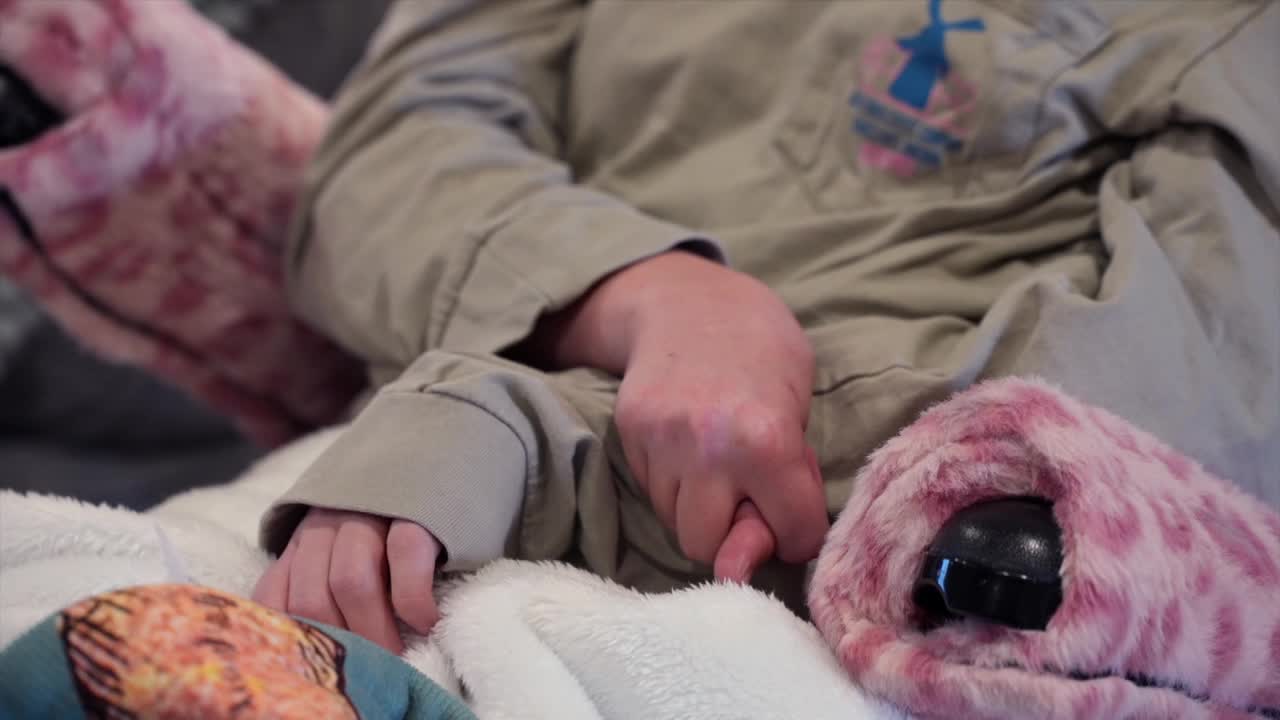
During an interview with Ronnie Broyles, he had to pause to tend to his daughter Victoria's ventilator. He said if the change goes into effect, he would have to clock in before he could tend to her needs.
"I would have had to have clocked in. And if they're doing it like Virginia does, clock in the task which would be suctioning. Suction her then clock back out all while she's descending," said Broyles. "Then what if something happens 10 minutes later? Rinse and repeat," Broyles said.
Other caregivers raised similar alarms. Susan Kirkpatrick described her frustration with what the new requirement would mean for the quality of care she is able to give her family members.
"How am I supposed to give my patient who deserves attention and care just like anybody else, how am I supposed to focus on them if I have to be focused on the clock and charting," Kirkpatrick said.
Kirkpatrick said she is worried for what the future will hold for her family members, like her father, who she takes care of.

"I mean, my father had a lot of crazy scary life moments that happened there in the summer, and luckily I was there and I caught them early and I was able to get a medical emergency here and get the support, but now there's still so much ongoing that he needs. And resources are just being threatened and taken from him because of all the proposals and cuts being made, and it's just scary and I want to cry every day for him," said Kirkpatrick.
She said the changes to EVV could change the way she takes care of her family, but not for the better.
"It gets overwhelming. To focus your details and everything on that is perfectly fine, but to put that on hold and not being able to do that at a later time because you're focusing on your family member is hard. They are the priority. Like, you go to the hospital and your nurse is focusing on you, not charting at the moment. They do that at a later time. So I feel like we should be able to do that with our family member," said Kirkpatrick.
Sharon Miller, who cares for her son, Jordan, described a real-world scenario she fears could become routine.
"Many people with intellectual disabilities, profound disabilities do require crisis care, so if my son's running across the parking lot, I have to say 'Oh, wait, honey, don't run away, I need to pull up my phone and pull up an app and hope there's no technical difficulties and clock in first'," Miller said.

Miller said the changes feel unethical.
"It won't prevent fraud because live-in caregivers live in the same home. So how would that prevent fraud? It wouldn't. So, they're hoping to save money through documentation errors. So that's unethical," said Miller.
She is very close with her son, Jordan, and they get out into the community as much as they can. Miller said she would put her son first no matter what.
"EVV for living caregivers ignores the reality of the on-demand care that we must provide to keep them safe. It definitely puts the people with disabilities at risk, and that, that's unacceptable. I don't care what kind of savings they think they're gonna they're going to have," said Miller.
The Department of Health Care Policy and Financing sent a statement about the removal of the exemption:
Electronic Visit Verification has been required in Colorado since 2020. When EVV was implemented, the state chose to allow for the exemption of live-in caregivers. This means that if a caregiver and member live in the same household, the provider agency or Financial Management Services (FMS) contractor may choose to not require EVV for those services. Since it is an agency choice, some provider agencies exempt live-in caregivers from EVV, while others still choose to collect the information. For caregivers that are required to collect EVV, it should take less than a minute at the beginning and end of each provided service. Additionally, the clock-in and clock-out required for EVV is just for the overall service and does not require task-level information. For example, the caregiver would note the times that Personal Care began and ended, but not how long it took to provide bathing support. Additionally, for consumer directed services that are provided in a bundled nature, like Consumer Directed Attendant Support Services and In-Home Support Services, EVV is only required for the overall service - not the sub-services of Personal Care, Homemaker, and Health Maintenance. This high-level data collection should not create undue burden on caregivers.
As part of Colorado’s sustainability initiatives, HCPF has proposed a potential change in state policy to require live-in caregivers to collect EVV when they provide an EVV-required service. This proposed policy comes at a time when the federal government is exploring changes to live-in caregiver exemption. This proposed policy will not cut services, reduce payments for services when required records are collected, or increase the likelihood that a member would be institutionalized. Instead, this policy would align the EVV requirement for all caregivers who provide services that require EVV. This potential change would increase program oversight to align with federal recommendations, help ensure that members receive the care they need, and safeguard state funding so Medicaid only pays for services that were delivered.
At this time, this is a proposal only with no implementation date. HCPF is currently gathering stakeholder feedback on this proposal and hosted two meetings this week that discussed this proposal. To view the webinar recording, stakeholders and members are encouraged to visit https://hcpf.colorado.gov/medicaid-sustainability-and-ltss.
Laura Johansson, a live-in caregiver who said she is constantly attending to her daughter's medical needs around the clock, questioned whether the savings justifies the added burden.
"I'm still making sure she's getting repositioned every 2 hours or so. I'm changing her briefs. I'm making sure she's not having seizures. I'm watching out for fall precautions. I'm doing all of the things that you've required of me to do. But now you're telling me that you're going to save nearly $11 million by making me be paying more attention to my phone," Johansson said.

Johansson said she is extremely close with her daughter, Sydney. They go to concerts, watch movies and TV shows, and enjoy getting a hot chocolate together.
Johansson said when if her hours are cut to 56 per week, she is still doing the same work to make sure her daughter gets proper care.
"Who's doing the rest of this stuff because she's still going to be, as far as I'm aware, allotted those hours, but then nobody's going to do them. You can save some money there because you're not gonna have somebody charting those, but I'm still doing them because who else is going to do it?" said Johansson. "If she's allowed those hours, why can't I get paid for it because I'm going to do it anyway. And they're like, it's going to prevent caregiver burnout. But how? Because again, I'm still going to do the work. I'm just now not going to receive any compensation for it."

Caregiver Angie Purdy said she believes the state is counting on some caregivers failing to meet documentation requirements.
"They're banking on us not being able to chart in a timely manner," Purdy said.
Purdy's daughter, Heidi, needs 24/7 care. She says the job is much more complicated than it appears at face value. Without funding and with changes to the way live-in caregivers operate, Purdy said it could be detrimental.
"When parents say that our children could die if we don't have the funds, it's not a joke. They can literally die from not having the services that they get paid to provide for the children. And it's really sad and also a little bit annoying that we don't have a seat at the table. And we absolutely should," Purdy said.
The Department of Health Care Policy and Financing says families shouldn't have to worry about institutionalization or any risks to their children's health, but many of the caregivers fear the opposite.
Johansson said she worries that the financial and logistical pressure of the new requirement could lead some families to a heart-wrenching decision.
"I don't see any situation where putting my child in some kind of facility, how is that better and how is that saving any money because in my mind, that costs considerably more than any amount of compensation that I would be getting paid to take care of her perfectly fine in a home with her dog, with her cat, with her dad," Johansson said.
Miller echoed those concerns, warning that the state budget could ultimately suffer if more people with disabilities end up in facilities.
"People will be forced into facilities, and it will be more costly. The outcomes will be worse and the state budget will be in much worse shape if they're having to now build all these institutions," Miller said.
Kirkpatrick added that Colorado's long-term care system may already be too strained to absorb an influx of new patients.
"There is no long-term care available. Colorado is already at a shortage," Kirkpatrick said.
The EVV proposal was made in October. But many parent caregivers say they expect more Medicaid cuts in the upcoming fiscal year.
"I already know they're going to target Medicaid. I don't have to worry about it. Medicaid's always got a bullseye on its back," Broyles said.
Miller said the core issue comes down to ethics and the safety of people with disabilities.
"Putting a caregiver in a situation where they have to choose between being paid or providing appropriate care, that's not okay. That's unethical and it's dangerous and puts people with disabilities at risk," Miller said.

