



COLORADO SPRINGS — The Colorado Springs tree canopy faces a destructive infestation.
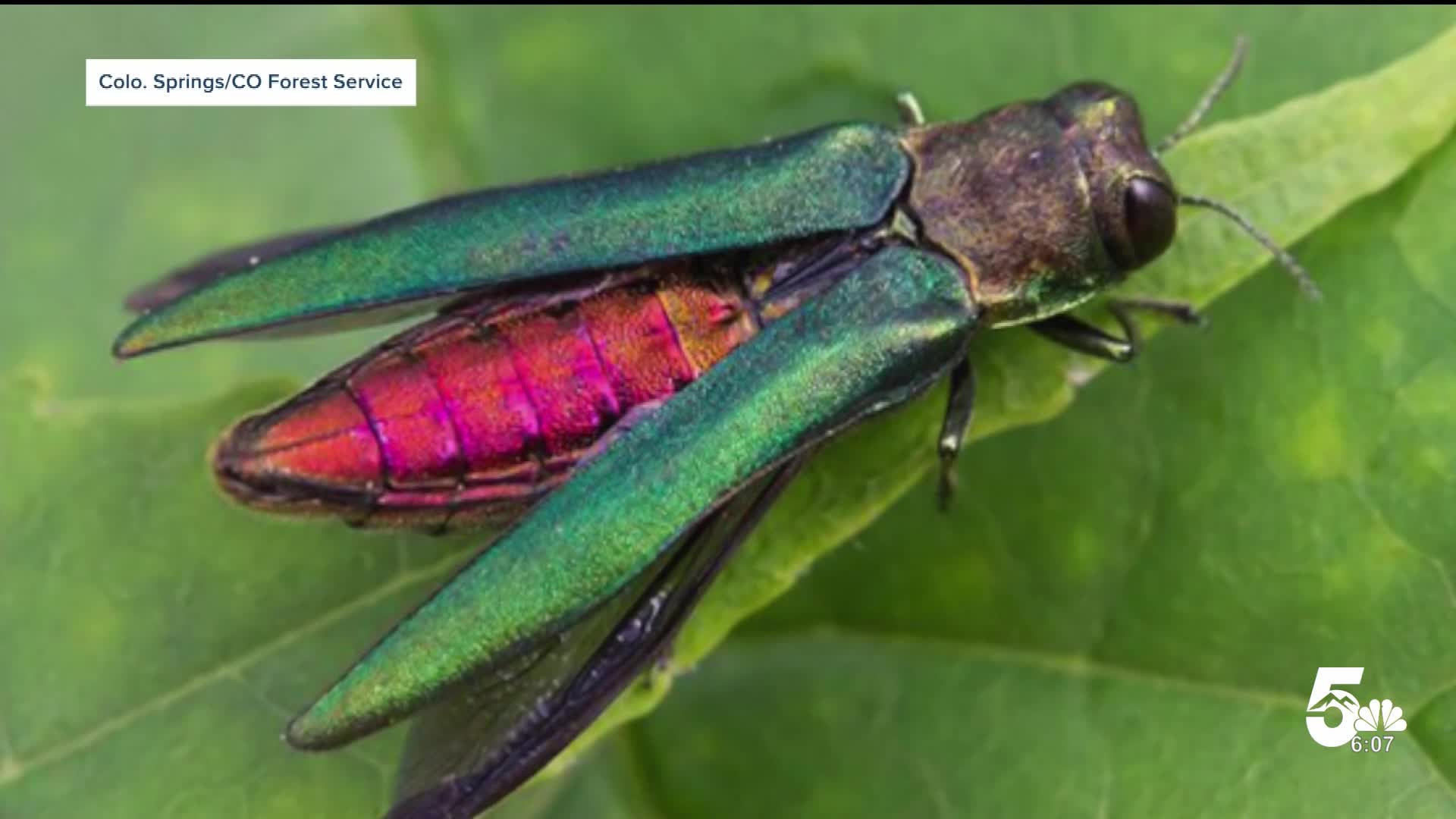
A beetle called the Emerald Ash Borer has been confirmed in the city. It is a potential death threat to every ash tree in the city. I
t puts at risk 20% of the canopy in Colorado Springs. That is one in five trees.
Enjoying a day in the shade at Thorndale Park on Colorado Springs west side is appreciated by longtime Westside resident Gary Wright.
He remembers the park before the park was developed decades ago.
"When I was a little kid, this was basically nothing but weeds growing here. So these, some of these trees are really, really old," Wright said. "Well, I'm 83."
Colorado Springs was once a treeless city and the founders pushed to plant trees for beauty. Those trees provide much more than aesthetics.
"Shade, air filtration, stormwater reduction, carbon storage, cooler streets for our neighborhoods, and just overall scenic beauty," said Matthew Puckett, City Forester for Colorado Springs.
It turns out good intentions from the city's early days planted trees not well suited for the area. Now tens of thousands of ash trees will likely die in the next 10 to 15 years.
"The pest is here to stay. That's the one thing, is that we cannot get rid of the Emerald Ash Borer," Puckett said.
The insect, originally from Asia, showed up in the central U.S., then was found in Boulder in 2023, and is now in Colorado Springs.
"They feed underneath the bark on the cambium layer of the tree, essentially cutting off all central nutrients. But also, what this pest does is it carries a little fungi, a fungus on its feet that rapidly spreads the rate of decomposition," Puckett said.
"It is something that's happening and it is something that people need to be aware of right now to think about getting that treatment scheduled for next spring," said Carrie Tomlinson with the Colorado State Forest Service.
A trained arborist is required to spot and treat for the insect. Spraying is a way of delaying a tree's death and the expense of tree removal.
"The cost of removal is going to run maybe 10 times more expensive than treating your tree," Tomlinson said.
City foresters have created a plan where some trees will be treated and many more will be removed as they die. It is going to cost hundreds of thousands of dollars in the years ahead. Part of the plan is also working now to get other types of trees growing as replacements for when ash trees die.
"Shadow planting, which is planting near the current tree, allowing that one to mature," Puckett said.
Wright wants to see the trees last as long as possible.
"I hope they never cut them down. If they do, plant another one," Wright said.
Foresters warn that the most common way the borer spreads is through the movement of wood piles. They are asking people not to move wood piles, and if cutting down an infected tree, the best case scenario is to chip it rather than turn it into logs.
The city will deal with trees in parks and along public right of ways.
Trees on private land are the responsibility of the property owner.
More information on the City of Colorado Springs Emerald Ash Borer Management and Response Plan is available on the city's website.
___

Right to Hunt and Fish? Amendment 83
____
Watch KOAA News5 on your time, anytime with our free streaming app available for your Roku, FireTV, AppleTV and Android TV. Just search KOAA News5, download and start watching.
