


COLORADO SPRINGS — A citizen committee is working to collect signatures to place four questions on the Colorado Springs ballot in April, two of which deal with noise regulations in relation to new developments and existing facilities that increase noise levels in residential areas.
The two questions relating to noise restrictions are listed below:
- Shall Colorado Springs City Code be amended to prohibit any development plan that includes any “facility” that will result in “noise detrimental to the quiet enjoyment of property” in “residentially zoned” areas, with no variance allowed, and defining new noise threshold levels and measurement methods and requirements?
- Shall Colorado Springs City Code be amended to prohibit hardship permits for any facility that will emit “noise detrimental to the quiet enjoyment of property” affecting any “residentially zoned” area, unless the emitted noise is the result of a “free entertainment event” and, in that case, a hardship permit may be granted, and defining new noise threshold levels and measurement methods and requirements?
In these petitions, "noise detrimental to the quiet enjoyment of property" refers to any noise from a "commercial, industrial, or entertainment facility, or temporary outdoor venue" that reaches or exceeds certain thresholds as measured from residentially zoned properties.
Learn More About the Effort Below
Those thresholds are as follows:
- Broad-Spectrum Noise: An equivalent continuous sound level (Leq) of 45 dBA or higher over any 10-minute measurement period, or a maximum sound level (LAmax) of 55dBA or higher, measured with a sound level meter set for A-weighting and slow response; or
- Continuous Low-Frequency Noise: Maximum unweighted (Z-weighted) sound pressure levels (LZmax) that meet or exceed 60 dB at the 16 Hz octave band, 55 dB at the 31.5 Hz octave band, or 50 dB at the 63 Hz octave band; or
- Dynamic Low-Frequency Noise: An equivalent continuous unweighted (Z-weighted) sound level (Leq) that meets or exceeds 50 dB at the 63 Hz octave band over any rolling 5-minute measurement period, or a maximum unweighted (Z-weighted) sound pressure level (LZmax) of 55 dB at the 63 Hz octave band.
The first of these proposed measures would prohibit the development of facilities that produce noise at or above the thresholds mentioned above as measured from residential areas. The other would prohibit the city from granting noise hardship permits — which allow businesses to exceed normal noise requirements — for paid events at facilities that produce noise at or above those same thresholds.
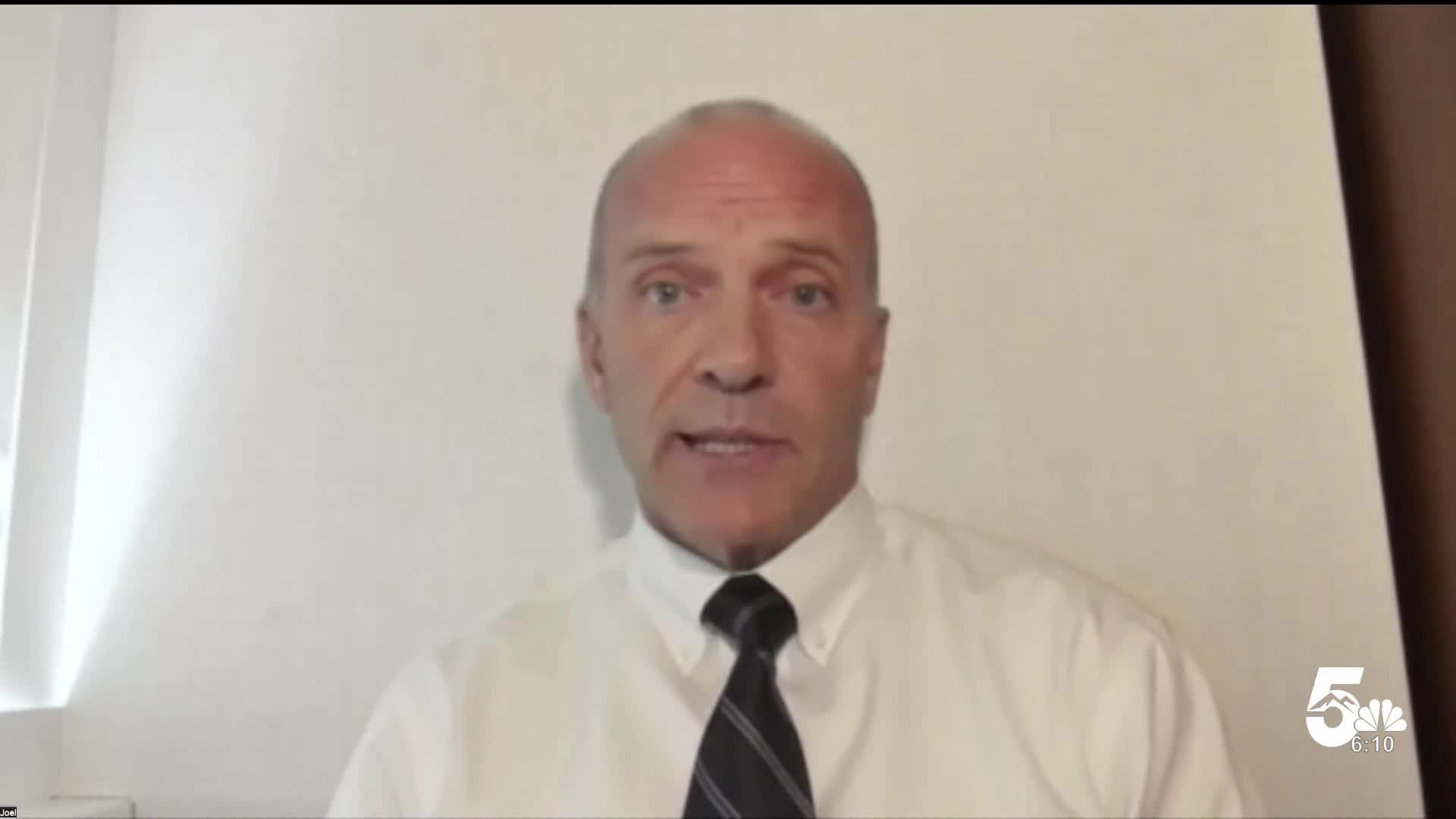
"There are frequencies, there's low frequency noise, there's higher frequency noise, and they're all spelled out very clearly," said Joel Miller, a member of the committee for these initiated ordinances.
"There's no subjectivity whatsoever in the ordinance," Miller continued. "So if it's going to exceed these limits and it's measured in a certain way with a certain measuring device, then the mayor may not issue a noise hardship permit — unless it's an event that is free and open to the public."
The petitions outline both the specific type of device needed to gather sound measurements in order to determine compliance of existing facilities as well as the process for determining compliance for future developments via acoustical studies.
The committee says the petitions are aimed at protecting property rights, "If the government issues a noise permit that's affecting your ability to enjoy your property — which is one of your property rights — then that is an infringement on a core constitutional right," Miller said.
Ford Amphitheater, which has received noise hardship permits from the city during each year of its operation since opening in 2024, says the measures would halt its business.
The city reports that in 2025, they issued 202 noise hardship permits, while in 2026 they have issued 212 as of October 13.
"In my view, these ordinances come down to whether or not you want to live in a vibrant city," said Bill Jaffee, vice president of executive communication for Venu Holding Corporation. "If you remove all sound from a city, you don't get peace and quiet — you get a city where nothing happens."
Jaffee added: "I want to live in a city where I see the Colorado Switchbacks play, and I want to live in a city where I can see a concert at Ford Amphitheater."
Addressing concerns put forward by Venu, Miller added, "I think that if you ask the signers of this petition or any members of this committee, none of us want the theater to be torn down, it's a nice facility. We want it to be turned down."
The committee needs approximately 25,000 signatures for each petition to qualify for the April ballot.
This story was reported on-air by a journalist and has been converted to this platform with the assistance of AI. Our editorial team verifies all reporting on all platforms for fairness and accuracy.
___

Right to Hunt and Fish? Amendment 83
____
Watch KOAA News5 on your time, anytime with our free streaming app available for your Roku, FireTV, AppleTV and Android TV. Just search KOAA News5, download and start watching.
