



IGNACIO, Colo. (KOAA) — As Colorado marks 150 years of statehood, Southern Ute Tribal Council member Linda Baker says the milestone carries a different meaning for Indigenous people whose history on the land stretches back long before the state existed.
“To me, personally, it doesn’t really mean too much as a year,” said Baker in a recent interview with News5.
Baker, who is half Navajo and half Southern Ute, said the Ute people view themselves not as settlers in Colorado, but as people whose origins are rooted in the Rocky Mountains themselves.
“There are three Ute tribes... there’s Southern Ute, Ute Mountain, and then the Ute Tribe in Utah,our creation story is centered in the Rocky Mountains,” explained Baker. “We don’t feel like we’ve moved anywhere. We feel like we’ve always been here.”
Baker is serving her second term on the Southern Ute Tribal Council after first being elected to a three-year term and later returning following a brief break in 2024.
Before joining tribal leadership, she worked as an academic adviser at Fort Lewis College, served as director of the Southern Ute Museum, and worked with Native collections and repatriation programs, including at the Denver Museum of Nature and Science.
As Colorado commemorates its sesquicentennial alongside the nation’s upcoming 250th anniversary, Baker said tribal participation in statewide commissions is about ensuring Native history is represented accurately.
“It is a controversial topic,” added Baker. “It is something that isn’t viewed as a celebration.”
Still, the Southern Ute Indian Tribe chose to participate in the Colorado 150 and America 250 commissions “to make sure that the Ute Tribe is represented and to make sure that the information that’s portrayed in any of the activities is accurate,” she said.
“That doesn’t mean that we necessarily wholeheartedly support anything,” added Baker. “We just want to make sure that the opportunity that’s given to us through these commissions or these activities, if they include the Native voice, we want to make sure that it’s accurate.”
For Baker, preserving Southern Ute culture means ensuring people understand Native communities are not confined to history books.
“I would like them to know that we are Colorado’s longest continuous residents,” she said. “We have always been here, and we have never moved.”
She also wants people to recognize the tribe’s modern contributions to southwestern Colorado, from economic development to health care and recreation.
Among the leaders she highlighted was the late Leonard C. Burch, the longtime tribal chairman credited with helping transform the Southern Ute Indian Tribe into a major economic force.
“Leonard C. Burch was innovative, and he had a sense of where he wanted the tribe to go,” Baker said.
Before Burch’s leadership, she said, the tribe relied heavily on federal resources.
Through energy development and strategic investments, tribal leaders worked toward self-sufficiency, eventually building what became a nationally recognized economic enterprise with a diversified portfolio and a strong Standard & Poor’s rating.
Baker said Burch believed “whatever is good for the tribe is also good for the community,” a philosophy she says still guides the Southern Ute Tribe today.
The tribe is now one of the region’s largest employers and has contributed land for development projects, including a hospital in Three Springs near Durango, according to Baker.
“We provide health care, we provide recreation, we provide healthy opportunities for our tribal members,” stated Baker. “This is very important because of the history; there’s been traumatization, and so we want to make sure that our people are able to move through the social issues that have plagued us as well.”
Baker emphasized that preserving culture remains central to the tribe’s future. One major effort is language revitalization, led in part by Dr. Stacey Oberly.
Southern Ute language labels now appear throughout tribal buildings, and language-learning apps developed in collaboration with the Ute Mountain Ute Tribe help younger generations hear and practice spoken Ute.
“We work very hard to retain what we can of our culture,” said Baker. “Things that are actually not written down that we pass down verbally among our family groups and among the tribe in general. We just want it to remain intact. We look at it in a way as... cultural survival.”
Baker said all tribal nations face similar challenges in maintaining identity and traditions.
“There are 575 federally recognized tribes,” she said. “Each of us is working to retain that. It’s not just us. We want to hold on to our cultural identity.”
She encouraged non-Native Coloradans to support tribal preservation efforts through education and consultation with tribal governments.
“We have been working with [the Colorado Department of Education] to provide educational material, knowledge, suggestions to teach children and young adults in high school even what it is that makes the tribes unique,” said Baker.
Baker also highlighted recent state-tribal cooperation, including legislation allowing members of Colorado’s two federally recognized tribes, the Southern Ute Indian Tribe and the Ute Mountain Ute Tribe, free access to Colorado state parks.
“If other tribes want to take that idea back home to their state, to their reservation, and encourage that type of positive relationship and positive action, please do that,” she said.
For Baker, preserving Southern Ute culture is ultimately about safeguarding identity for future generations.
“That is our identity,” she said. “We hold on to what we can.”
“I think all of us just want to be the best person we can be for our own people.”
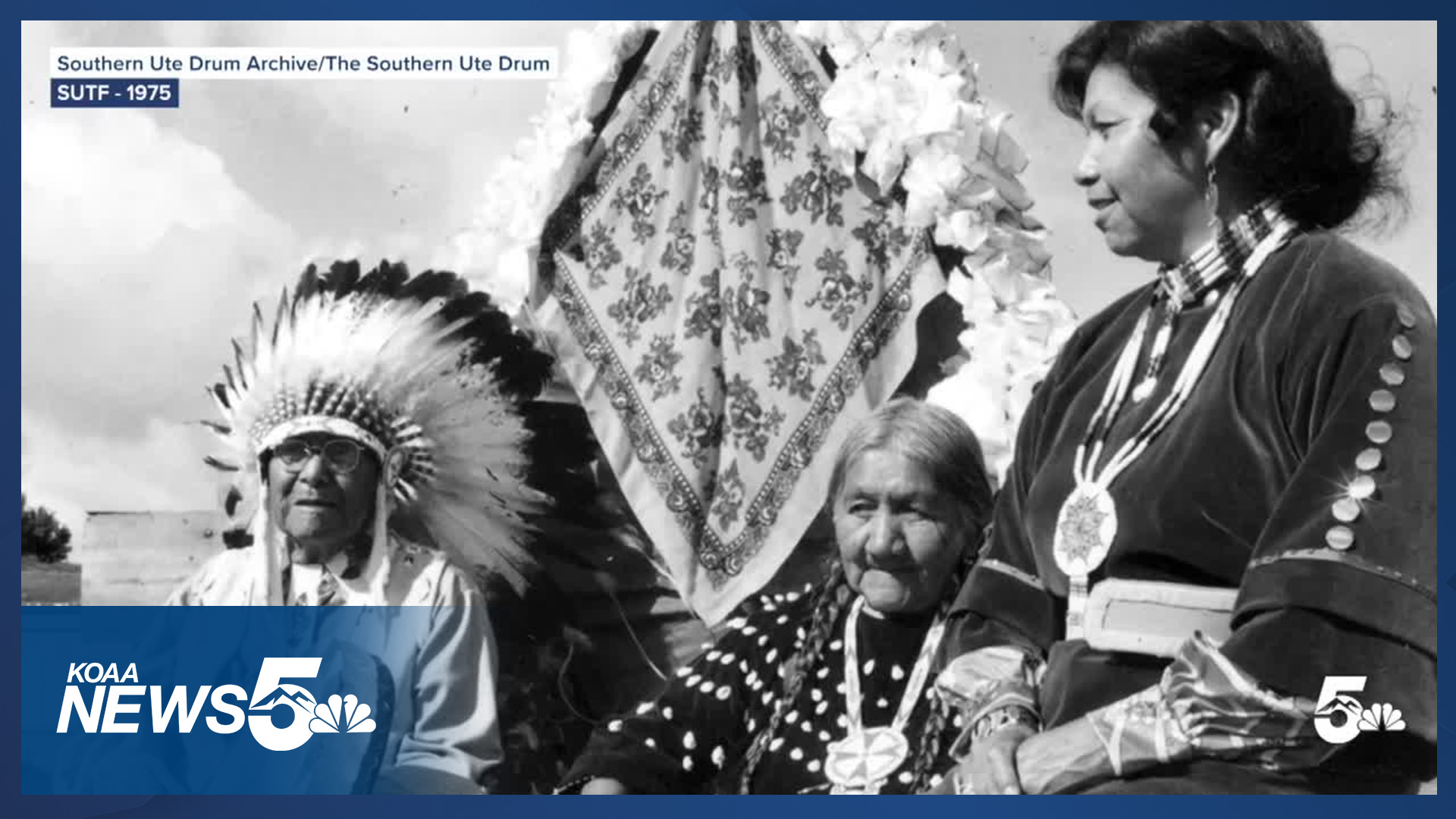
Photos for a piece that is airing during a KOAA special this Sunday were provided by The Southern Ute Drum. Click here for more on the Southern Ute Drum.
Click here for more on the Southern Ute Indian Tribe.
Tune in to see the full story on the Special Edition of News5 on Sunday, July 5.
___

Right to Hunt and Fish? Amendment 83
____
Watch KOAA News5 on your time, anytime with our free streaming app available for your Roku, FireTV, AppleTV and Android TV. Just search KOAA News5, download and start watching.
