



MESA COUNTY, Colo. — In a single-file line, a group of people walk up a forested hillside, pushing past branches and stepping over fallen trees to reach a spot in the woods devoid of wildlife but full of signs that they had traveled through it.
Like ghosts, those signs tell a story of the past for those willing to look closely enough.
Bark ripped from a small tree. A rodent skull. Dirt gently pushed into a small pile. A series of meandering coyote tracks. Bear scat near a grass bed.

The range riders quietly walk between each clue under the afternoon sun, crouching to examine each one closely. It's their job to make sense of the puzzle pieces, envision the full picture of what's happening on the landscape and apply it to range riding. If a threat to livestock is sticking around, they are tasked with reporting their findings back to the producers.
And while this day was just a test, the real thing was right around the corner.
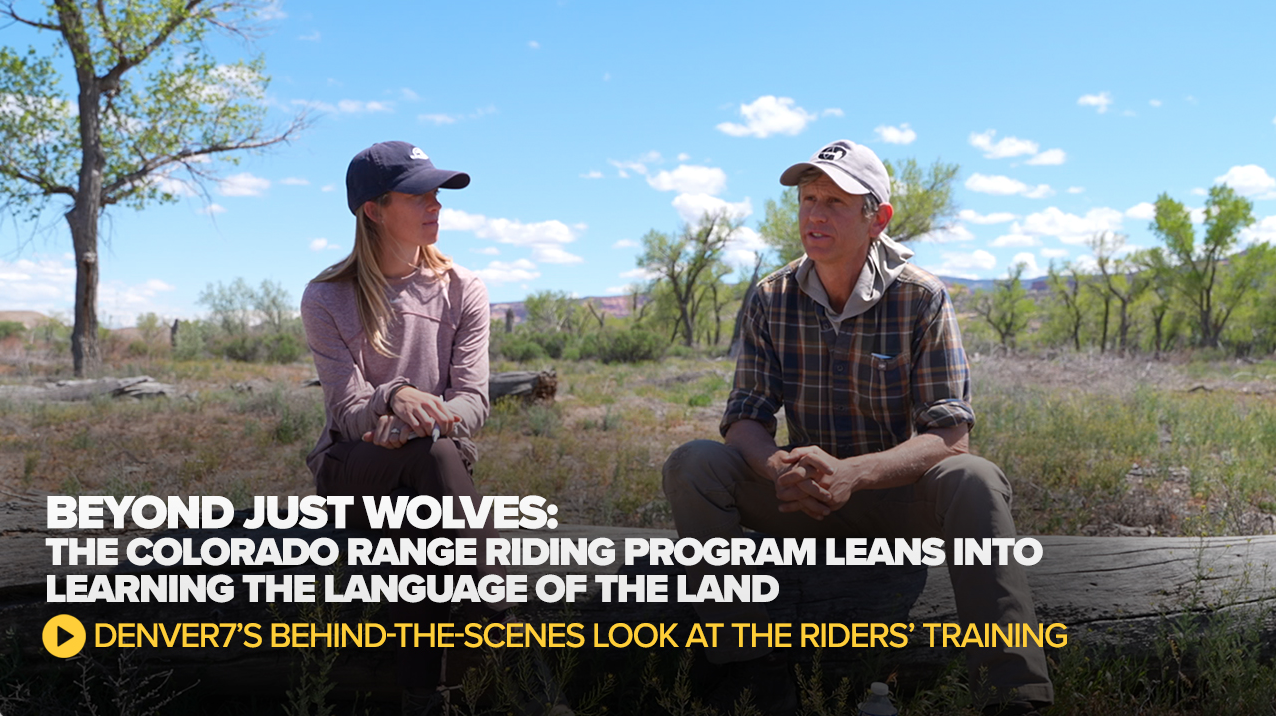
In late April, Denver7 was invited to experience the training for the Colorado Range Rider Program first-hand, and traveled to Mesa County to see how the state is training range riders to not only protect livestock from wolves, but to truly learn the language of the land.
WATCH: In the video below, watch our behind-the-scenes reporting on why this program came about and what kind of training the riders underwent.

Colorado Range Rider Program kickstarted by wolf reintroduction, but not specifically for it
The program may exist because of the wolves, but it’s not only for them.
Following two and a half years of preparations, gray wolves hit the ground in Colorado for the first round of reintroductions in December 2023 and a second in January 2025.

Despite some mitigation efforts, the spring and summer of 2024 saw a lengthy list of wolf depredations — sometimes with multiples a week — in Grand, Jackson and Routt counties. Ranchers called for more and better resources.
Colorado Parks and Wildlife (CPW) says this program is proof they heard the feedback.
"One of the big things that they identified was the need for a range rider program, as well as just expanded capacity on CPW’s side to be able to respond to conflict, as well as proactively get out there to help producers," said Luke Perkins, CPW statewide public information officer. "So that came in the form of our wildlife damage specialists, as well as the range rider program — the Colorado Range Rider program — that was stood up last year."
While the program launched in the wake of the wolf reintroductions, range riding has many other facets, he explained.
"There's so much other wildlife out there that these range riders might encounter and need to be aware of so that they can assist the producers that they're working with," Perkins said.
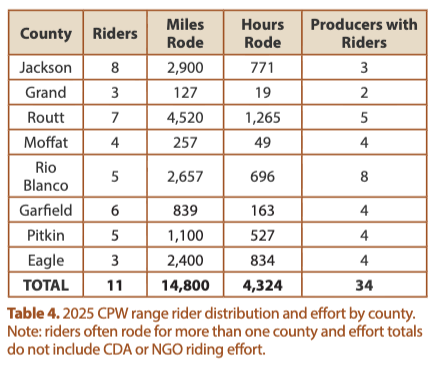
At the start of the inaugural year of the Colorado Range Rider Program in 2025, CPW brought on 11 riders. They ended the season with eight — in total, they rode almost 15,000 miles over 4,000 hours for 34 different livestock producers, the agency reported. The Colorado Department of Agriculture also has its own range riders and ranchers are welcome to hire their own.
"This year, we're going to have 15 riders, seven of which are returning from last season, which is a really great retention rate," Perkins said.
Training to be the “eyes, ears and presence on the landscape”
Through the final week of April, the range riders met in Grand Junction for formal training. It was broken up into three days in the classroom and two days out at The High Lonesome Ranch, off the Roan Plateau in Mesa County, for in-the-field practice. Denver7 joined for the latter.

Travis Brooks, general manager of the ranch, offered up the property as the training grounds in both 2025 and 2026.
"Programs like this, the solution-based type programs — we're happy to help foster and help build," he said. "So, I think that's our biggest role right now. Just providing the partnership that these guys need to hold this kind of workshop here."

Staff at the 300-square-mile ranch are already working toward a better future with regenerative ranching practices to prioritize environmental health. Supporting range riders during their training is another way they hope to be part of the solution.
"(The riders) are going to have the opportunity to see range conditions, body conditions on cows, wildlife movements. They're going to be the eyes, ears and presence on the landscape," Brooks said. "And I think producers will reap benefits from that presence."
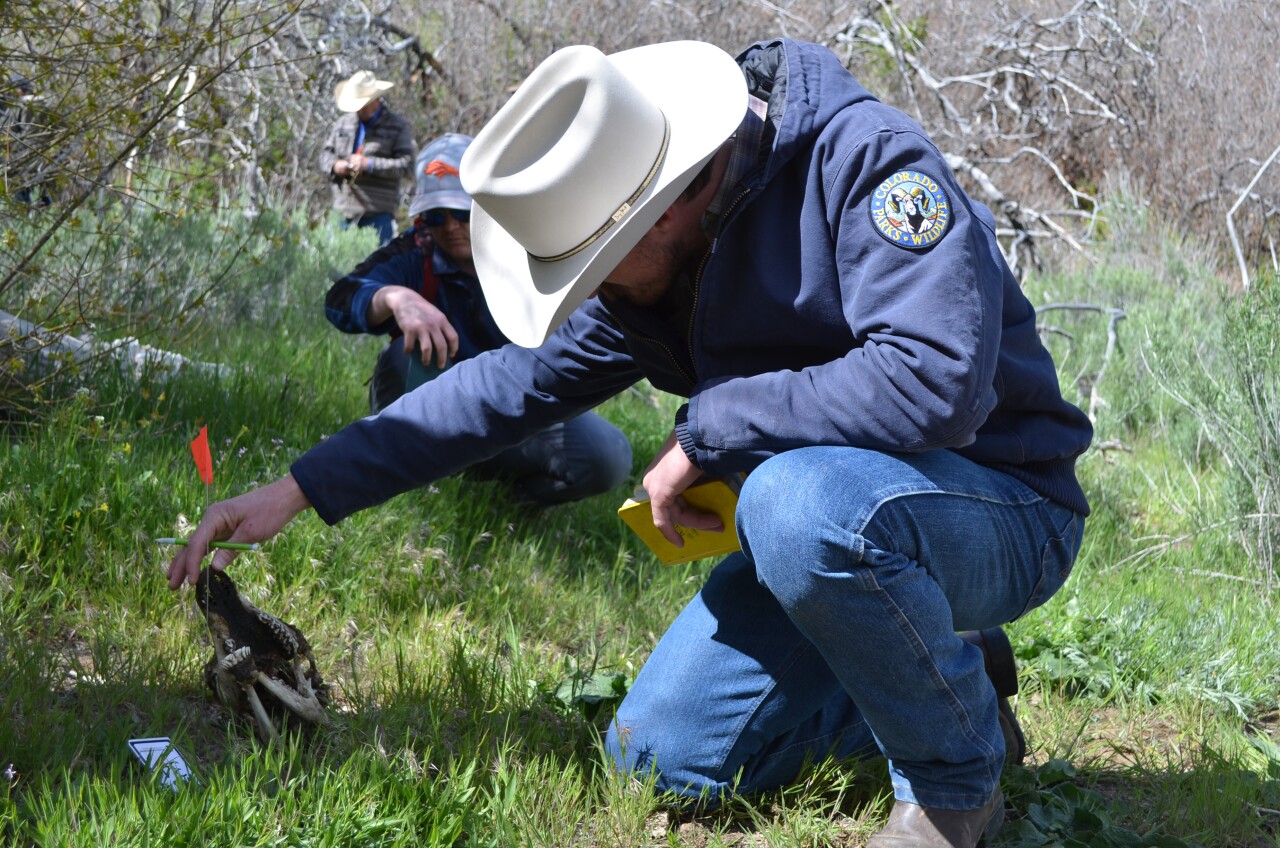
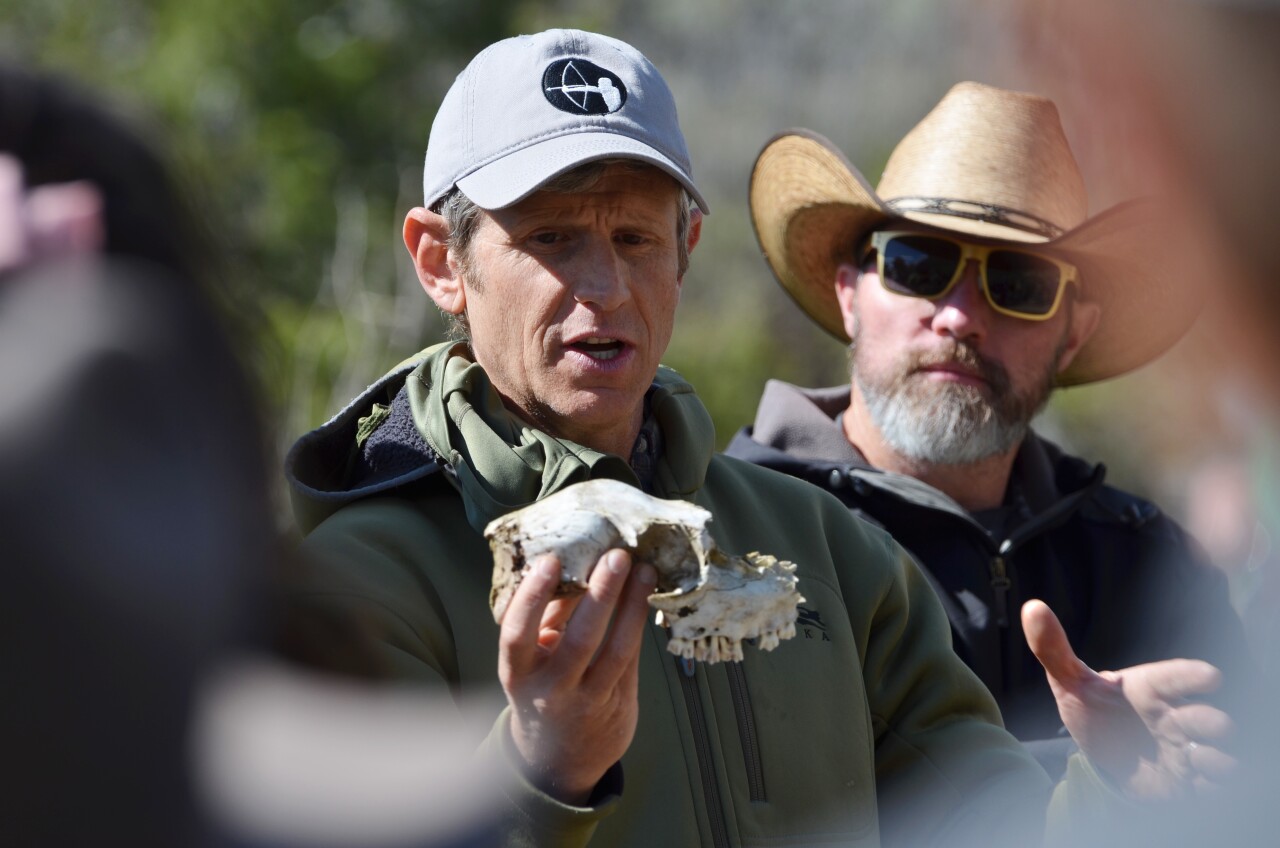
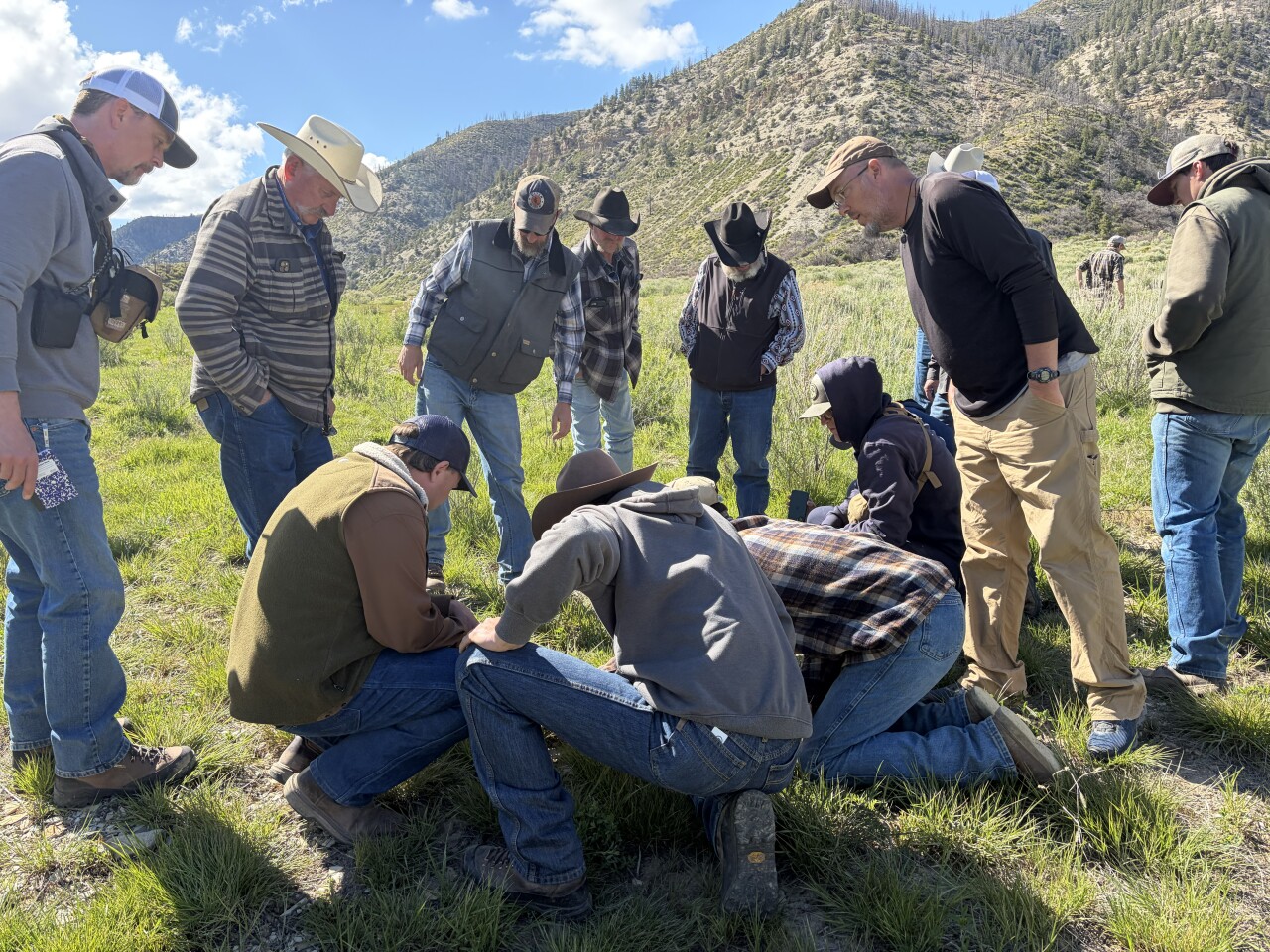
The training itself was simple. Its leaders, including senior tracker Casey McFarland with the South African nonprofit Cyber Tracker Conservation, scoured an area for signs an animal had been there, stuck a small flag in the ground with a number and then the riders were invited to piece clues together.
To squeeze out every ounce of the exercise though, their detective work had to be solo. And so the men and women quietly stepped up to each of the signs and wrote down their answers. Was the print canine or feline? Dog or coyote? Were those tracks from a deer or young elk? Once all answers were recorded, McFarland gathered the group together and they walked through the answers.
The riders' accuracy would determine a final score, and therefore their “level” of range riding at the end of the day Friday.
“All these folks have been tasked with a very challenging job, and that is to be out on the landscape and just trying to keep track of a lot of very complex scenarios,” McFarland told Denver7. “And one of the tools that they have at their disposal is to be able to just try to read sign of all different kinds of animals across the landscape.”
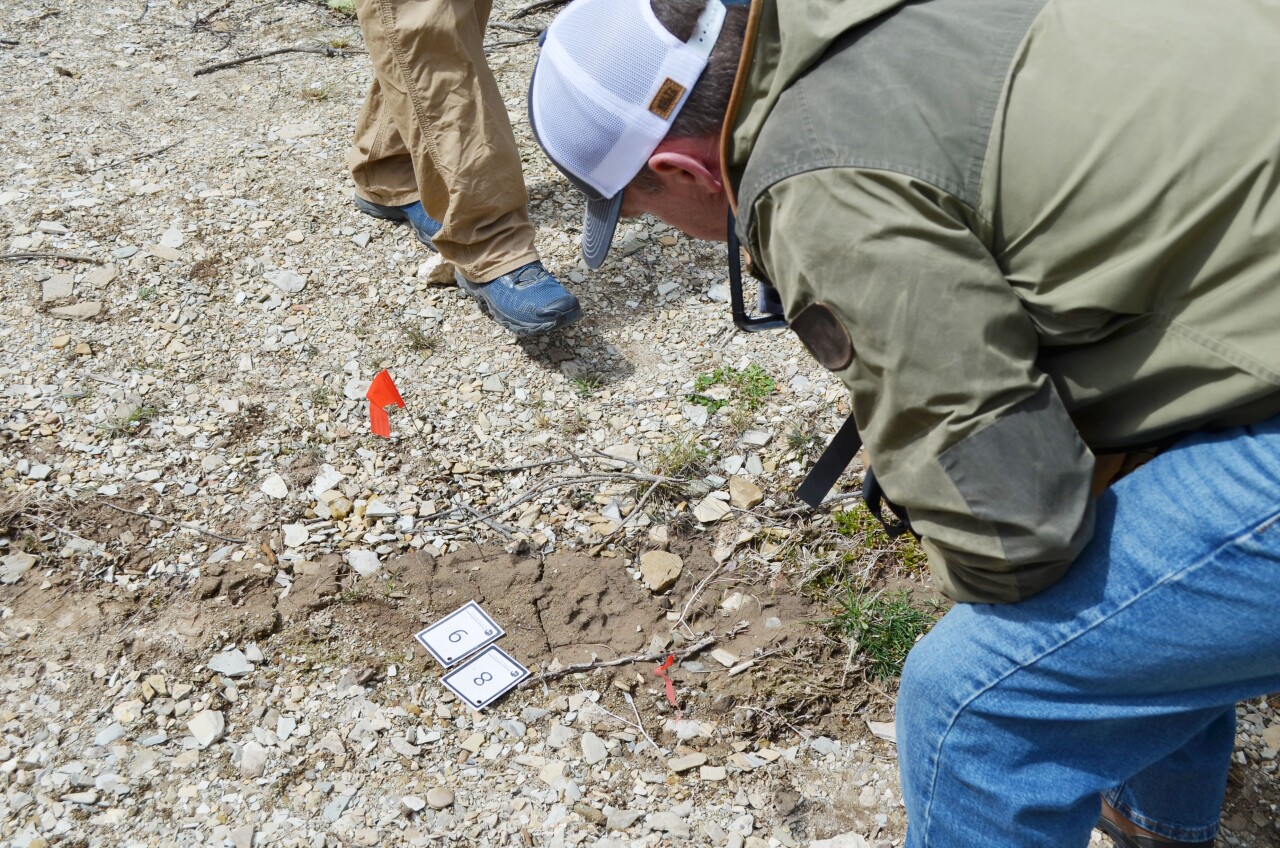
That includes not only which animal made which print or left which scat, but how many animals were there, if they were a juvenile or adult, if prints belonged to a front foot or hind foot, and if they were walking, trotting or running and why, among many other factors.
There is plenty of evidence around a landscape of wildlife, but without proper training, humans almost always miss it, McFarland explained. It’s more than just tracking wolf or mountain lion prints, he said. It’s learning how to track, well, anything.
“That's what it boils down to,” McFarland said.
Over nearly 20 years, he has led these trainings around the world.
“There's something to it — having people see a story come to life for the first time in front of them, and it is so human,” he said. “And just makes me happy, because it's making other people happy. People just get jazzed about this stuff. It definitely keeps the fire going.”
“People think it's just chasing wolves all the time”
Among the eight range riders returning to the program from 2025 is Emma Baker out of Eagle County. She is one of three women riding this year for CPW’s program.
A childhood of playing outside and learning the roles on a farm set her up for a degree in conservation biology.
“I was kind of always interested in being able to make agriculture and conservation work in concert more,” she explained.
That led her to human-wildlife conflict studies and, eventually, Colorado’s range riding program.
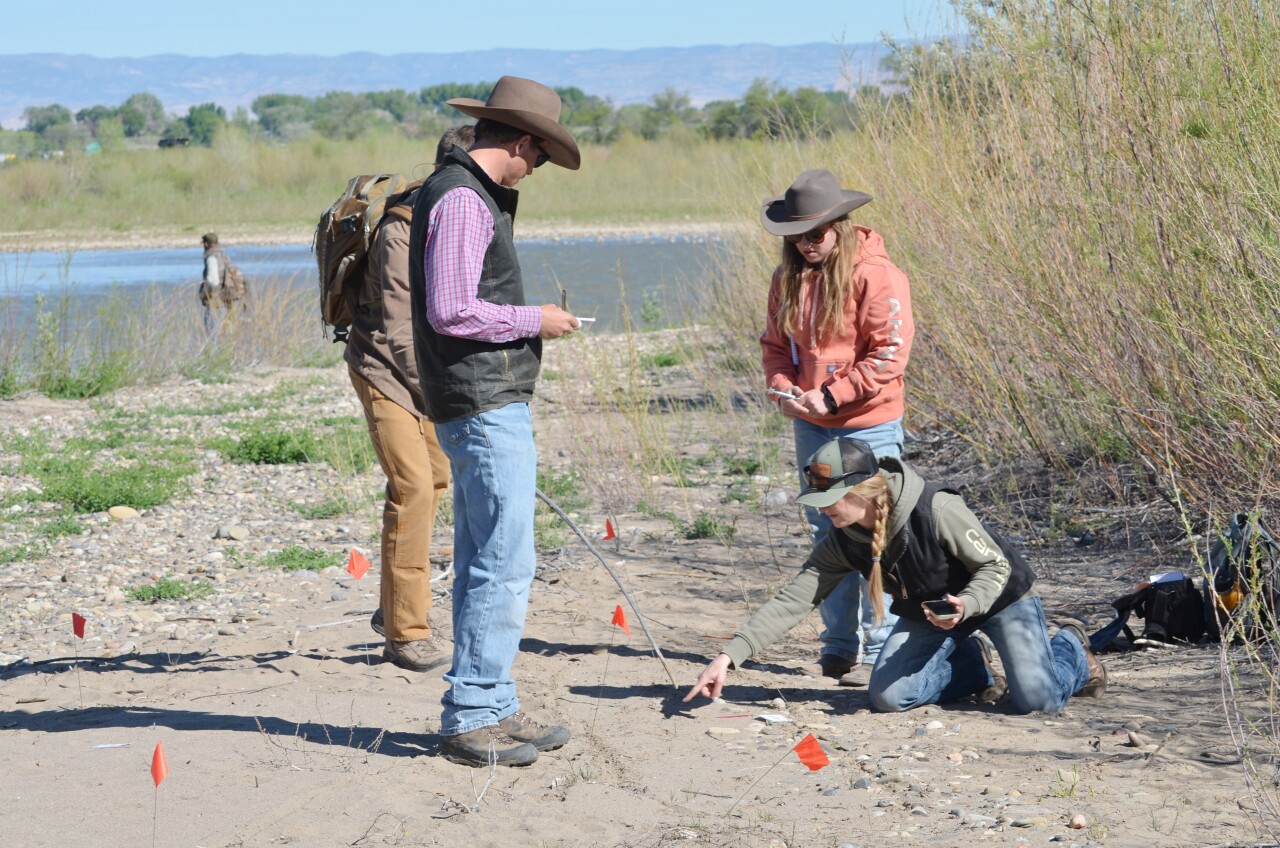
“A lot of people think it's just chasing wolves all the time, which in reality, it's not,” Baker told Denver7. “It's a lot more about the day to day of getting to know your producer's livestock, and their patterns… I want to keep the livestock safe, so I don't let these producers down — that's kind of my main thought.”
Despite rough terrain, dangerous weather and a controversial predator at the center of the program, she unquestionably loves the job. It’s one of the few places where she can clear her mind, she explained.

“All the challenges are so good and so rewarding to me to try to work through,” Baker said. “I enjoy pretty much every aspect of it. I think sometimes, the long days — the very long days — do get hard, and the working overnight for weeks at a time does get hard. But I, honestly, I really love it.”
Including through the heartache of finding a wolf’s kill on the ranch.
Even with all the training in the world and riders on the landscape, depredations will still happen, she explained. It’s not a perfect science and she knew that the producer’s livelihood was directly affected by the loss.
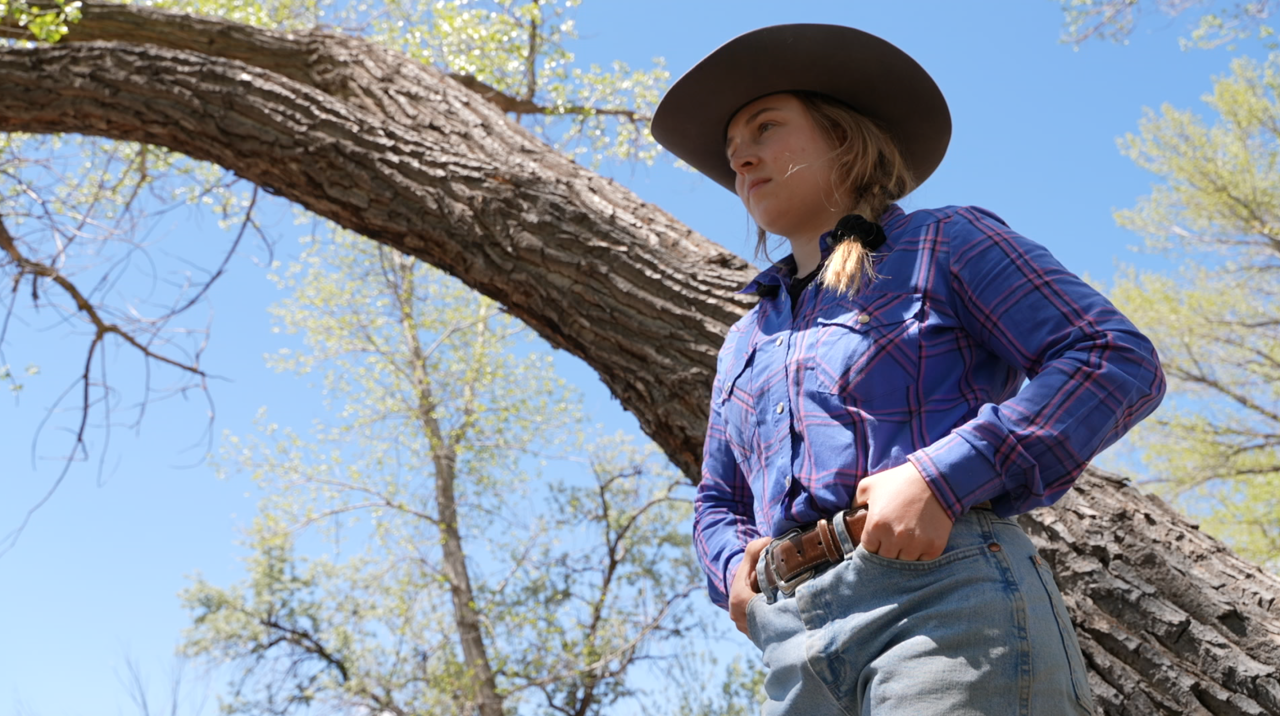
But Colorado's program is moving in the right direction and working to better itself. It's only in its second year and while it may “have a long way to go,” Baker said CPW took riders’ feedback from 2025 and applied it to this year’s training.
“I believe in it, and I think the more we work at it, and the more we learn just through doing, I think it'll continue to get better, and hopefully it'll continue to get better, and hopefully we continue to improve and reduce conflict as much as possible,” she said. “It's my favorite job I've ever had.”
What is next with range rider deployments and wolf news
The range riding season typically runs May through October in Colorado, meaning those 15 riders are ready for deployment or already deployed. Per CPW's Wolf-Livestock Conflict Minimization Program Guide, they will ride four to five days a week and up to 22 days per month during that season.
It all depends on wolf activity and producers' needs.

Leading up to last winter, producers in southwest Colorado were prepping to be the drop-off point for a third round of wolf reintroductions, but that never ended up happening. In October, the Trump administration told Colorado to stop reintroducing wolves from Canada and instead rely on northern Rocky Mountain states for the reintroduction effort. But while Canada was prepared to offer up 10-15 wolves, most of the Rocky Mountain states rejected the request, leaving Colorado without a source for the animals.
In the third week of January 2026, CPW announced this year's reintroduction wasn't in the cards.

Environment
Report on CO's wolf program shows latest status of packs and conflict mitigation
It was a pause that the Colorado Cattlemen's Association called "a constructive step," while the Rocky Mountain Wolf Project told Denver7 via email the decision meant the USFWS had "gone back on their commitment to Colorado and their legal obligation to the Endangered Species Act."
Colorado is still planning on releasing wolves during the winter of 2026-2027, but exact details have not yet been ironed out. Laura Clellan, CPW’s acting director, said in a statement that her agency will continue to meet with producers and other stakeholders, including the U.S. Fish and Wildlife Service, to “explore how to maximize the restoration effort” next winter while protecting both livestock and wolves.
For now, the riders are ready to go where the wolves take them.
It’s a position that McFarland admires.
“I'm very inspired by all these individuals, just for who they are, what they're bringing to the table, and their skillsets,” he said. “What's most important is that we just keep at it. They got a big job, and we're all rooting for them.”
The Scripps News Group has been following Colorado's wolf reintroduction program since the very beginning, and you can explore all of that reporting in the timeline below, which starts with our most recent story.
