

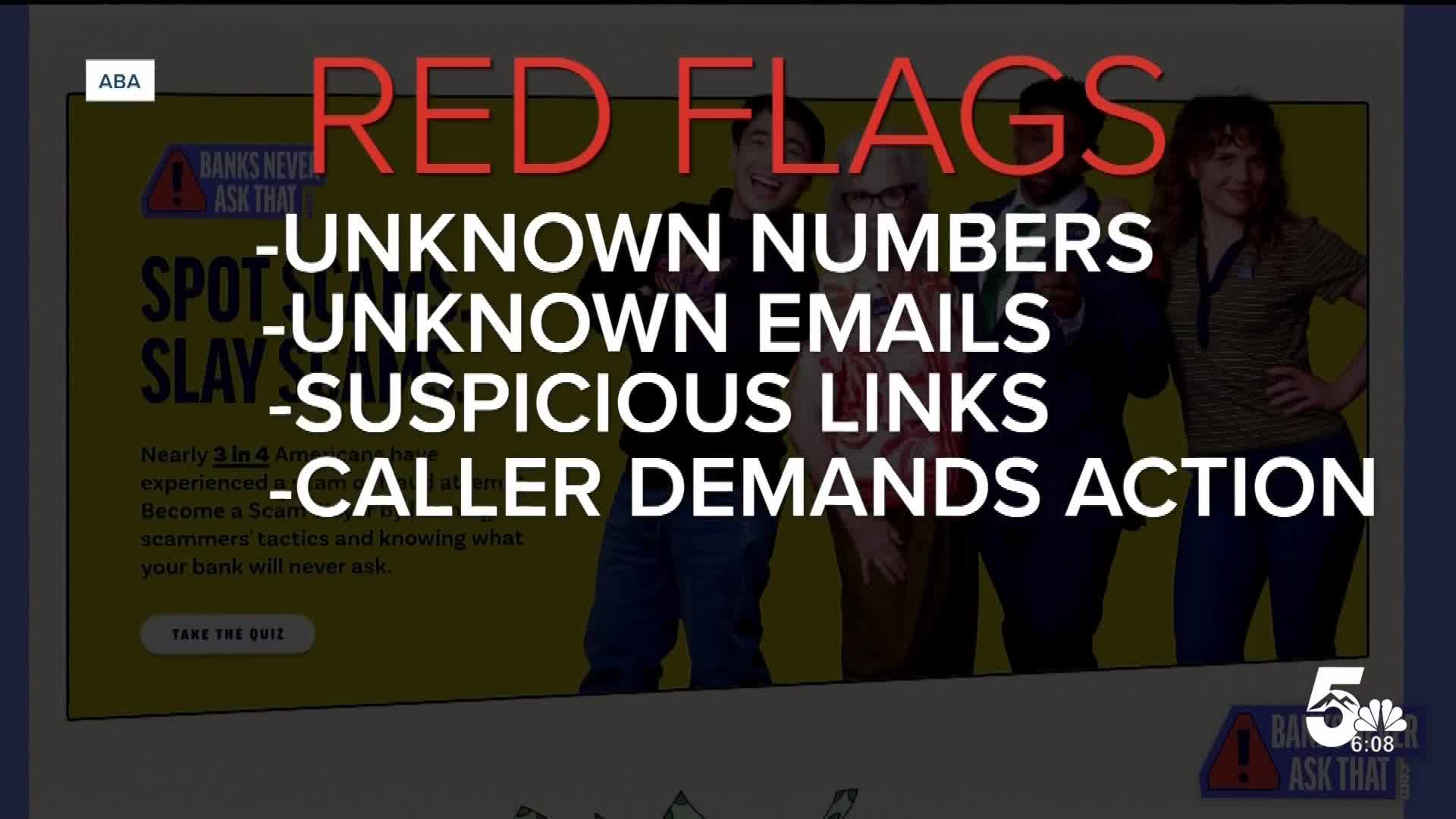



COLORADO SPRINGS, Colo. (KOAA) — Banking scams are becoming harder to spot as criminals use artificial intelligence to create convincing emails, fake bank websites and even voice recordings designed to impersonate loved ones, according to a banking industry cybersecurity expert.
Paul Benda, executive vice president for risk, fraud and cybersecurity at the American Bankers Association, said consumers need to recognize that some of the traditional warning signs of scams are no longer enough. The ABA is promoting its “#BanksNeverAskThat” campaign, which aims to educate consumers about common scams and the information banks will and will not request.
“Scams are really prevalent,” Benda explained. “We're seeing them leverage AI. They're writing emails much more clearly right now. They're setting up websites that look just like your bank. They're even deepfaking voices.”
Benda said criminals can take a short recording of someone's voice from social media and use it to impersonate that person.
“They can take a snippet off of social media of your child, mimic that voice, call you up and pretend to be that child in danger, and try and extort money out of you,” he added.
Benda said consumers should be particularly suspicious when someone contacts them unexpectedly and creates a sense of urgency or fear. One warning sign is a caller claiming to be from a bank and saying there are suspicious transactions that require the customer to immediately move money.
“Frankly, if they tell you to keep it a secret, it's a scam,” Benda said.
Consumers also should not automatically trust caller ID, he said. Criminals can spoof the name and phone number displayed on a phone, making a call appear to come from a legitimate bank. Benda said the FBI estimates losses from scams are increasing about 25% each year. Gallup estimates Americans lost $68 billion to scams, according to Benda.
Check fraud remains a concern
Despite the growth of digital banking, Benda said check fraud remains a significant problem. Checks contain valuable information, including a person's name, address, bank routing number and account number. Criminals have increasingly targeted checks sent through the mail, he said.
Benda said criminals are not necessarily limited to altering stolen checks. Once they obtain banking information, they can use it to print fraudulent checks and attempt to drain accounts.
“We're recommending people really move to electronic transactions, use that banking app or use that website to keep their account safe,” Benda stated.
What to do if you fall for a scam
Benda said consumers who click on a suspicious link, share banking information or make a fraudulent transaction should contact their bank immediately.
“Act quickly and call your bank right away,” he said. “Minutes, seconds, hours matter.”
Contacting the bank quickly can give it an opportunity to secure the account and potentially recover stolen money, he said.
People who lose significant amounts of money also should report the incident to the FBI's Internet Crime Complaint Center at IC3.gov.
The ABA's “Banks Never Ask That” campaign includes information about common scam tactics, red flags, videos and a quiz designed to test consumers' knowledge. Benda also recommended families establish a secret password that can be used to verify a loved one's identity during an unexpected call. The campaign website encourages consumers to learn what banks will and will not ask for before they encounter a scam. Click here for more on #BanksNeverAskThat.

Right to Hunt and Fish? Amendment 83
____
Watch KOAA News5 on your time, anytime with our free streaming app available for your Roku, FireTV, AppleTV and Android TV. Just search KOAA News5, download and start watching.
