


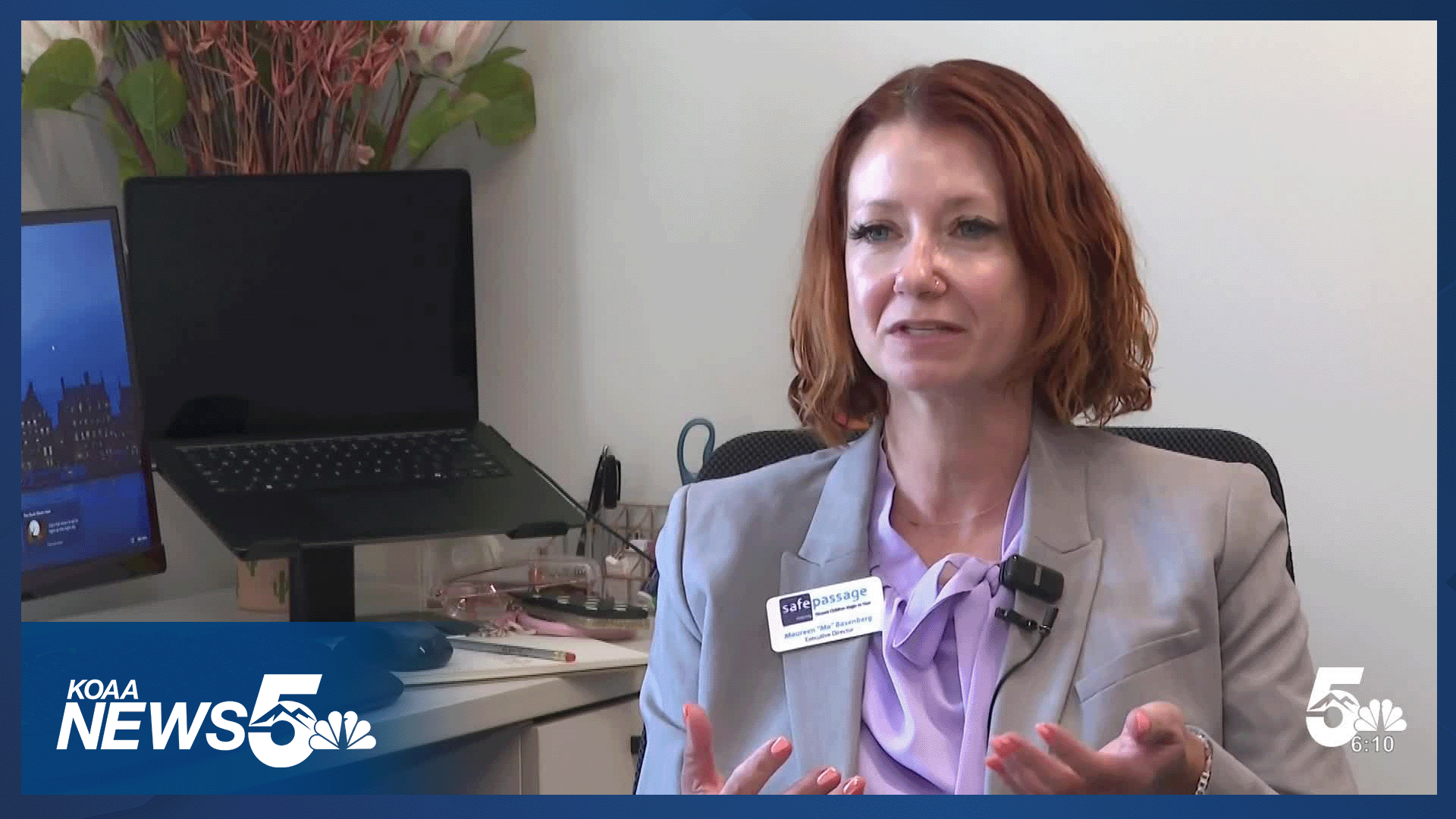


COLORADO SPRINGS, Colo. (KOAA) — If your kids go back to school next week, experts say now is the time to start getting them back into a routine. The executive director of Safe Passage, a children's advocacy center, says small changes now can help make the transition less stressful.
Those changes include the following:
- starting to shift bedtimes earlier
- adjusting meal times to match the school day
- cutting back on screen time
- making time to reconnect with friends
- talking with your kids about the changes ahead
"It begins with a discussion," said the Executive Director of Safe Passage, Mo Basenberg, when asked what's the one thing parents and caregivers should do a week ahead of school starting. "Don't surprise them."
She encouraged parents to gradually shift bedtimes while also resetting screen time and meal schedules.
"It's actually not just sleep," she added. "There's a number of things that happen through the summer that need some adjustment."
Basenberg said parents should also begin serving meals closer to school lunch times to help children adjust.
"Those little tummies... it really can help if we can start to mimic what they're going to experience," she said.
A protein-rich breakfast can also help students stay energized throughout the school day.
"Reduce the sugary cereals, reduce those opportunities for those sugary snacks, and bump up those proteins," explained Basenberg.
For children feeling anxious about returning to school, she recommends reconnecting with friends before classes begin.
"If there's friends that maybe they haven't connected with over the summer, try to make a play date and meet up at the school playground," she stated.
If students continue struggling after school begins, Basenberg encouraged parents to seek support from teachers or school counselors.
"You can go to your school," she said. "They're on your side and they're there to support your kiddo."
AS SCHOOL GETS BACK IN SESSION, KNOW THE SIGNS OF CHILD ABUSE AND NEGLECT:
Basenberg also urged adults to watch for significant behavioral changes, such as new fears, changes in sleep or eating habits, or unusual anxiety, and to report concerns if something doesn't seem right when it comes to potential child abuse.
"If you have any concerns, please go ahead and make that call," she said.
A break from school for the holidays is welcome by most students, but some may be returning home to a nightmare of abuse and neglect without the watchful eyes of their teachers.
The Colorado Abuse and Neglect Hotline sees a drop in call volume while kids are out of school, according to data from the state, as educators play a key role in mandatory reporting.
More than 70 percent of 2024 referrals came from mandatory reporters, and calls drop about 25 percent during holiday and summer breaks because teachers and counselors aren't seeing kids daily.
Basenberg says keeping kids safe in our community falls on the shoulders of every adult.
People can call the Colorado Child Abuse and Neglect Hotline 24/7 at 844-CO-4-Kids.
Symptoms of child abuse from Mayo Clinic can be read below:
A child who's being abused may feel guilty, ashamed or confused. The child may be afraid to tell anyone about the abuse, especially if the abuser is a parent, other relative or family friend. That's why it's vital to watch for red flags, including the following:
- withdrawal from friends or usual activities
- changes in behavior, such as aggression, anger, hostility or hyperactivity, or changes in school performance
- depression, anxiety or unusual fears, or a sudden loss of self-confidence
- sleep problems and nightmares
- an apparent lack of supervision
- frequent absences from school
- rebellious or defiant behavior
- self-harm or attempts at suicide
Specific signs and symptoms depend on the type of abuse and can vary. Keep in mind that warning signs are just that, warning signs. The presence of warning signs doesn't necessarily mean that a child is being abused.
Physical abuse signs and symptoms
- unexplained injuries, such as bruises, broken bones (fractures) or burns
- injuries that don't match the given explanation
- injuries that aren't compatible with the child's developmental ability
Sexual abuse signs and symptoms
- sexual behavior or knowledge that's inappropriate for the child's age
- pregnancy or a sexually transmitted infection
- genital or anal pain, bleeding, or injury
- statements by the child that he or she was sexually abused
- inappropriate sexual behavior with other children
Emotional abuse signs and symptoms
- delayed or inappropriate emotional development
- loss of self-confidence or self-esteem
- social withdrawal or a loss of interest or enthusiasm
- depression
- avoidance of certain situations, such as refusing to go to school or ride the bus
- appears to desperately seek affection
- a decrease in school performance or loss of interest in school
- loss of previously acquired developmental skills
Neglect signs and symptoms
- poor growth
- excessive weight with medical complications that are not being adequately addressed
- poor personal cleanliness
- lack of clothing or supplies to meet physical needs
- hoarding or stealing food
- poor record of school attendance
- lack of appropriate attention for medical, dental or psychological problems or lack of necessary follow-up care
Parental behavior
Sometimes a parent's demeanor or behavior sends red flags about child abuse. Warning signs include a parent who does the following:
- shows little concern for the child
- appears unable to recognize physical or emotional distress in the child
- blames the child for the problems
- consistently belittles or berates the child, and describes the child with negative terms, such as "worthless" or "evil"
- expects the child to provide attention and care to the parent and seems jealous of other family members getting attention from the child
- uses harsh physical discipline
- demands an inappropriate level of physical or academic performance
- severely limits the child's contact with others
- offers conflicting or unconvincing explanations for a child's injuries or no explanation at all
- repeatedly brings the child for medical evaluations or requests medical tests, such as X-rays and lab tests, for concerns not seen during the health care provider's examination
ABOUT SAFE PASSAGE:
Safe Passage is a Colorado Springs nonprofit and accredited Children's Advocacy Center that helps children who have experienced abuse or witnessed violent crimes.
It brings medical, investigative, legal, advocacy and mental health services together in one child-friendly location, reducing the need for children to repeatedly recount traumatic experiences.
Safe Passage serves children and their non-offending caregivers throughout the Pikes Peak region at no cost to families.
This story was reported on-air by a journalist and has been converted to this platform with the assistance of AI. Our editorial team verifies all reporting on all platforms for fairness and accuracy.
___

Right to Hunt and Fish? Amendment 83
____
Watch KOAA News5 on your time, anytime with our free streaming app available for your Roku, FireTV, AppleTV and Android TV. Just search KOAA News5, download and start watching.