

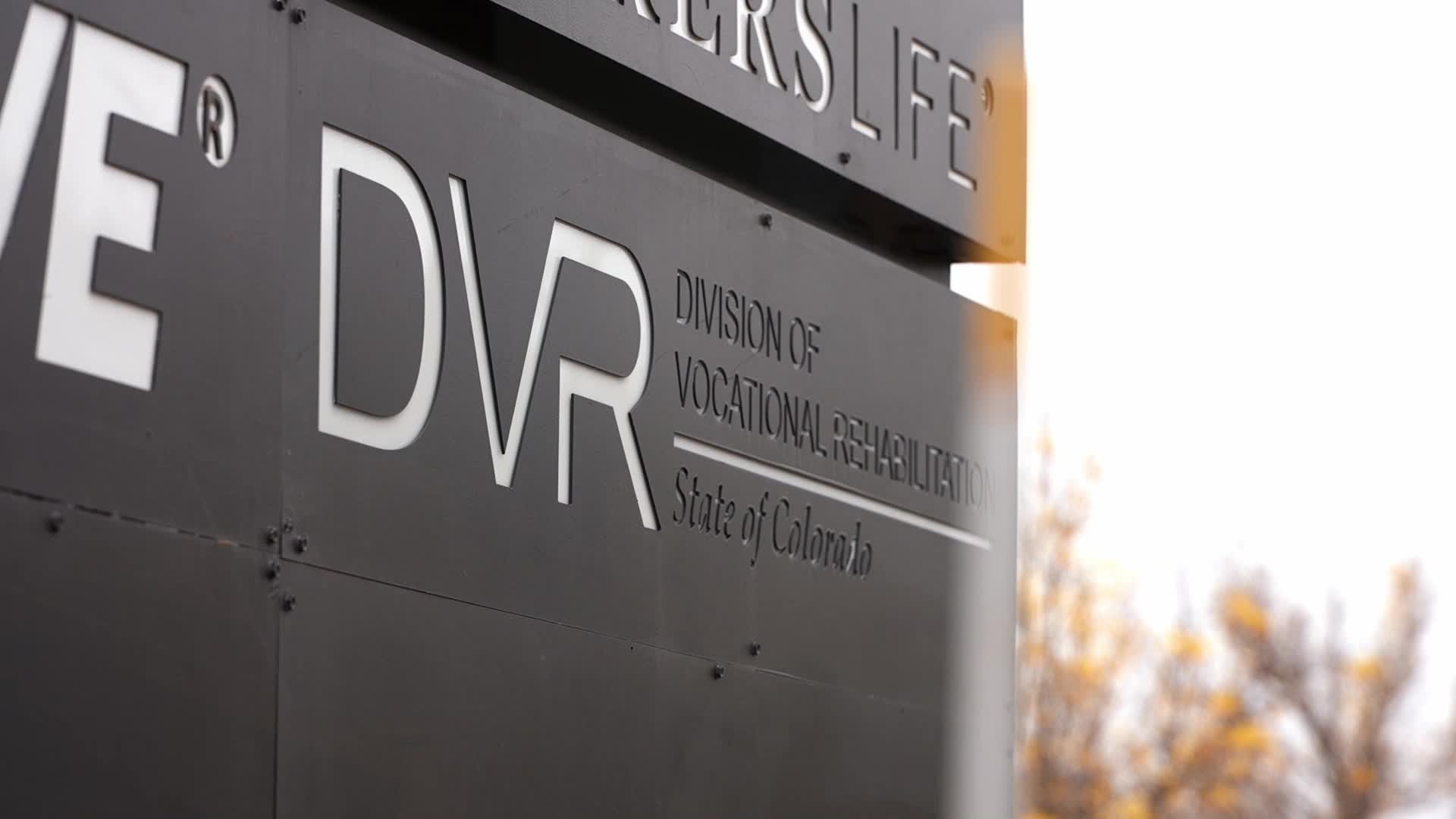


COLORADO SPRINGS, Colo. (KOAA) — A Colorado Springs employment provider that helped people with disabilities find and maintain jobs has gone out of business, months after its owner raised concerns about operations within the Colorado Division of Vocational Rehabilitation (DVR).
News5 first spoke with Inga Carland, owner and operator of Mountain Employment Training, in January. At the time, Carland said she saw a shift in client authorizations through DVR.
Months later, the improvement Carland had hoped for never materialized.
“Folks are still out there needing support," Carland said. "They’re just not making it to us."
Watch the video report below:
Carland said her problems with DVR began in 2025 and continued into 2026. She pointed to two events that had a significant impact on her business.
“First was back in October when there was a huge delay with being able to get authorizations, the approval to work with folks,” Carland said. “The second event was January 28th when the waitlist, or order of selection, was enacted and that put a giant bottleneck in being able to get clients through our doors.”
In December 2025, DVR addressed a $2.5 million funding deficit for 2026 and outlined several cost containment strategies, including adding additional levels of approval for case service authorization and services being provided directly by DVR staff whenever possible.
Carland said the authorization process eventually improved, but the number of clients coming through her doors did not.
Between the end of January and mid-June, Carland said Mountain Employment Training received just three new clients. In previous years, she said the business would typically receive two or three new clients each week.
Watch our January coverage below:
When News5 spoke with Carland in January, Mountain Employment Training had the capacity to serve 100 clients, but had only 13 authorized by DVR. Six months later, Carland said Mountain Employment Training was serving 29 people, still far below its capacity.
“We’ve had to let go of some employees. We’re having to let go of our office space,” Carland said at the time. “A lot of different overhead things that we’re trimming just to stay afloat.”
Since that interview, Mountain Employment Training has gone out of business. Carland said DVR policies and restrictions made it too difficult for the business to continue providing services.
Carland said some DVR staff members had advised her to diversify funding sources rather than depend entirely on DVR.
“I’ve had a couple staff members of DVR say that they would recommend business owners like mine not to put all our eggs in one basket, to diversify and try to find other funding streams, not to rely on DVR because it’s so unstable,” Carland said.
In a statement to News5, a DVR spokesperson addressed its cost containment measures:
“DVR cannot fulfill its mission without our provider community, and we are so grateful for our partnerships. We understand the additional cost containment efforts have been a change for some providers, and we’re hopeful our providers will remain collaborative as we work through the waitlist in order to support as many individuals as efficiently as possible.
When DVR cannot serve all eligible applicants immediately, federal law requires a waitlist, based on disability priority category. As the most effective method for managing costs, a waitlist will help DVR staff continue to provide critical, individualized services.
DVR entered a waitlist on January 28, 2026. People we serve with an established Individual Plan for Employment as of January 28, 2026, will continue to receive services regardless of their priority category. We continue our cost containment measures and continue to serve as many people as we can with our available resources. As of October 19, there were 5,710 individuals receiving services under an approved plan for employment. Additionally, students receiving Pre-Employment Transition Services (pre-ETS) continue to have access to pre-ETS. Lastly, all current and future applicants continue to be evaluated for eligibility determination and placement into a priority category.
DVR recognizes that waiting to receive services can be stressful. If individuals with disabilities need support right away, we’ve created this Support Finder (made possible by MINDSOURCE) to get them connected to readily available resources.”
For Carland, however, the concern extends beyond the effect the changes had on her business. She worries about people with disabilities who may spend months waiting to receive employment assistance.
“It’s very impactful for clients to be waitlisted for months and months on end," Carland said. "That is months and months of a gap on a resume."
She said the greatest consequences may be the ones that are more difficult to measure.
“I think the greatest impact is the one that we can’t immediately see,” Carland said. “It’s the folks that are sitting at home waiting for support.”
Email Senior Reporter Meghan Glova at meghan.glova@koaa.com.
Follow Meghan Glova KOAA on Facebook.

Right to Hunt and Fish? Amendment 83
____
Watch KOAA News5 on your time, anytime with our free streaming app available for your Roku, FireTV, AppleTV and Android TV. Just search KOAA News5, download and start watching.
