

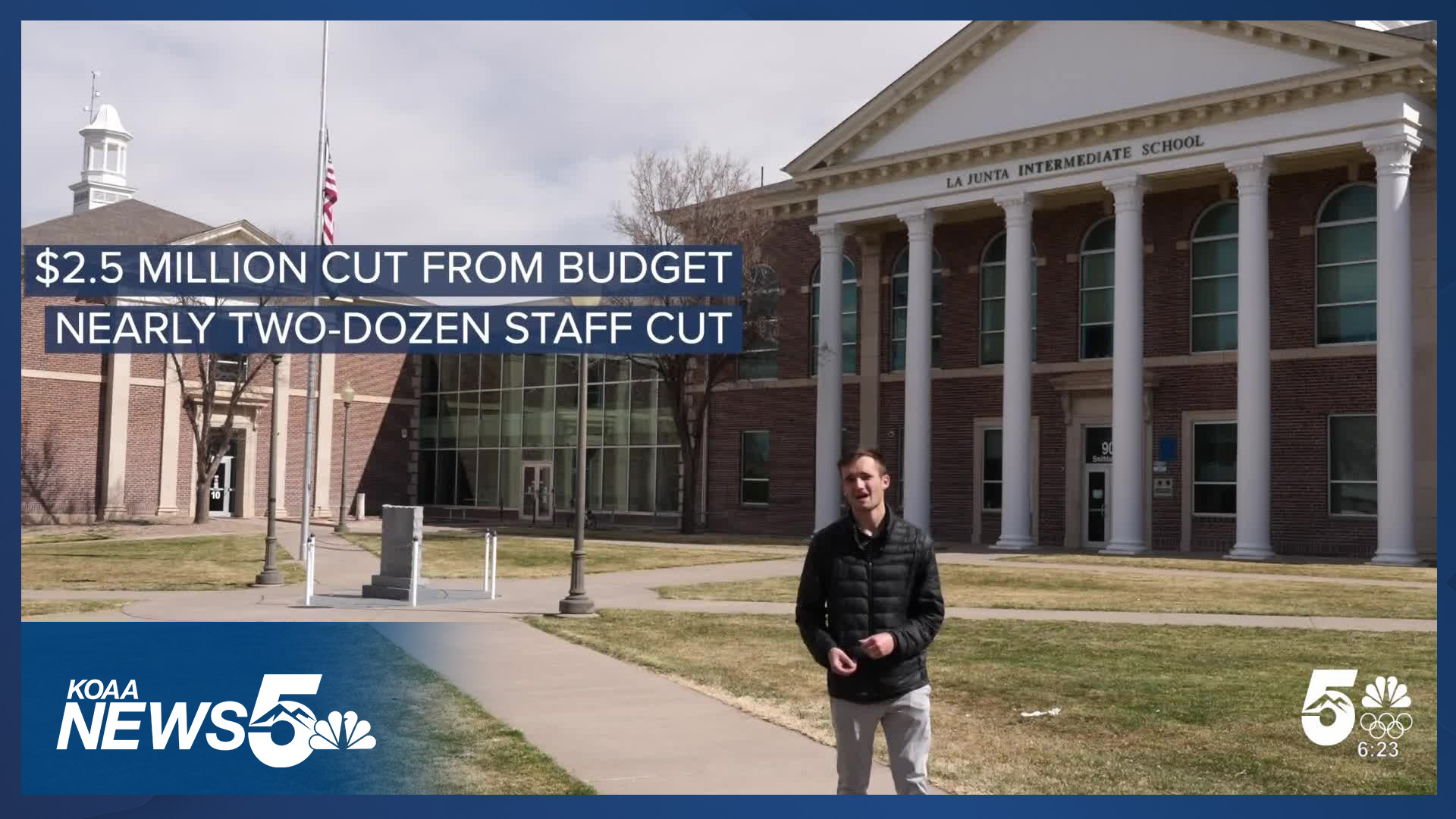


LA JUNTA, Colo. (KOAA) — The East Otero School District is more than $440,000 in debt, a financial crisis that has forced district leaders to cut $2.5 million from next year's budget and lay off nearly 2 dozen employees.
A $340,000 fine from the IRS makes up the largest portion of the debt.
The district failed to file 1094-C and 1095 tax forms during the 2023-24 school year.
The remaining debt is owed to the state Department of Education.
Between 2018 and 2022, the district overcounted students, overcollecting $97,000 in funding. Schools receive money based on total student enrollment.
The district is also facing transportation-related fines.
This, according to the public minutes from a recent school board meeting.
East Otero Superintendent Patrick Krumholz said the district is working to address the financial shortfall.
"First thing we have to do is right now we have to get our spending under control," Krumholz said.
The district is also working through audits. Until those audits are complete, East Otero cannot receive its full funding from the county and state.
"We're still working through our audits," Krumholz said.
Krumholz said the budget cuts are necessary to stabilize the district's finances.
"We are having to make cuts, to get to a situation to get to a place where it makes sense, and we're running a balanced budget," Krumholz said.
The current school board says the financial problems were inherited from a prior administration.
"I feel awful that the district is where it is and for the pieces that I could have done better and helped," says Rick Lovato, East Otero’s superintendent from 2014 to 2024.
Lovato told me he had “no idea” his staff failed to file important tax documents. He says he noticed his staff struggled to reconcile COVID grant money with the general fund.
This was after his longtime business manager and auditing firm retired. Lovato promoted these positions from within.
I spoke with the superintendent who led East Otero between Lovato and Krumholz. He did not want to be named, but told me he felt the business manager and auditor he had inherited were “not adequate” and “incapable of doing their jobs.”
Due to high turnover, misallocation of funds, and missing documents, over four years of audits were nerver complete. Without completed audits, the Colorado Department of Education withholds tax revenues that many districts rely on for funding.
“They don’t have those tax revenues. Between 2 and 4.5 million dollars. A district that size can’t handle their operating expenditures without that,” says Lovato.
The unnamed superintendent I spoke with says he was able to get three of the four audits completed with the help of an auditor he had hired in 2024.
The district says it has approved a contract with the consulting firm, The New Teacher Project, to help guide its way out of this financial turmoil. The cost of the contract is just under $80,000 and will come from state tax revenues.
Superintendent Krumholz says the district has until 2032 to pay its debt to the Department of Education. He is less confident in the board’s ability to negotiate with the IRS.
