



COLORADO SPRINGS, Colo. (KOAA) — Solar insolation is the weather term for how much of the sun's energy hits a patch of Earth in a given period of time. The balance between energy coming in and energy going out is what drives the seasonal temperature lag.
Earth has an energy budget, and like any budget you have deposits and withdrawals.
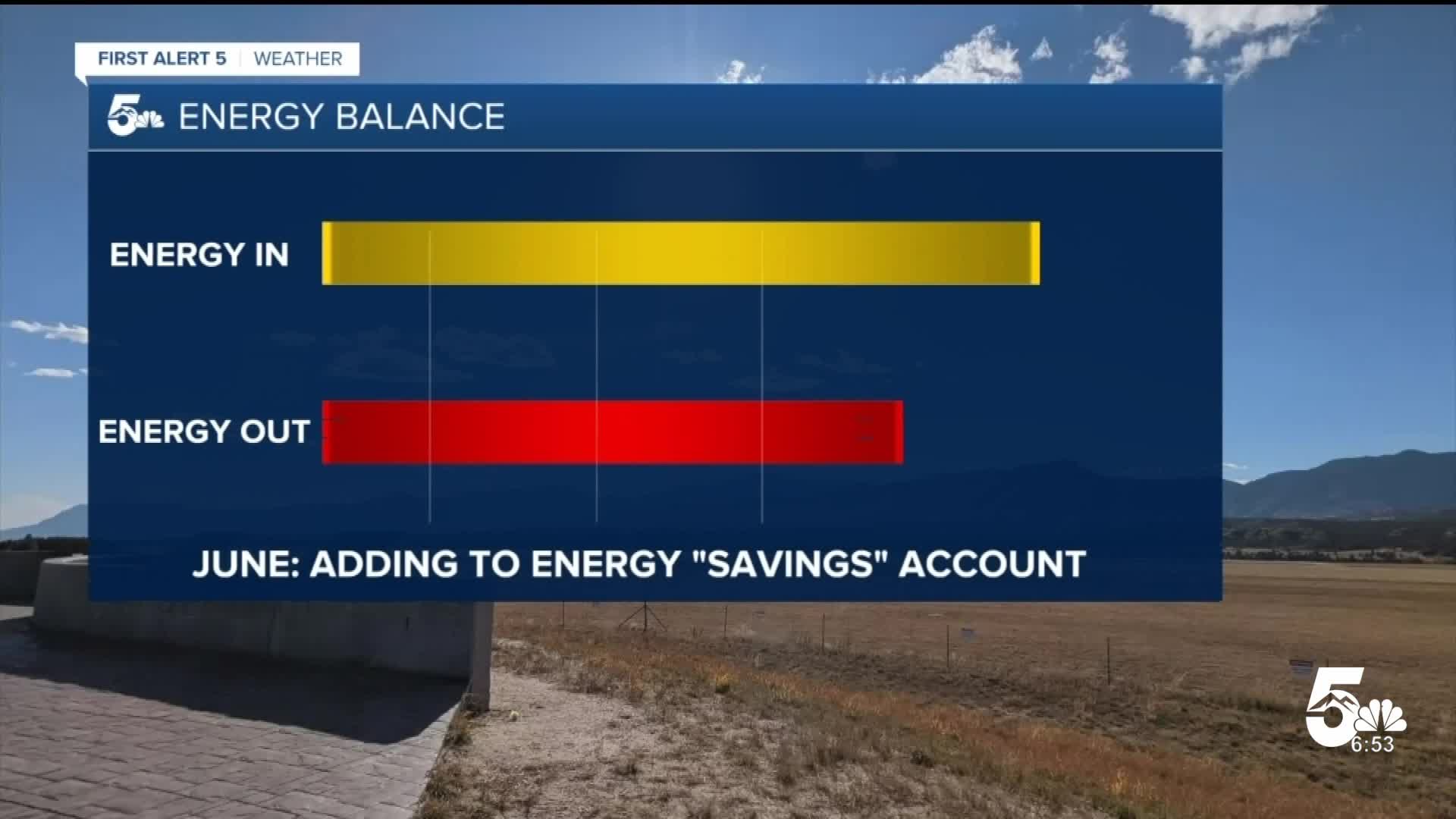
So, think of it like a savings account. In April, the region is building up its energy reserves, taking in far more solar energy than it loses. On average, Earth loses about 237.5 watts per square meter of energy out to space.
There are variations to this average for all kinds of reasons, and that number is for the top of the atmosphere. But that's the starting point.
As the days get longer — and the sun gets higher in the sky each day — the duration of solar heating, and the intensity of that heating increases. This ultimately exceeds the "energy out" budget in spring.
In May, that trend continues. By mid-June, the gap between energy in and energy out is narrowing, but the region is still accumulating heat. It is not until late July that energy in and energy out reach roughly equal levels. In essence, the land and oceans are still absorbing more heat than they are emitting, and temperatures keep warming...well past the summer solstice.
By August, more energy is leaving than arriving, and temperatures begin to fall.
The sun's angle also plays a role. On June 1, Colorado Springs' peak sun angle sits just above 73 degrees. At the summer solstice, it reaches about 74.5 degrees. By July 31, that angle has already dropped to 69 degrees — meaning the solstice quantifies the peak of solar insolation, not the peak of summer heat.
Average high temperatures in Colorado Springs reflect this lag clearly. The hottest month (July) trails the solstice by roughly a month. The same pattern plays out a bit less strongly in winter — the coldest temperatures arrive a couple of weeks after the winter solstice, as the climate system plays catch up.
____
Have a question or story idea you would like the First Alert 5 Weather team to consider? Email: weather@koaa.com
Watch KOAA News5 on your time, anytime with our free streaming app available for your Roku, FireTV, AppleTV and Android TV. Just search KOAA News5, download and start watching.
