



Meteorological winter officially started on December 1, marking the beginning of the three coldest months of the year that will extend through the end of February.
Meteorologists and climatologists use this definition to compare winters consistently from year to year, rather than relying on the variable calendar winter dates.
Earth's slightly oval-shaped orbit causes the length of calendar winter to vary annually. Calendar winter begins on the winter solstice, when the Northern Hemisphere tilts most away from the sun, and ends at the spring equinox, when both halves of Earth receive equal daylight.
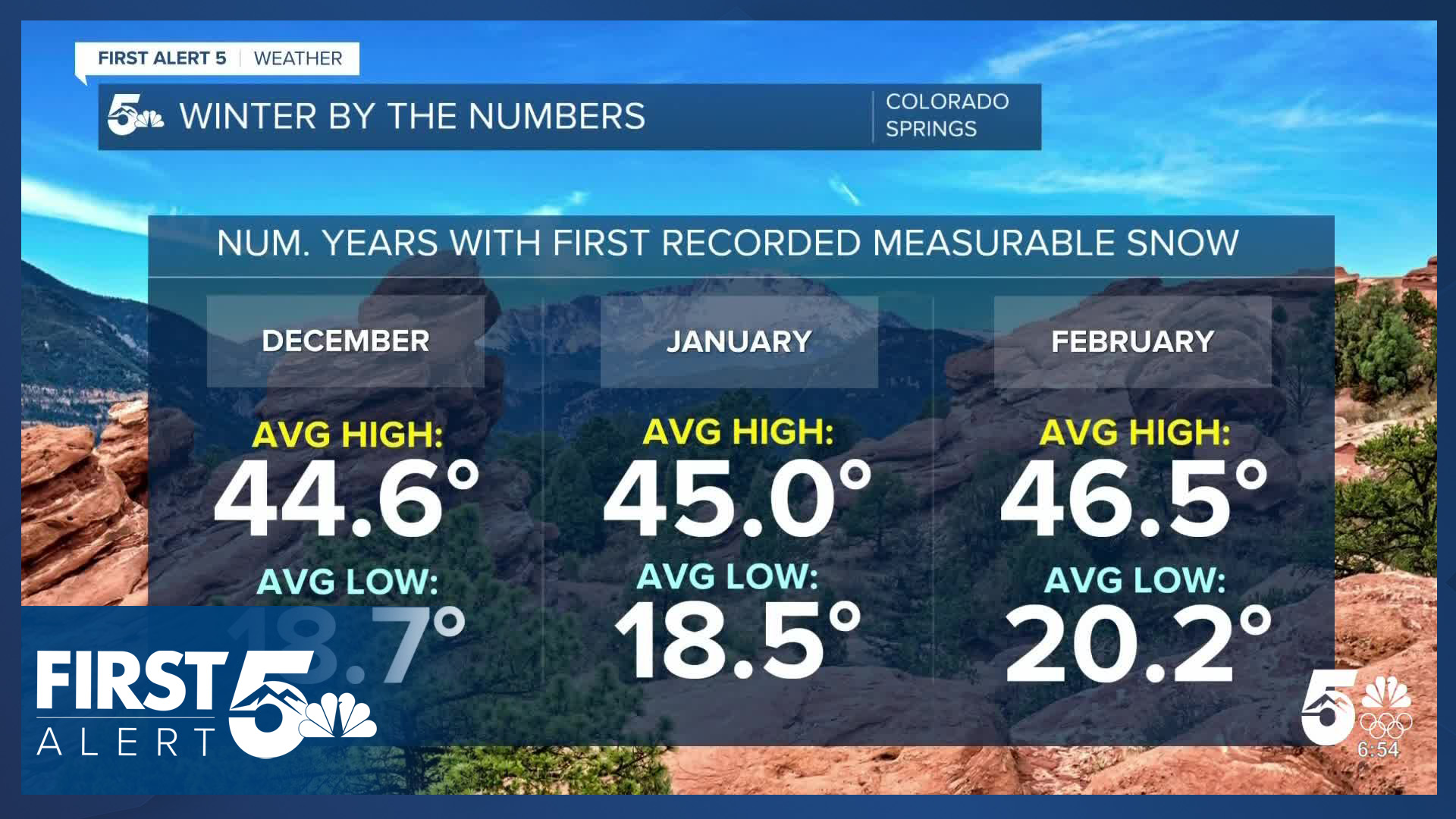
Between December and February, average high and low temperatures remain relatively stable. In Colorado Springs, highs typically range between 44 and 46 degrees, with lows hovering between 18 and 20 degrees. This consistency supports the meteorological winter definition.
La Nina conditions contributed to the unusually dry and warm fall weather. The Climate Prediction Center's 90-day outlook suggests weak La Nina conditions may persist into early next year.
Much of southwest Colorado is likely to experience above-average temperatures this winter. The southeastern plains are expected to see drier than average conditions through February, while the rest of the state should receive closer to normal moisture levels.
Although La Nina conditions may continue into early 2026, models show the pattern weakening over time, suggesting more typical snow events are likely in early 2026.
____
Have a question or story idea you would like the First Alert 5 Weather team to consider? Email: weather@koaa.com
Watch KOAA News5 on your time, anytime with our free streaming app available for your Roku, FireTV, AppleTV and Android TV. Just search KOAA News5, download and start watching.
