

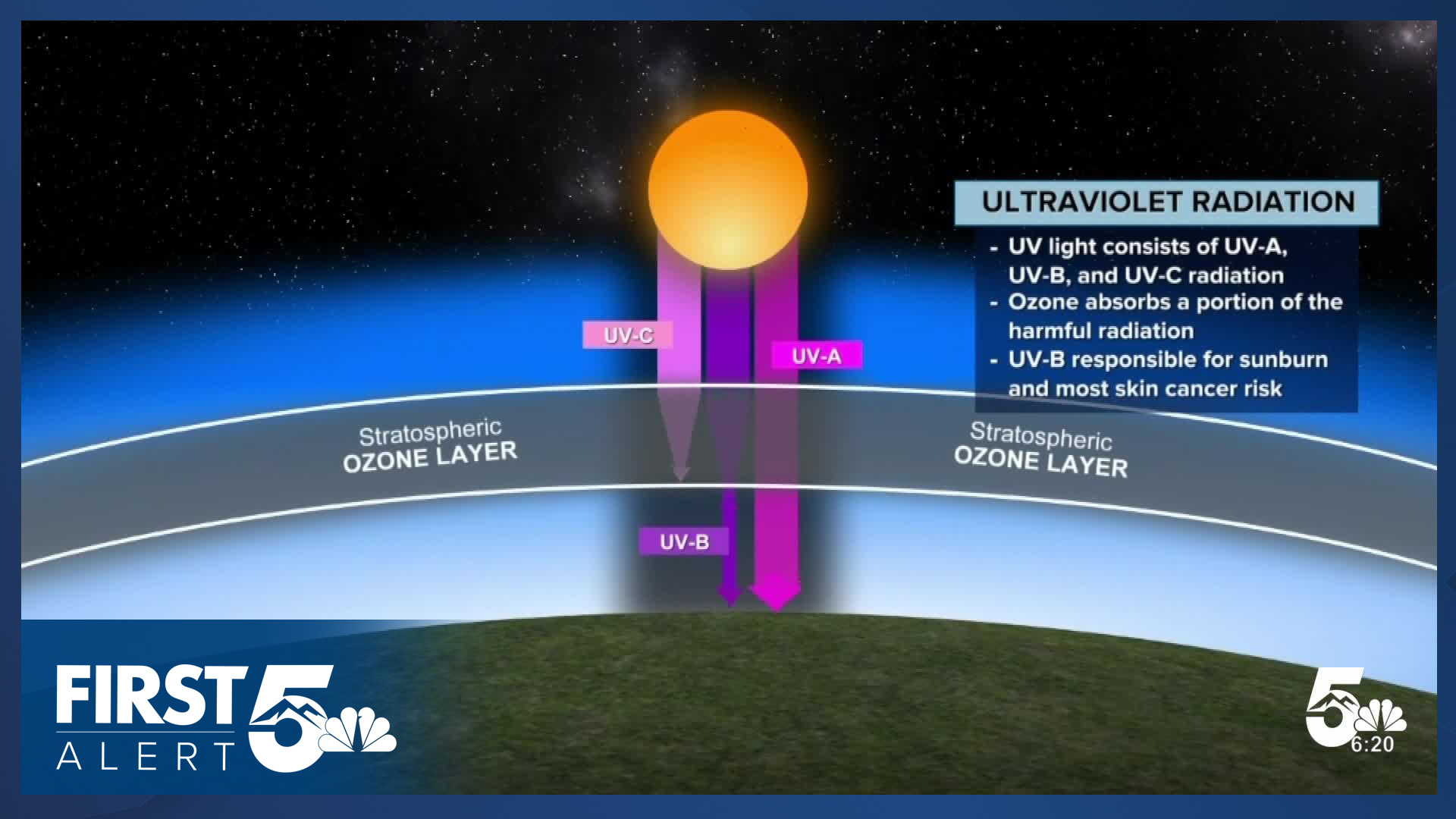

COLORADO SPRINGS, Colo. (KOAA) — Colorado's sunshine is already more potent than at lower elevations because the thinner atmosphere at higher altitudes provides less protection from ultraviolet radiation. Three weeks from the summer solstice, the sun's zenith angle is decreasing (the peak angle above the horizon is increasing) and approaching its highest point of the year, which increases its intensity even further.
On Thursday, community members at the dog park at Palmer Park in Colorado Springs shared how they protect themselves from the intense summer sun — and some recalled painful lessons learned the hard way.
Matthew Adams, a Colorado Springs resident, described his worst sunburn.
"It was probably at the Pueblo Reservoir tubing. Honestly, like we were out on the tube all day and it was so bad I got blisters."
Adams said he was about 12 years old at the time and had been outside most of the day.
What UV rays actually are — and why they matter
The sun produces ultraviolet radiation, commonly known as UV rays. These are divided into UV-A, UV-B, and UV-C based on their wavelength. UV-B rays are the primary concern for outdoor enthusiasts — they are responsible for sunburns and most skin cancer risk.
Understanding SPF
The SPF number on sunscreen stands for Sun Protection Factor. Broad spectrum sunscreen blocks both UV-A and UV-B rays.
Here's how the numbers break down:
- SPF 30 blocks about 97% of UV-B rays
- SPF 50 blocks about 98%
- SPF 100 blocks about 99%
The SPF number represents a ratio. With SPF 30 applied correctly, it should take skin 30 times as long to burn compared to wearing no sunscreen at all. With SPF 50, it should take 50 times as long. That protection only holds, however, if sunscreen is applied properly and no spots are missed.
Colorado Springs resident Amy Milling said she aims for at least SPF 30.
"See I...I tried to do at least a 30 and I think that for here in Colorado I think it's the minimum is like 30."
She was right. Dermatologists recommend a minimum of SPF 30 - everywhere.
Applying enough sunscreen, not missing spots, and reapplying regularly is more important than simply choosing a higher SPF number. That said, if you burn easily or plan to be at very high altitudes — such as on a 13er or 14er — those higher SPF levels still matter.
The summer solstice is the longest day of the year and offers plenty of time to enjoy the outdoors. Protecting yourself from the sun and staying hydrated will help make those extra hours enjoyable.
____
Have a question or story idea you would like the First Alert 5 Weather team to consider? Email: weather@koaa.com
Watch KOAA News5 on your time, anytime with our free streaming app available for your Roku, FireTV, AppleTV and Android TV. Just search KOAA News5, download and start watching.
