



Although we're still in the middle of winter, we've already made it through the darkest 12 weeks of the year.
Thursday marked the last day of the darkest quarter of the year — the three-month period where the sun's maximum angle in the sky — the zenith angle — is lowest and day lengths are shortest.
In February, the peak sun angle will climb from around 35 to 43 degrees. This means the days aren't just longer — the light we get is also more direct.

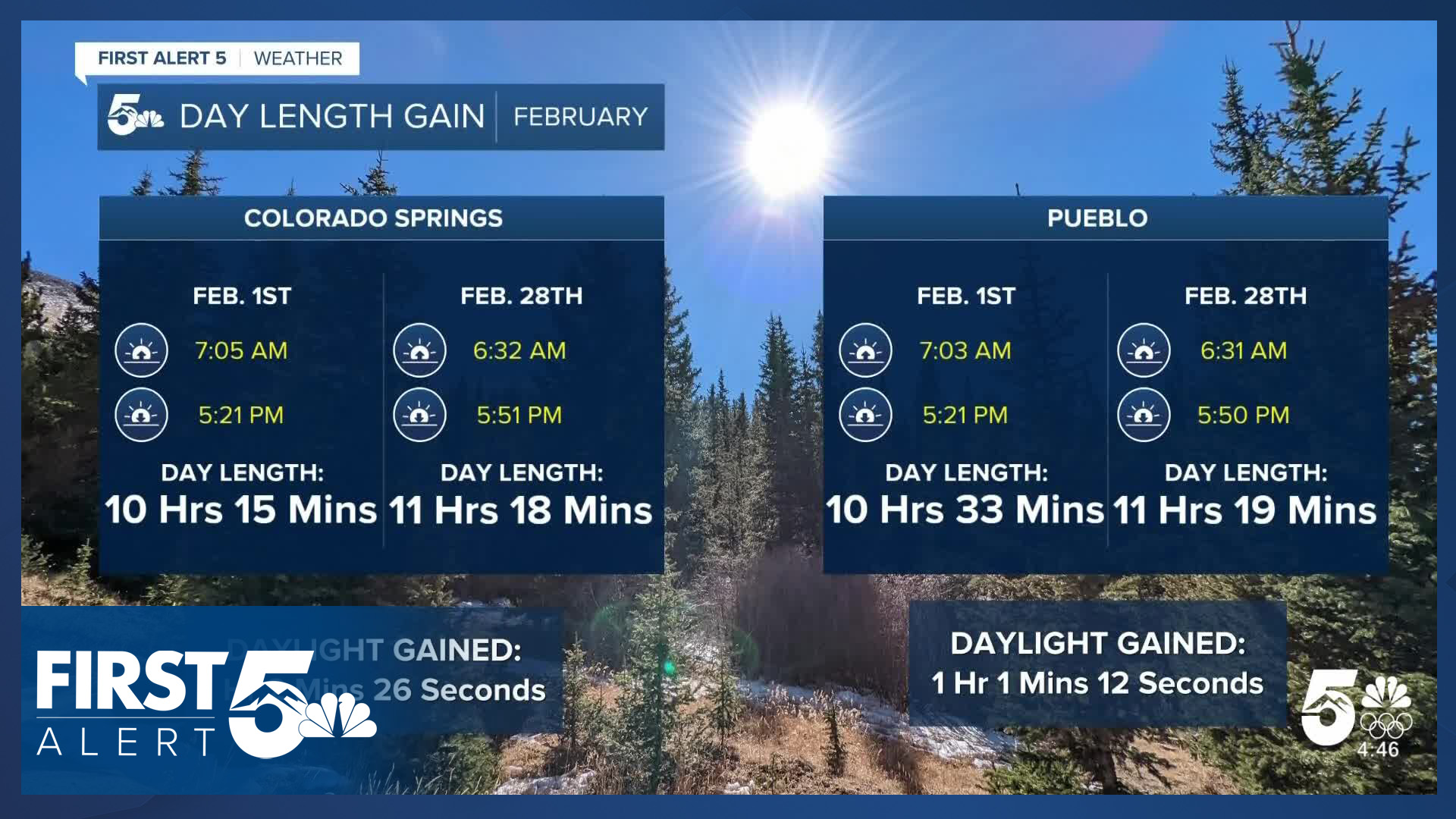
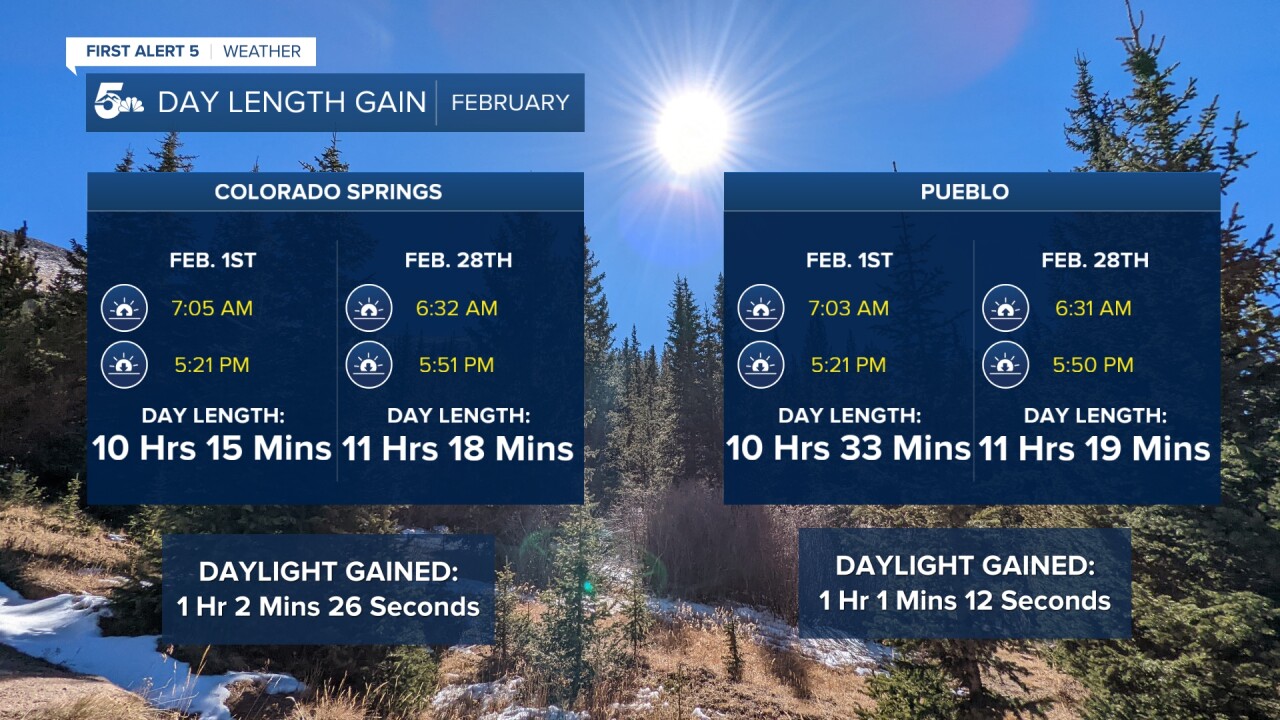
Colorado Springs will gain more than an hour of daylight in February. We're now gaining over two minutes of light every day.
In Pueblo, your sunset time advances from 5:21 p.m. to 5:50 p.m. through the month. One notable trend you can see is that the Springs gains a little bit more light than Pueblo does. That's because Colorado Springs is north of Pueblo.

Looking at this on a larger scale, the northernmost states in the U.S. gain the most light — about 80 minutes. The southern states gain about 40 minutes.
Think of Earth as a spinning top tilted to one side. As we orbit the sun, the tilt means the sun shines more directly and for longer on the part leaning toward it. This also means the poles see the biggest swing in day length and the equator sees minimal change.
Ultimately, these changes are why we have seasons and why our weather varies so dramatically. And it means spring is just around the corner.
This story was reported on-air by a journalist and has been converted to this platform with the assistance of AI. Our editorial team verifies all reporting on all platforms for fairness and accuracy.
____
Have a question or story idea you would like the First Alert 5 Weather team to consider? Email: weather@koaa.com
Watch KOAA News5 on your time, anytime with our free streaming app available for your Roku, FireTV, AppleTV and Android TV. Just search KOAA News5, download and start watching.
