

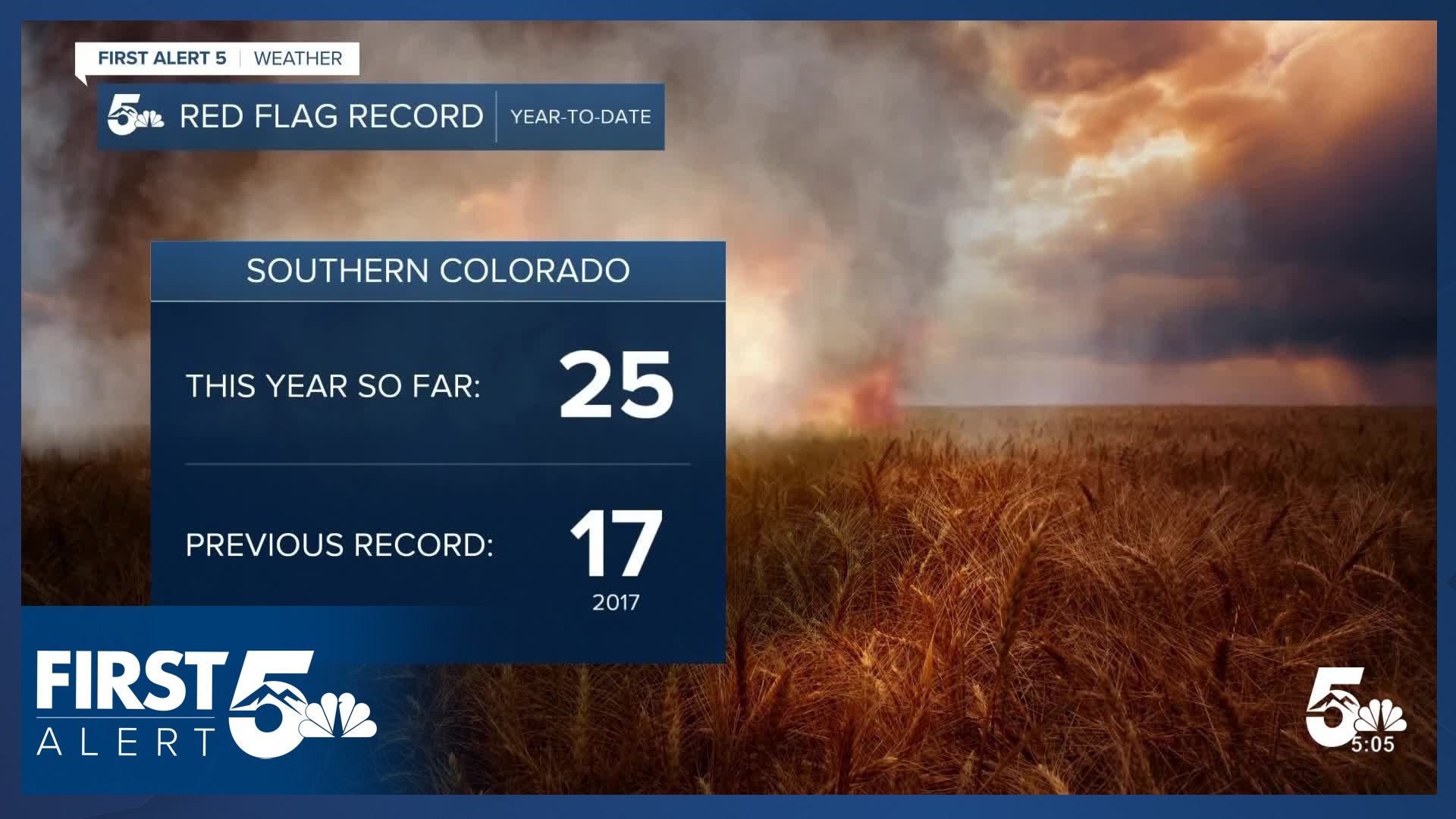


Southern Colorado has already recorded 25 red flag warning days in 2026, meaning roughly one in every three days so far this year has carried elevated fire danger, a pace that shatters anything seen in the past 20 years.
March is historically one of the busiest months for red flag warnings in the region, but this month alone, through Saturday, southern Colorado will have seen 10 red flag warning days. That is more than the average for the entire month of March.
On average, April is the busiest month for Red Flag Warnings, with March, May, and June varying each year for second through fourth place.
Colorado Springs Fire Chief Randy Royal has been with the Colorado Springs Fire Department for 30 years and has watched Red Flag Warnings increase dramatically over that time.
"If you go back in time...Red Flag Warnings...that you all are familiar with...two to three...to five a year was normal. And that was back in the 80s to about 2010," Royal said. But he went on to point out they've become much more common since, particularly within the last few years.
"In the last 12 years...we have seen in Colorado the 5 most destructive fires in our history," Royal added.
The relentless fire danger this year is being driven by the position of the jet stream. This winter, it has consistently steered storms north of Colorado, allowing warmth to build and quickly dry out grasses and other fuels. High pressure has also been dominating the western pattern, leading to mainly clear skies.
While the eastern plains are not technically in a drought, that does not reduce the risk. Grasses are considered one-hour fuels, meaning they can dry out and become explosive fuel in a matter of hours. We don't see that risk drop until the spring green-up.
What you can do now to prepare:
- Clear leaves and pine needles from your roof and gutters.
- Move woodpiles away from your house and trim low-hanging tree branches.
- Create a family evacuation plan and prepare a go bag.
- Sign up for emergency alerts in your county.
There is no sign of this dangerous pattern easing up anytime soon. The best step you can take right now is to make sure you are prepared.
This story was reported on-air by a journalist and has been converted to this platform with the assistance of AI. Our editorial team verifies all reporting on all platforms for fairness and accuracy.
____
Have a question or story idea you would like the First Alert 5 Weather team to consider? Email: weather@koaa.com
Watch KOAA News5 on your time, anytime with our free streaming app available for your Roku, FireTV, AppleTV and Android TV. Just search KOAA News5, download and start watching.
