

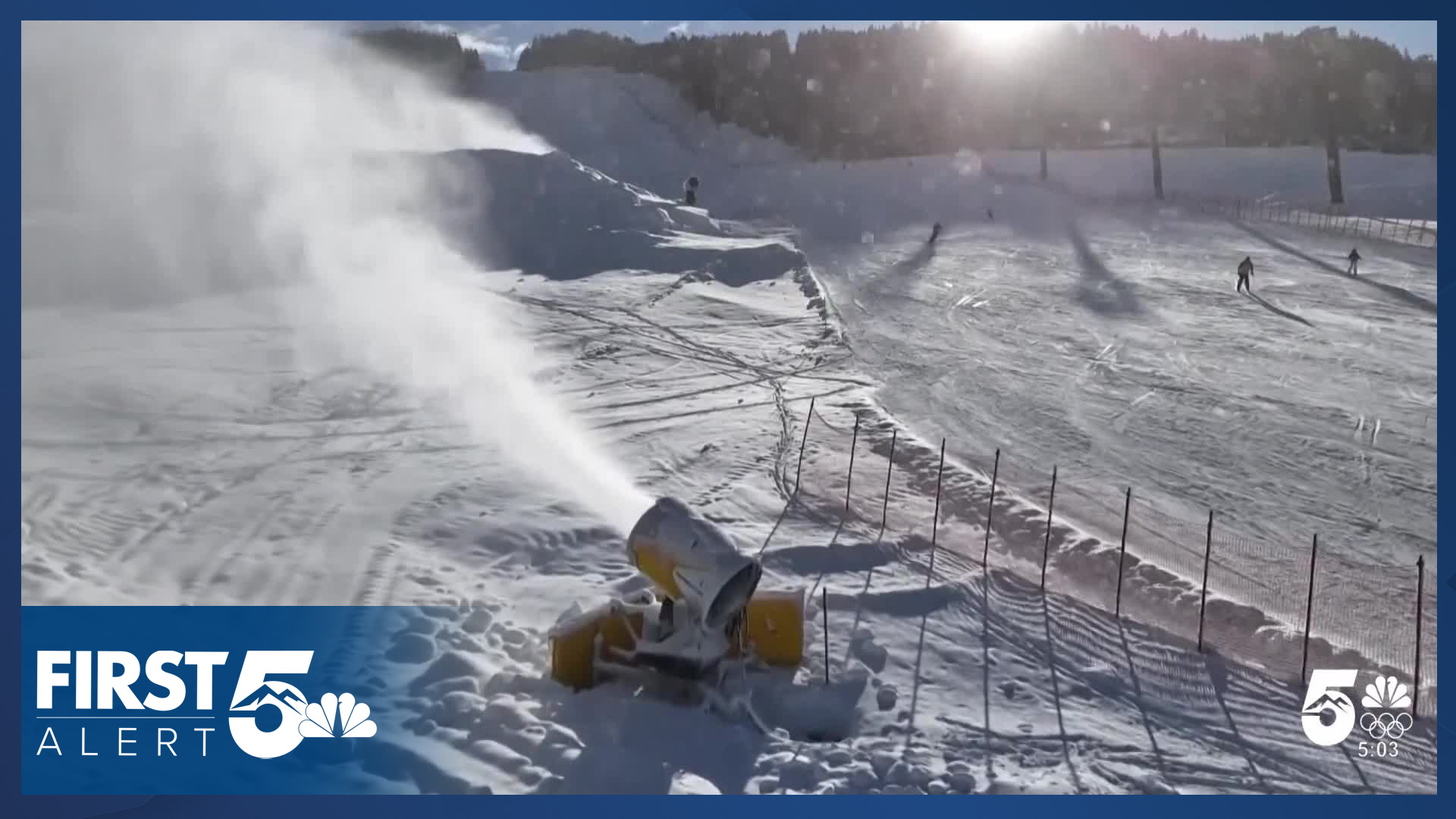

If you skied an Olympic race course in Cortina d'Ampezzo or Bormio, you'd fly down the hill much faster than Colorado's slopes. The reason? Olympic-grade machine made snow.
Organizers of the 2026 Games estimate they'll use 250 million gallons of water to turn into machine-made snow for their event venues. Even in the snowy Alps, it's essential for durability as natural snow becomes less predictable.
But - you don't need to fly to Italy to see this special snowmaking process in action. Many of the star athletes you're watching in Cortina and Bormio were at Copper Mountain here in Colorado in late November when the resort hosted World Cup downhill ski races - the first time the resort was a primary host of World Cup events. Their operations manager, Bill Blair, explained how important machine-made snow is for international events. The goal: extra water in the snow, when possible, providing extra durability:
"It creates a much firmer surface than natural snow, especially here in Colorado where we get nice, light, dry, low water content snow," Blair said.
He added:
"Having that really firm surface on top of the snow creates that layer that doesn't break down after we send the whole start list of racers down it".
The process to make this special competition-grade machine snow starts with the guns shooting water into a stream of fast-moving air. That is largely similar to the way snow is made for public slopes in Colorado and around the world.
But, for World Cup and Olympic events, the guns use more water for the same amount of air. The exact amount they can add depends on how wet or dry, and warm or cold, the air is. Colder and drier air is ideal - so course managers for the Olympics, and even competition in Colorado, time their snowmaking using advanced equipment and sensors to ensure they can produce the optimal snow densities. This extra-dense snow, each crystal of which ends up shaped largely like a ball bearing, packs down more tightly than what you'll find at a typical Colorado ski resort.
"We want to make lighter, drier snow for our general public trails because it's easier to ski for general people. But on a race hill we're looking for a really durable surface," Blair said.
This is essential for Olympic athletes who exert extreme forces into the snow as they ski. The goal is to minimize the difference in performance a skier will experience who skis first, versus 60th.
Course organizers do even more once the snow gets made to further harden the course - but that's a story for another day. The actual amounts of water used are not publicly disclosed, but if you were to ski on these courses, it'd still ski like snow - but much harder than even typical hardpack conditions. You'd need to be an aggressive carver to get your edges to bite deeply.
Warming temperatures are also a big reason for the increase in technical snow use. Temperatures in Cortina in February have risen by an average of almost 6.5 degrees since 1956 when the city last hosted the Games according to data from Climate Central. And the technology, both in Italy and here at home, is adapting.
Blair says Copper has modernized their snowmaking systems "so that we can not only hit those windows of marginal temperatures but also capitalize when it does get really cold."
The systems in Cortina are even more advanced. The company performing the work, TechnoAlpin has deployed technology at the games that can work when the air temperature is above 80 degrees. This system essentially uses a large refrigerator unit to keep the production air temperature cold and then blasts the produced ice flakes out into the air. Typical snow guns used in Colorado rely on the ambient air temperature.
Olympic snow machines ultimately keep races fair and protect event schedules when nature has other plans. As temperatures rise, this technology becomes more critical for winter sports here and around the world.
____
Have a question or story idea you would like the First Alert 5 Weather team to consider? Email: weather@koaa.com
Watch KOAA News5 on your time, anytime with our free streaming app available for your Roku, FireTV, AppleTV and Android TV. Just search KOAA News5, download and start watching.
