


COLORADO SPRINGS, Colo. (KOAA) — Monsoon storms are moving through southern Colorado, bringing welcome relief after a bone-dry start to the summer, but experts say the rain alone won't be enough to erase a significant rainfall deficit.
I spoke with Colorado Springs gardeners at the Horticultural Art Society's plant sale Wednesday about the challenges they've faced and what it will actually take to recover.
- Hear from those gardeners below:
The stakes are real for local plant lovers.
Among them were Christina Berdine, Elizabeth Albers, and Nikki Wicht.
"I have a few plants that are dying!", said Christina, a self-described new gardener.
That feeling is widespread, though. Before this week's rain, Colorado Springs was more than 4 inches below average for precipitation year to date.
Colorado Springs city horticulturist Alex Crochet says much of the struggle comes down to plant selection.
"But really where you're seeing the impacts of the drought are the non-native plants, especially in our trees, and then the non-native perennials and things are where you're going to be struggling a bit more to keep everything hydrated," Crochet said.
So how could the monsoon help? A common misconception multiple gardeners told me is that the monsoon simply means continuous or frequent, heavy afternoon rain.
I think it's like when 6 inches of rain or more falls in a 10 hour period. I'm not sure of the exact ratio...but a monsoon is...you'll get 3 inches...then it'll rain a quarter inch for an hour...then another inch...more rain than anyone wants!", exclaimed resident Laura Paine O'Brien.
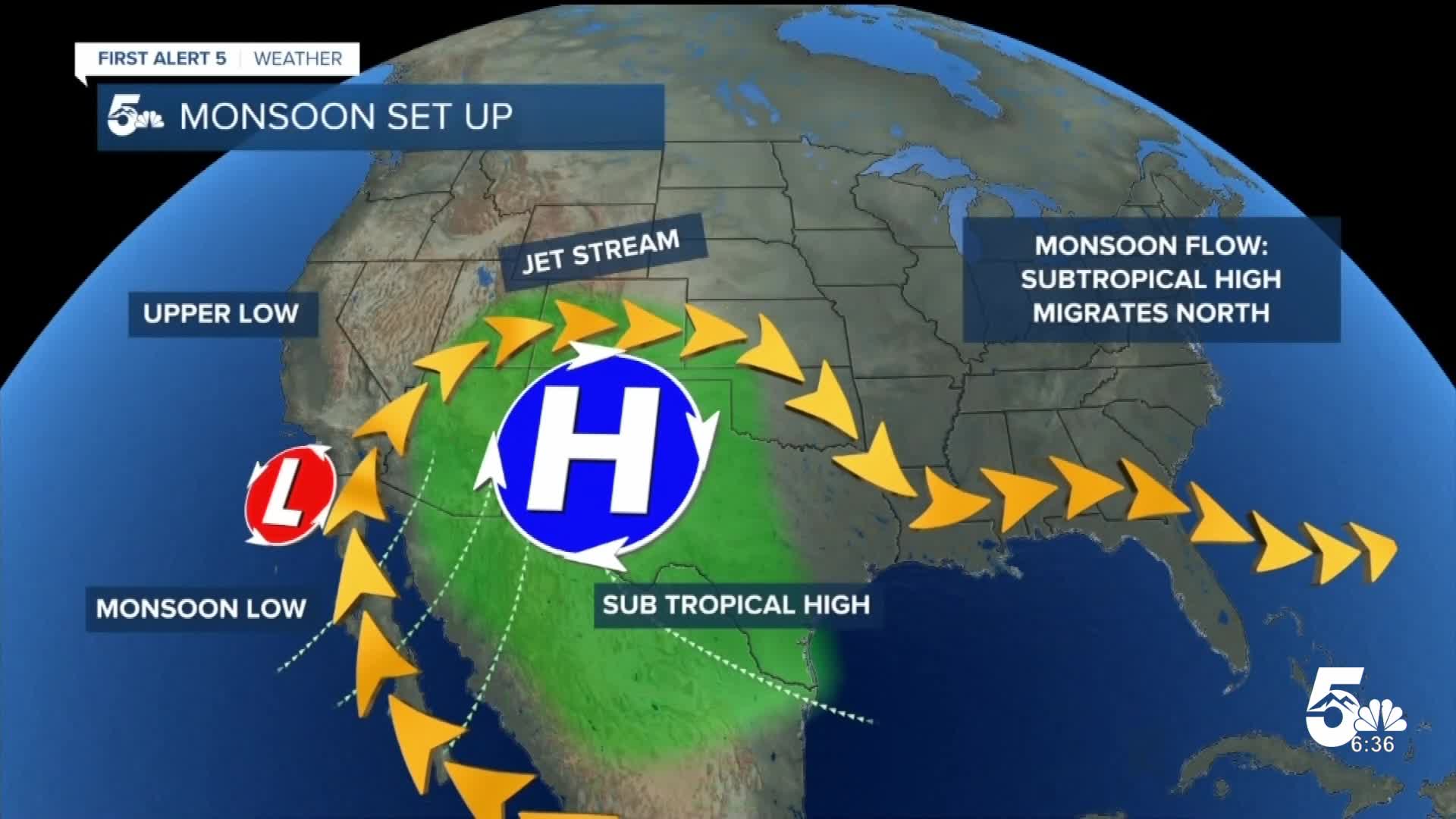
But the monsoon isn't actually the rain itself — it's the reason for the rain.
The monsoon is a massive, seasonal shift in wind direction. High pressure over the center of the country funnels tropical moisture into Colorado. Low pressure to the west also often helps. But if that setup shifts, it can point that moisture somewhere else entirely, leaving Colorado dry. And it also means that parts of the central US can stay dry in a monsoon set up that benefits Colorado.
For many gardeners, the arrival of storms brings hope — and not just for their plants.
"Oh, absolutely, for many reasons. I mean, between our plants and the fires," Christina said.
But that hope needs context. The monsoon is not a drought eraser.
"Really, the first thing that needs to happen is feet and feet of snow in the wintertime, so we can have a bit of a base of moisture, because when it rains and the soil is dry, we're actually seeing a lot of that moisture evaporate before it soaks down into the soil," Crochet said.
While these afternoon storms are very welcome, there is a lot of ground to make up. The good news is that this monsoon pattern is likely to remain active over the next several weeks, making it possible to chip away at the rainfall debt.
____
Have a question or story idea you would like the First Alert 5 Weather team to consider? Email: weather@koaa.com
Watch KOAA News5 on your time, anytime with our free streaming app available for your Roku, FireTV, AppleTV and Android TV. Just search KOAA News5, download and start watching.
