



Daylight saving time has begun, and March is delivering even more change to the skies above Colorado Springs. This month brings the largest gain in daylight of any month all year — and that shift has real consequences for local weather patterns, snowpack and even your health.

Colorado Springs will gain more than 75 minutes of daylight in March, averaging nearly 2.5 minutes of additional light each day. By the end of the month, sunset will arrive at 7:20 p.m. or later if you live north of Highway 50.
The gains are even more dramatic in northern cities. Seattle and Fargo will each pick up more than an hour and 40 minutes of daylight this month! By comparison, southern Florida and southern Texas will gain only about 40 minutes.
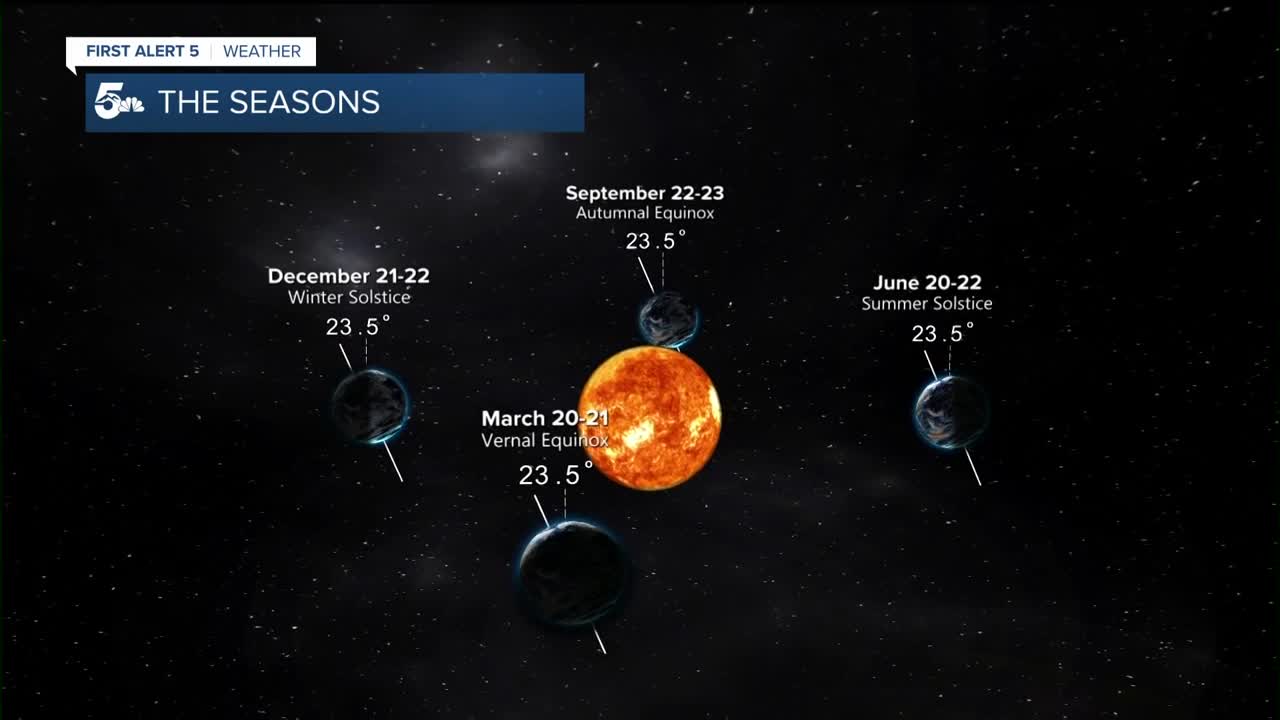
The difference comes down to Earth's tilt on its axis. As the planet orbits the sun, the hemisphere tilted toward it receives more light. On the equinoxes, both hemispheres receive equal amounts. That dynamic means the equator sees the smallest change in day length throughout the year, while the poles experience the most dramatic swings.

March also brings a significant increase in how high the sun climbs in the sky. By March 31, the peak sun angle —called the solar zenith, which occurs at solar noon — will jump by more than 10 degrees, reaching 55 degrees above the horizon.

A higher sun angle means the light reaching the ground is stronger and more direct. That increased solar energy makes it easier for snow to melt — and even to sublimate: turning directly into water vapor without melting first. With the local snowpack already running low, the stronger March sun will begin to erode what little snow remains. Typically, this is offset by frequent significant March snow events. That, of course, does not appear to be the case this year.
The higher sun angle also drives up the UV index. More direct sunlight allows the skin to produce vitamin D, but it also means sunburns can happen faster, raising the risk of skin cancer.
March is a weather pivot point, bringing the biggest increase in solar energy of any month. That means brighter evenings ahead, but it also carries consequences for an already-depleted snowpack.
- Learn more by watching the video in the player below
____
Have a question or story idea you would like the First Alert 5 Weather team to consider? Email: weather@koaa.com
____
This story was reported on-air by a journalist and has been converted to this platform with the assistance of AI. Our editorial team verifies all reporting on all platforms for fairness and accuracy.
Watch KOAA News5 on your time, anytime with our free streaming app available for your Roku, FireTV, AppleTV and Android TV. Just search KOAA News5, download and start watching.
