

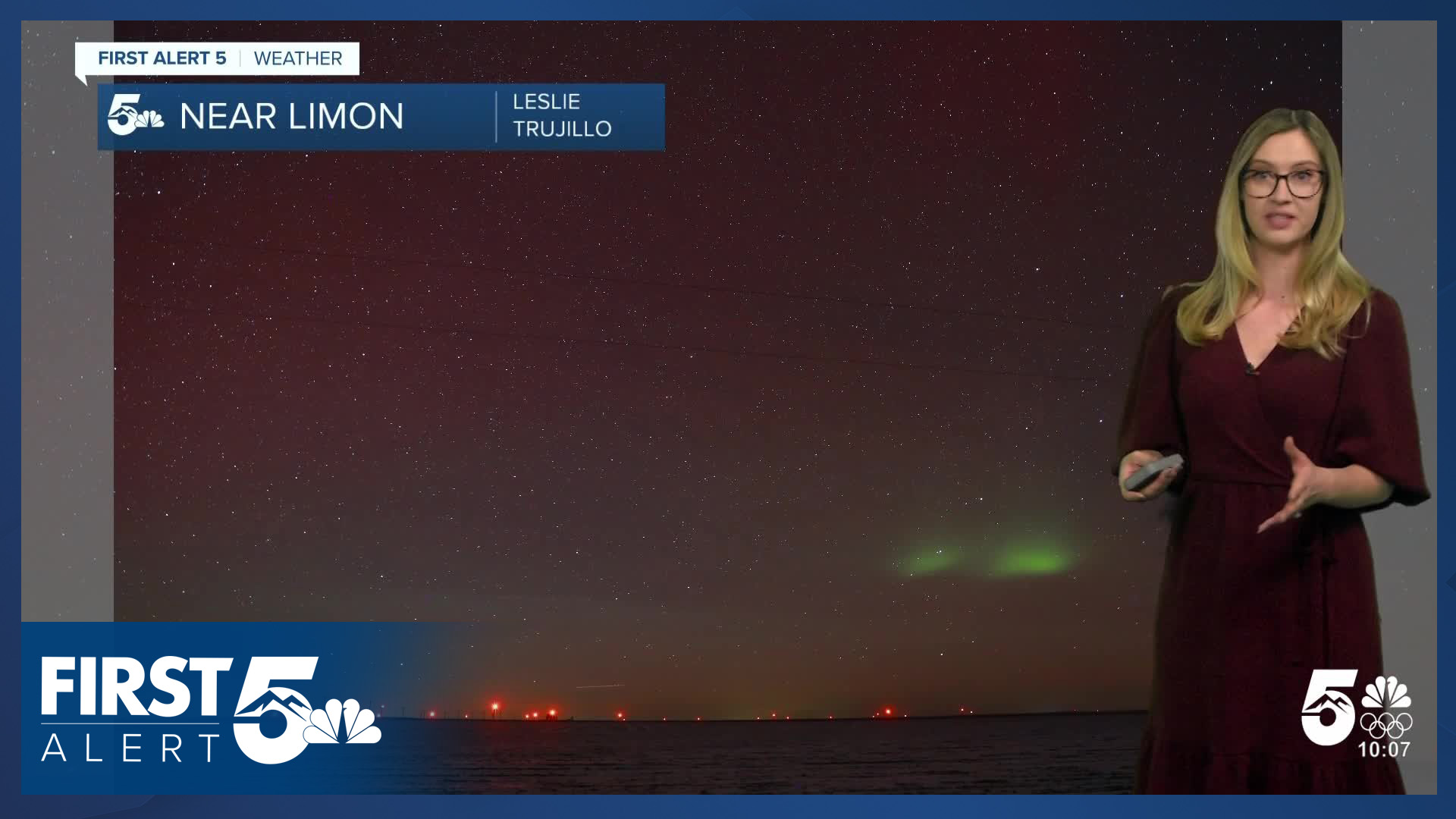


SOUTHERN COLORADO (KOAA) — Craving an encore of the Northern Lights displays in 2024 and 2025? Tonight might just be your night. The National Oceanic and Atmospheric Administration (NOAA)'s Space Weather Prediction Center (SWPC) issued a rare severe G-4 geomagnetic storm watch Monday morning.
The watch is in effect for this evening into Tuesday morning. A large and fast moving coronal mass ejection occurred yesterday, with the material reaching Earth this evening, according to the Boulder, Colorado-based agency. G-4 level storms occur a few times each solar cycle - which lasts 11 years, with storms of this strength typically producing a visible aurora in Colorado in areas with low light pollution.
Late Monday morning, the agency issued an additional statement indicating that energy from this storm is significantly impacting space operations. The storm is now the largest since October 2003:
WHAT TIME WILL THE AURORA BE VISIBLE?
The latest auroral modeling suggests the storm will peak between 6 PM tonight - 2 AM Tuesday. These times may change slightly, and the aurora is not likely to be visible throughout the full storm window. Instead, sub-storms within the main event will produce periods of better visibility and lead to auroral viewing with the naked eye. This is similar to an intense band of snow dropping a quick 2" in an hour, within a long duration winter storm event. The app "My Aurora Forecast & Alerts" among others allows you to track real-time auroral activity to determine when those stronger peaks in storm activity may occur where you live.
HOW STRONG WILL THE STORM BE?
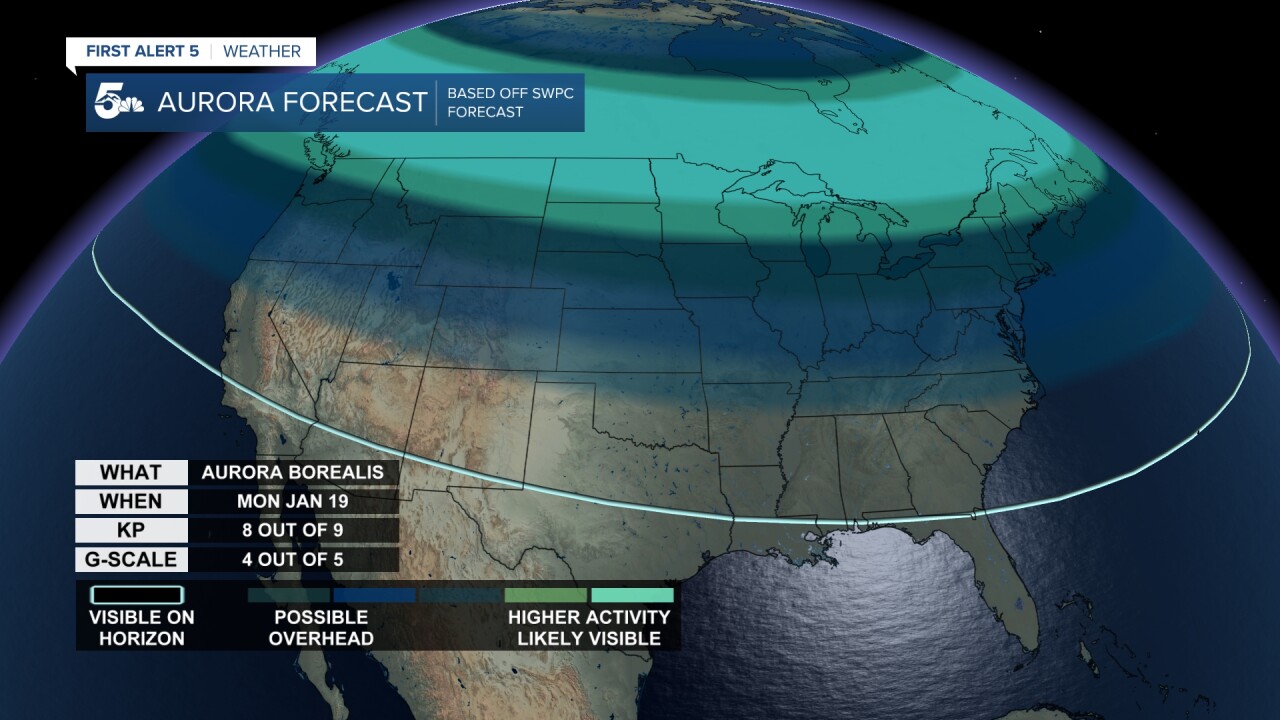
G-4 watches are severe, and correspond with an aurora kP of 8 on a 9 point scale; the G-scale itself goes from 1-5. The SWPC does not issue G-5 watches, with G-5 level events often only occurring once or twice per solar cycle. The solar storm on May 11th, 2024, was a G-5 level event. A kP 8 level storm typically produces visible aurora in southern Colorado.
WHERE SHOULD I GO TO SEE THE AURORA IN SOUTHERN COLORADO?

With any astronomical event, light pollution makes viewing harder. In southern Colorado, this means getting away from the urban corridor close to I-25. You can use this website to see light pollution near you by zooming in on the map. Aim to reach an area colored blue, or clear, for optimal viewing. You also need a clear view to the north. The eastern plains fit the bill for both of these items - budget a drive time of 20-45 minutes east if you live in Colorado Springs or Pueblo.
In the mountain areas, overlooks with clear views of the north horizon are the best bet.
Wherever you go, give your eyes 30 minutes to fully adjust to the dark sky outside. Avoid looking at bright lights (including your phone screen - set it to the dimmest possible setting), to help your eyes adjust faster. You can also use your phone camera's "night mode" to enhance visibility and make the aurora easier to see.
WHAT IS THE WEATHER GOING TO BE LIKE?
Cold, and clear. These are actually some of the best conditions you can view any astronomical phenomena with, because cold and dry air leads to better atmospheric transparency and less light scattering. This is less important for an aurora than using a telescope to view a planet, but it means this is about as good as it gets for astronomy viewing.
With the clear skies - will come winter cold. Temperatures at 6 PM will be in the 30s on the plains. By 2 AM, most of southern Colorado falls to the 20s to upper teens.
PHOTOS OF THE AURORA:
If you do go out tonight - view photos and submit yours here:
____
Have a question or story idea you would like the First Alert 5 Weather team to consider? Email: weather@koaa.com
Watch KOAA News5 on your time, anytime with our free streaming app available for your Roku, FireTV, AppleTV and Android TV. Just search KOAA News5, download and start watching.<blockquote class="twitter-tweet"><p lang="en" dir="ltr">An S4 severe solar radiation storm is now in progress - this is the largest solar radiation storm in over 20 years. The last time S4 levels were observed was in October, 2003. Potential effects are mainly limited to space launch, aviation, and satellite operations. <a href="https://t.co/kCjHj4XYzB">pic.twitter.com/kCjHj4XYzB</a></p>— NOAA Space Weather Prediction Center (@NWSSWPC) <a href="
">January 19, 2026</a></blockquote> <script async src="https://platform.twitter.com/widgets.js" charset="utf-8"></script>
