



The price of everyday life keeps climbing — and more states are raising the minimum wage to help workers keep up. But economists say how high it goes could make the difference between more opportunity or fewer jobs.
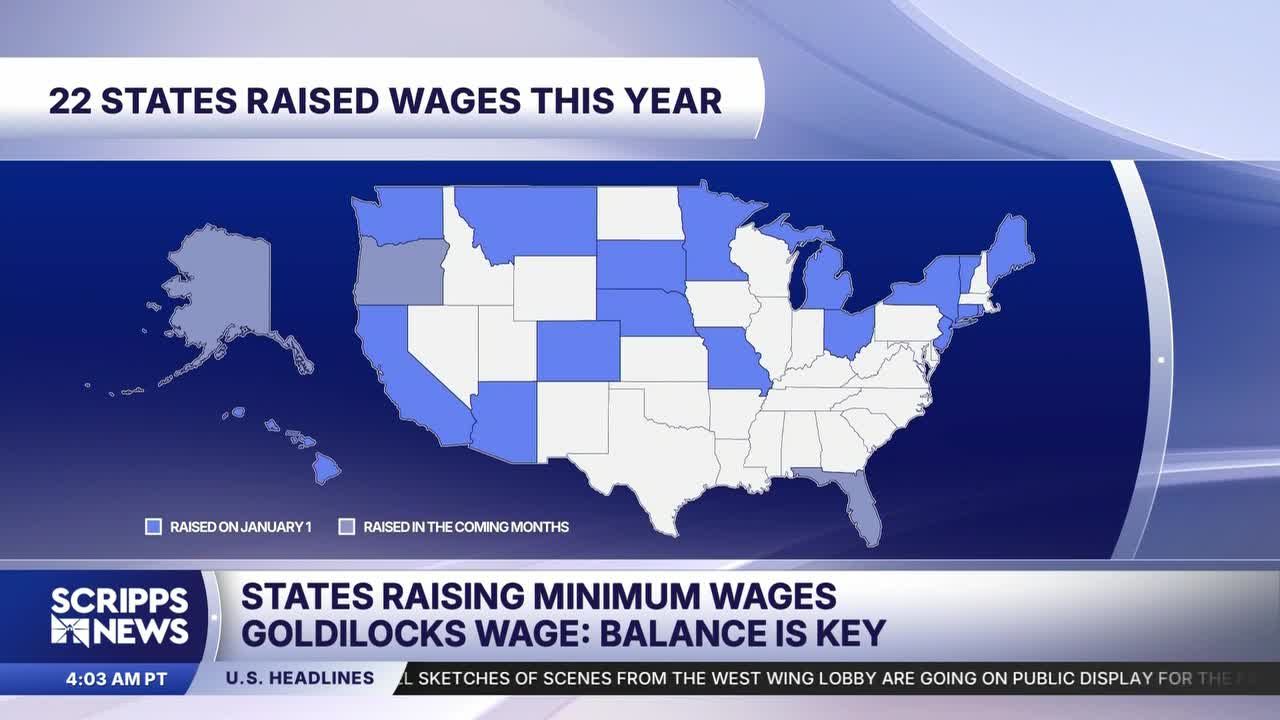
Nineteen states raised the minimum wage on Jan. 1 this year, and three more will see increases in the coming months. The median minimum wage nationwide is around $15 an hour. Meanwhile, 20 states remain at the federal baseline of $7.25.
Economist Heather Long says support for raising the wage crosses political lines.
"Anytime voters have had a chance to vote on this... they overwhelmingly vote to increase it — even in conservative states," Long said. "Most people do not think $7.25 is livable."
IN CASE YOU MISSED IT | US job market extends winning streak with 172,000 new positions in May 2026
Housing costs are a major driver in the current debate — up 50% in the past five years. Rent hikes are now impacting places that were previously considered affordable.
"High housing costs used to be just New York and San Francisco," Long said. "Now it's Texas, Florida, Phoenix — places once seen as cheaper."
Economist Scott Beaulier, dean at the University of Wyoming College of Business, says minimum wage hikes affect different workers in different ways.
"If you raise the minimum wage too much, it's going to be automation that's relied on for those first jobs like McDonald's — we're seeing it right now," Beaulier said. "So the minimum wage is one tool to help the poor and those who are over-skilled, but it runs this risk of if you raise it too much you're going to end up causing unemployment as well."
Beaulier says the idea of a "living wage" can vary widely depending on location, age, and life stage.
"A living wage for someone in Laramie, Wyoming, versus someone living in the Bay Area is going to be very different," he said. "When you look at a person's lifespan too, those who are just out of college aren't going to need as much to live on as a family of say five."
RELATED STORY | Housing market shows signs of life; affordability challenges remain for buyers
Studies show moderate wage increases tend to add only a few cents to consumer prices, because labor is only a fraction of a total business cost. But both economists warn dramatic increases in wages could mean fewer hires and more automation.
The challenge is finding a "Goldilocks" wage that works for both workers and businesses. Any changes to the federal minimum wage, however, require action from Congress.
