

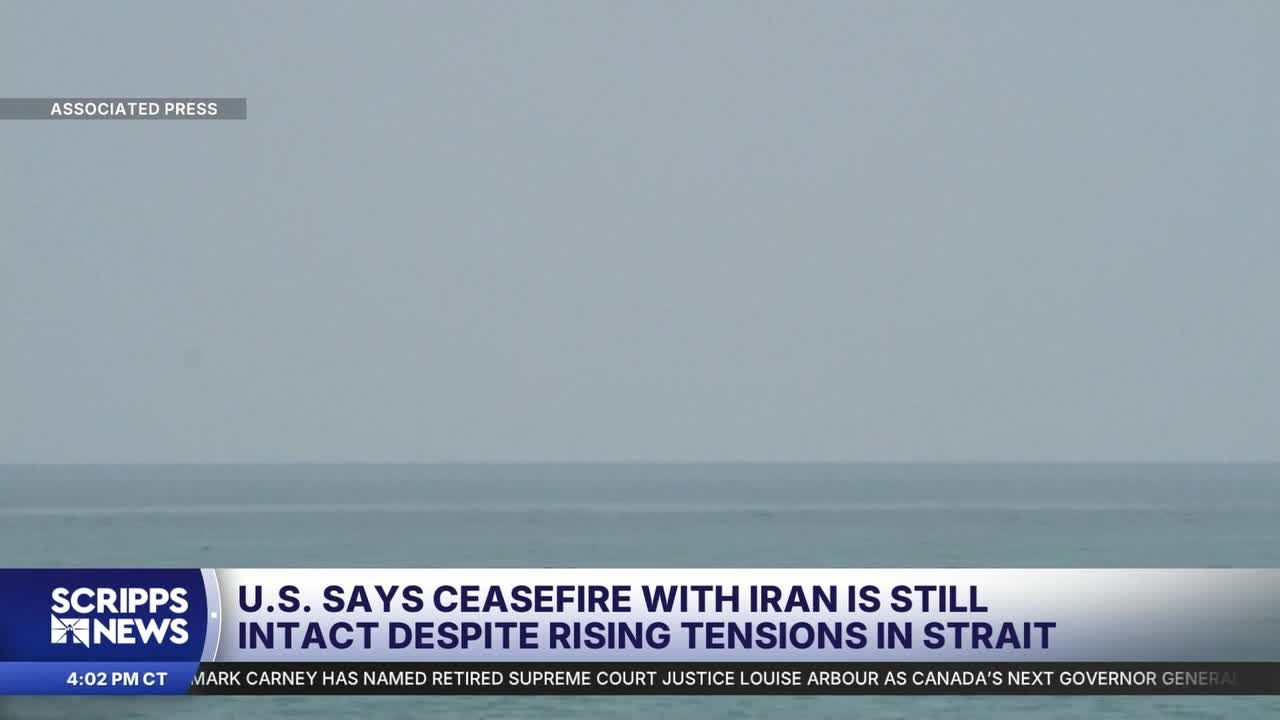


U.S. Defense Secretary Pete Hegseth said Tuesday that Iran no longer controls the Strait of Hormuz, a critical shipping lane that carried about 20% of the world’s oil supply before the start of the war.
Hegseth’s comments came a day after the United States launched Project Freedom, a mission aimed at ensuring safe passage for merchant ships. The Defense Department said the operation involves more than 100 land- and sea-based aircraft and 15,000 service members.
While U.S. officials have described the attack on Iran as a success, Iran’s earlier ability to block tanker traffic through the strait has been a major frustration for Washington and has contributed to a sharp rise in global energy prices.
“We know the Iranians are embarrassed by this fact. They said they control the strait. They do not,” Hegseth said. “American ships led the way — commercial and military — shouldering the initial risk from the front, as Americans always do.”
Hegseth said “hundreds” of ships from around the world are now lining up to pass through the Strait of Hormuz. He added that two U.S.-flagged ships have transited the waterway since Project Freedom began.
RELATED STORY | Trump downplays economic risks of 'mini war' with Iran
But Iran, through the state news agency Fars, disputed the claims that the strait is not under Iranian control. Iran claims the two ships were stuck in rocky waters near the coast of Oman.
Additionally, Iran claims that the path being cleared by the U.S. is not navigable for large shipping vessels.
How long the United States maintains such a presence is unclear. President Donald Trump suggested at the start of the war more than two months ago that hostilities could end within weeks.
RELATED STORY | US says it sank 6 Iranian boats as it begins escorting ships through Strait of Hormuz
Hegseth said the mission is intended to be temporary, with other nations expected to take over security responsibilities. However, apart from Israel, most U.S. allies have largely stayed on the sidelines.
“To our partners, allies and the rest of the world, this is a temporary mission for us,” Hegseth said. “The world needs this waterway a lot more than we do. We’re stabilizing the situation so commerce can flow again. But we expect the world to step up. At the appropriate time — and soon — we will hand responsibility back to you.”
On Monday, the Pentagon said U.S. forces sank six Iranian ships at the start of Project Freedom.
Hegseth described the current hostilities as a new conflict, not a resumption of the war that began in February. He suggested that a ceasefire between the United States and Iran remains in effect.
The Trump administration has cited that ceasefire in explaining why it has not sought congressional authorization for the operation. Under the War Powers Act, conflicts lasting beyond 60 days require congressional approval.
