

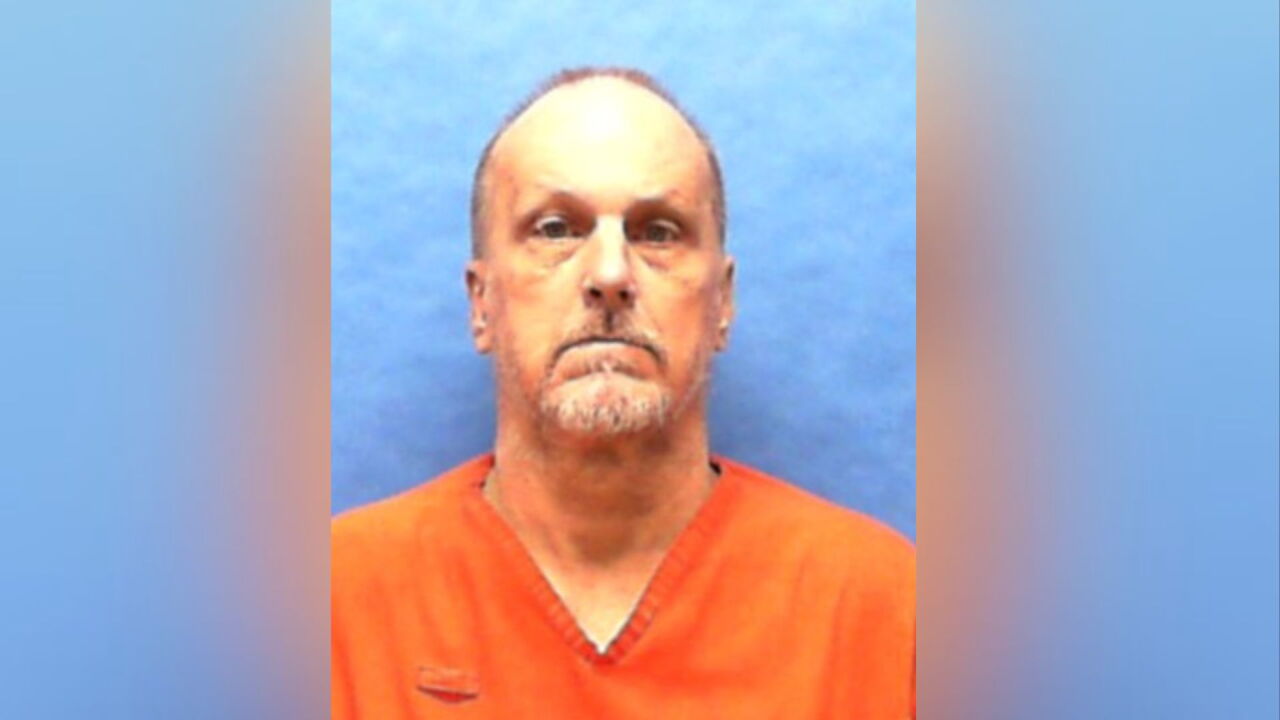

A Florida prisoner who said he killed his cellmate so he could be moved to death row was executed Tuesday, nearly 18 years after the fatal attack.
James Robertson, 63, was pronounced dead at 12:32 p.m. after receiving a three-drug injection at Florida State Prison near Starke. He pleaded guilty to first-degree murder and waived all appeals in the 2008 strangling of Frank Hart.
Robertson's execution comes at a time of escalating attention on the death penalty in the U.S. In Tennessee, Christa Pike survived an execution attempt two weeks ago despite receiving two lethal doses of pentobarbital. And last week, the Pentagon announced that the firing squad execution of Fort Hood shooter Nidal Malik Hasan would be livestreamed.
RELATED STORY | Johnson says not everyone in GOP is on board with Hasan execution livestream
Florida Department of Corrections spokesperson Jordan Kirkland was asked at a press conference early Tuesday how the state planned to make sure what happened to Pike in Tennessee wouldn't happen in Florida.
“Florida has a sound lethal injection process and protocol,” Kirkland said, noting he couldn't speak to Tennessee’s lethal injection procedure. “We are very committed to carrying that out in a humane and dignified manner.”
Florida executes people by injecting them with a sedative, a paralytic and a drug that stops the heart, according to the Department of Corrections.
Robertson was supposed to be one of two executions carried out by Florida on Tuesday, but Gov. Ron DeSantis withdrew a death warrant last week for William Lee Thompson. The Republican governor did not provide a reason but had temporarily stayed his execution last month pending a psychiatric evaluation.
Records show this is the first time DeSantis has withdrawn a death warrant, which does not technically change Thompson’s sentence. He will remain on death row, and a new death warrant could be signed for him in the future.
Robertson wanted to be executed
According to court records, Robertson was incarcerated at Charlotte Correctional Institution, north of Fort Myers, in December 2008 when he tied several socks together and strangled Hart while the other man slept. Robertson told investigators that the attack was unprovoked and that he killed his cellmate so that he would be sentenced to death, rather than having to live out his days in prison.
Robertson was 17 years old when he went to prison in 1980 for burglary and assault. Years of convictions for escape, battery and weapons while in prison kept adding time to his total sentence. Hart was sent to prison in 2003 following a sexual battery conviction.
IN CASE YOU MISSED IT | Christa Pike back in Tennessee prison after surviving lethal injection
Robertson pleaded guilty and waived a penalty phase, where a jury would recommend the death penalty or life in prison. A judge sentenced Robertson to death, and he later waived all post-conviction proceedings. Robertson reiterated his position during a hearing earlier this month, telling a judge that he understood his execution had been scheduled and that he didn't want to make any final appeals to the Florida Supreme Court or U.S. Supreme Court.
Opponents of the death penalty say Robertson's case undermines claims that executions deter murder. Maria DeLiberato, the legal and policy director for Floridians for Alternatives to the Death Penalty, said Hart deserved to be safe in prison and argued that “the existence of the death penalty may have caused the very violence it purportedly prevents.
A rare reprieve leaves another Florida prisoner on death row
Meanwhile, DeSantis is the third Florida governor to sign a death warrant for Thompson. Bob Graham and Bob Martinez both scheduled executions for Thompson in the 1980s, but years of appeals and stays allowed him to avoid the electric chair, the state's method of execution at the time. The 74-year-old death row inmate was convicted of first-degree murder, kidnapping and sexual battery in the 1976 killing of 23-year-old Sally Ivester.
Thompson will remain on Florida’s death row, and a new death warrant could be signed for him in the future. His attorneys have said he has dementia, and his health is failing. They said he should be relocated to an adequate medical facility to get the care he needs.
Only one other Florida inmate remains alive following a death warrant signed by DeSantis. James Dailey, 80, was scheduled to die in late 2019 for the murder of a 14-year-old girl, but a federal judge halted the execution as attorneys argued against his guilt. The stay was eventually lifted, but DeSantis didn't sign a new death warrant. The state halted all executions during the COVID-19 pandemic and didn't restart until 2023.
Florida has the nation's busiest death chamber
DeSantis, who leaves office in January, oversaw 19 executions in 2025, more than any other Florida governor in a single year since the death penalty was reinstated in 1976. Robertson was the state’s 17th execution of 2026, with two more already scheduled, not counting Thompson.
DeSantis has made few public comments about the unprecedented number of executions but explained previously that his goal is to bring justice to victims’ families who have waited decades for the death sentences to be carried out.
William Reaves, 77, is scheduled to be executed on Oct. 20, followed by Jesse Guardado, 64, on Nov. 5. Reaves was convicted of fatally shooting a deputy after dropping a gun in front of the law enforcement officer in 1986. Guardado was convicted of robbing and killing a woman in order to buy drugs in 2004.
If Reaves and Guardado are executed as planned, that would match the state’s 2025 total, with eight weeks remaining in 2026.
A total of 47 people were executed in the U.S. in 2025. Besides leading all other states last year, Florida has carried out more than half the 31 total executions in the U.S. so far this year. In July, Florida executed two prisoners in one day, the first state in nearly a decade to do so.
