



DENVER — Less than a week after the federal government made a sweeping change to the guidance on emotional support animals and housing for people with disabilities, Gov. Jared Polis signed a bill into law that enshrined those standards in Colorado law.
What qualifies as an "assistance animal" no longer includes an emotional support animal at the national level, but House Bill 26-1045 means that change does not apply in the Centennial State.
"House Bill 1045 is why Colorado does not need to have a concern here, and why individuals with disabilities can rest easy here in Colorado," said State Rep. Yara Zokaie, D — District 52, who was one of the prime sponsors of the legislation.
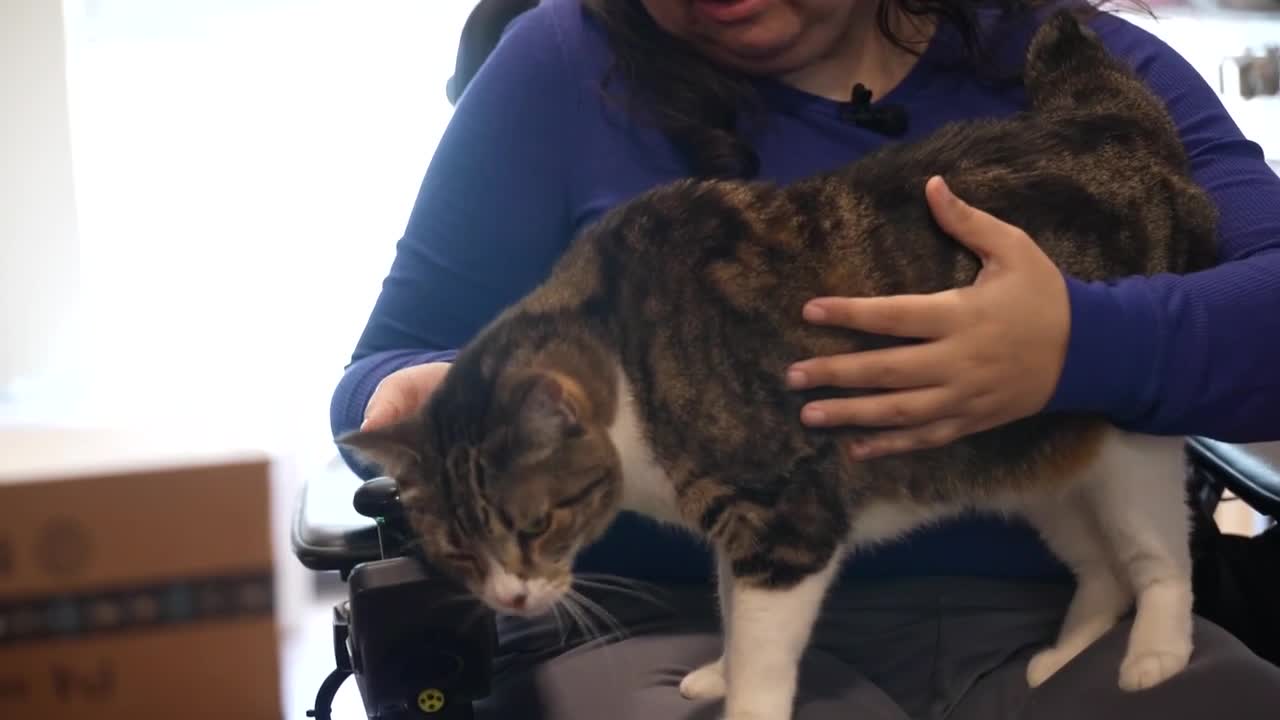
Jordan Sibayan and Jacqueline Mitchell each have an emotional support animal. Their two cats, Jewel and Oakley, affect the couple in ways only animals can.
"What I feel like they bring to our lives is a sense of normalcy, a sense of purpose in a way. You know, taking care of them fills our day, and it really helps ground us and gives us a reason to get up," said Sibayan. “They're there when we have a hard day, you know, they don't judge us, and we just get to have fun with them, and it gives us somebody outside of ourselves to care about.”
Sibayan has muscular dystrophy, and Mitchell has cerebral palsy.
“Just the fact that they rescinded those protections, and it could put them and us in jeopardy... We don't want to give them up. We don't want to lose them, and that's what we were afraid of," Sibayan said. “We didn't know what was going to happen.”
As defined in the new state law, reasonable accommodation is an exception or adjustment to a rule, policy, practice, or service that enables a person with a disability to have equal housing opportunities.
Under the Fair Housing Act (FHA), reasonable accommodations must be provided to individuals who live with disabilities to ensure equal access to housing. In addition, tenants with disabilities may have pet deposits or monthly fees waived.
HB26-1045 defines an "assistance animal" as both an emotional support animal and a service animal. The legislation added those definitions to the Colorado Anti-Discrimination Act (CADA).
The new Colorado law shields the state from the narrowed definition of "assistance animals" on a national scale.
"It takes those definitions that we had previously at the federal level of what an emotional support animal is — of assistance animals — and it codifies those definitions as well as clarifies that those protections still exist, and that individuals who have a qualified assistance animal are able to have the animal with them in their housing," Zokaie explained. “Essentially, you cannot be denied housing because you have an assistance animal.”

Service animals are trained to perform a task directly related to a person's disability, according to the Americans with Disabilities Act (ADA).
Meanwhile, emotional support animals do not have special training designed to assist people with disabilities. Instead, they provide emotional support that helps alleviate disability-related symptoms.
According to a memorandum from the Office of Fair Housing and Equal Opportunity (FHEO) within the Department of Housing and Urban Development (HUD), only housing discrimination cases involving animals trained to assist individuals with disabilities will be pursued. That means FHEO will abide by the ADA's definition of a service animal for such complaints.
The new definition established by the federal government will "guarantee evenhanded enforcement" of the FHA, according to the document.
The memorandum, which was shared by the National Low Income Housing Coalition, continued to claim it is an "immense challenge" to determine whether reasonable accommodation related to animals should be granted.
"Though well-intentioned, the guidance failed to provide “greater clarity” on the supposed distinction between pets and emotional support animals," the memorandum states. "Instead, an entire industry has emerged to convert pets into emotional support animals."
► Watch Colette Bordelon's report in the player below:
Zokaie believes the change will force families to make difficult decisions between their housing and their emotional support animals.
“That is what, unfortunately, I think we're going to see in many states — people are going to be faced with having to make that impossible choice," said Zokaie. "I mean, quite frankly, people could be facing eviction because of this.”
Zokaie praised Disability Law Colorado for bringing the idea for HB26-1045 to lawmakers. Disability Law Colorado works to protect the rights of people with disabilities in the state.
“My biggest concern was that there would be a lot of confusion, and that would lead to an increase in landlords and housing providers denying people emotional support animals as a reasonable accommodation, and that could lead to increased complaints with the Civil Rights Division, increased lawsuits," said Kelly McCullough, the Co-Legal Director of Disability Law Colorado, listing off what she believes could happen with the federal change.
McCullough said she was relieved when Polis signed the bill into law, a feeling shared by Sibayan and Mitchell.
"The fact that the state has our back on this is really a relief for us," said Sibayan.
“We wish other states would adopt this because there's no reason for this to be happening," Mitchell added.
While HB26-1045 was being considered in the Senate Local Government and Housing Committee, State Sen. Lynda Zamora Wilson, R — District 9, voiced her concerns about property rights while State Sen. Mark Baisley, R — District 4, said he knows landlords who already do not want to operate in Colorado. Baisley continued to say the proposal could force housing out of the state.
The two voted against the bill in committee and again when it was heard on the Senate Floor, along with State Sen. Janice Rich, R—District 7.
Denver7 reached out to HUD for comment on the policy change, and a spokesperson sent over the following comment:
HUD’s prior guidance on emotional support animals (ESAs) led to immense confusion, appeared to impose obligations on housing providers in violation of federal law, and facilitated fraudulent ESA claims that diverted our dedicated staff away from helping disabled Americans in need. By focusing our enforcement resources on helping our brave veterans and all Americans with dedicated, trained ESAs and assistance animals—rather than investigating dubious accommodation requests for bearded dragons and roosters—we will swiftly deliver for disabled Americans in need of reasonable accommodations under the Fair Housing Act.
