

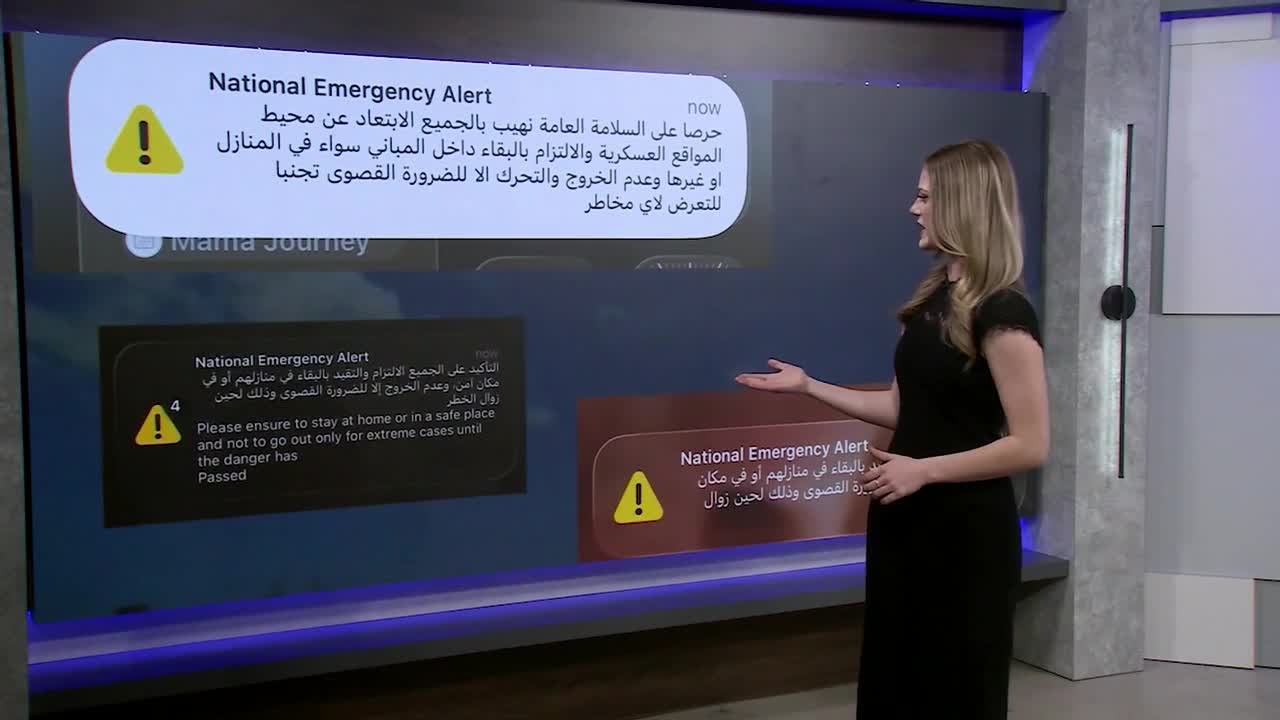



DENVER — The U.S. Department of State said Sunday that 32,000 Americans in the Middle East have safely returned to the United States — including a number of Coloradans — since the first strikes on Iran.
Among those caught in the chaos was Cory Katuna, a Longmont native, who was in the middle of a layover in Qatar when the U.S. attacks in Iran began. She said what was supposed to be a three-hour layover from India to Italy turned into an eight-day lockdown in Qatar.
"I was on the plane. So, my flight was supposed to take off at 9:30 a.m.," Katuna said. "I didn't suspect anything until my phone had one of those, like, emergency alarms... that went off on my phone and on everybody's phone at the same time on the flight."
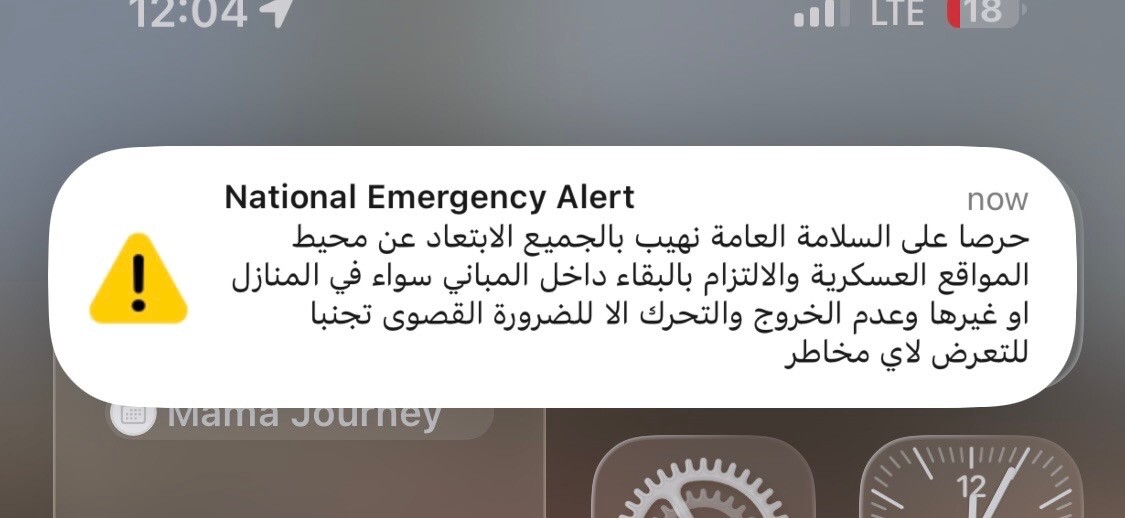
A national emergency alert was sent to Katuna's phone in Arabic. When translated to English, it reads: "For the sake of public safety, everyone is requested to stay away from the vicinity of military sites and remain inside buildings, whether at home or elsewhere. Do not go out or move around unless absolutely necessary, in order to avoid exposure to any danger."
Her flight was deplaned and Katuna said she was shuttled to a hotel, where she stayed completely inside for six days.
"The first few days there were explosions, like loud, scary explosions. There were tons more alarms on our phones, so it just seemed like the threat was imminent," Katuna said.
On March 2, the U.S. State Department ordered Americans to "DEPART NOW" from more than a dozen Middle Eastern countries, including Bahrain, Egypt, Iran, Iraq, Israel, the West Bank and Gaza, Jordan, Kuwait, Lebanon, Oman, Qatar, Saudi Arabia, Syria, United Arab Emirates and Yemen due to "serious safety risks."
As Katuna tried to secure plans to leave the country, she said communication with U.S. agencies was confusing and unclear.
"In my experience, the communication with the U.S. was, like, robotic. It was just like, 'Do not rely on the U.S. government for evacuation... just a repeating voice that was saying that," Katuna said. "Am I on the right lists? Who are you emailing? Who are you calling? Should I be calling them?"
Katuna said she was able to get out of the country on a Qatar Airways flight to Italy over the weekend. Through the chaos, she said she now sees the situation differently and is grateful to have spent time in a place she may have otherwise never visited.
"What I can't imagine is being an Iranian or a Israeli, or somebody who, like lives there and is getting missiles like, shot at you, daily, daily, daily," Katuna said.
Another Colorado couple is facing a unique situation as chaos unfolds in the Middle East. Pastor Mark Tedder and his wife, Carrie, moved to Israel on a clergy visa in January after making multiple trips to the area to play music for soldiers, families and children during the war in Gaza.


The Tedders were on a work trip in Italy when the airspace shut down following the U.S. strikes on Iran.
"We're in Italy with two carry-on bags, wondering what's happening to the world," Tedder said. "The skies are closed. There's missiles flying in Iran, and there's missiles being sent from Iran back to Israel."
Unable to get back to their apartment in Jerusalem, the Tedders decided to return to Colorado until it's safe for Americans to be back in the Middle East.
"The rent continues there, the car rental continues there, and we're stuck here in Colorado, 6,000 miles away," Tedder said. "So we're just trying to wait this thing out and see what happens. They can't tell us anything, because honestly, every day, there's a different event in the war, as we know, and it has spread throughout the Middle East."
In a post on X on Sunday, Dylan Johnson, Assistant Secretary of State for Global Public Affairs, said 32,000 Americans have returned to the U.S. from the Middle East since February 28. Johnson said the number does not include Americans who relocated to other countries or who are currently in transit from the Middle East to the U.S.
The Department of State completed nearly two dozen charter flights to evacuate American citizens from the region, according to Johnson, as well as ground transport operations.
