




COLORADO SPRINGS, Colo. (KOAA) — A show that is out of this world is taking place this weekend, and an expert at the University of Colorado has some tips to make sure you get the best viewing experience!
GEMINIDS METEOR SHOWER
According to NASA, the Geminids meteor shower, which peaks during mid-December each year, is considered to be one of the best and most reliable annual meteor showers. The Geminids did not start out that way. The Geminids first began appearing in the mid-1800s. However, the first showers were not noteworthy with only 10 to 20 meteors seen per hour. Since that time, the Geminids have grown to become one of the major meteor showers of the year. During its peak, 120 Geminid meteors can be seen per hour under perfect conditions. The Geminids are bright and fast meteors and tend to be yellow in color.
WHEN TO WATCH
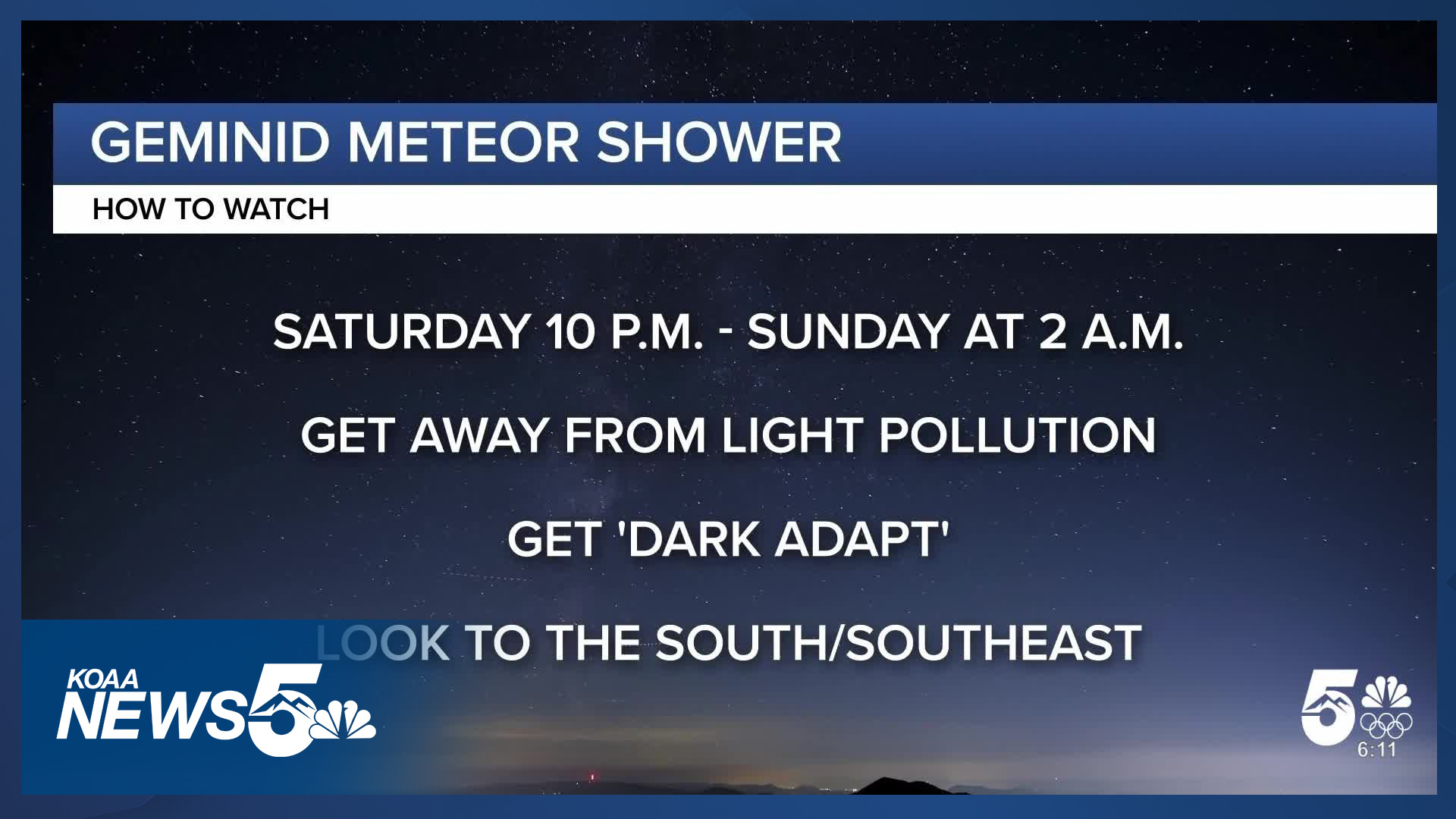
Dr. John Keller, the director of Fiske Planterium, is a teaching professor at the University of Colorado. Dr. Keller recommends people in Colorado try and catch the show Saturday night into Sunday morning, with ideal viewing conditions between 10 p.m. and 2 a.m. Keller adding that the waning crescent moon will rise around 2 a.m. Sunday, making it harder to spot meteors because there will be more light at that time.
HOW TO WATCH
"You're really trying to get away from city lights," Dr. Keller explained. "You really want to 'dark adapt.' You don't just want to like go out for two minutes and say, 'oh, I didn't see anything. I'm going to go back in.' You really need to, you know, you want to commit for 15 to 30 minutes of time."
The News5 Weather Team says people in much of southern Colorado should expect fairly clear skies. Dr. Keller recommends if you want to take photos, use a camera where you can open up the shutter and take a long exposure with a tripod. Dr. Keller says you should leave that open anywhere from one to 10 minutes so you can get an image that shows multiple meteors. However, Dr. Keller himself is more of a "purist" and recommends lying down, getting comfortable and just keep your eyes to the sky.
"This meteor shower comes from a really interesting rock asteroid called Phaethon, and Phaethon is a very unique Apollo asteroid that crosses Earth's orbit and also goes very, very close to the sun. And the debris that that asteroid has put into space creates really colorful meteors... and those are from the different gasses, from magnesium and sodium and iron."

Right to Hunt and Fish? Amendment 83
____
Watch KOAA News5 on your time, anytime with our free streaming app available for your Roku, FireTV, AppleTV and Android TV. Just search KOAA News5, download and start watching.
