


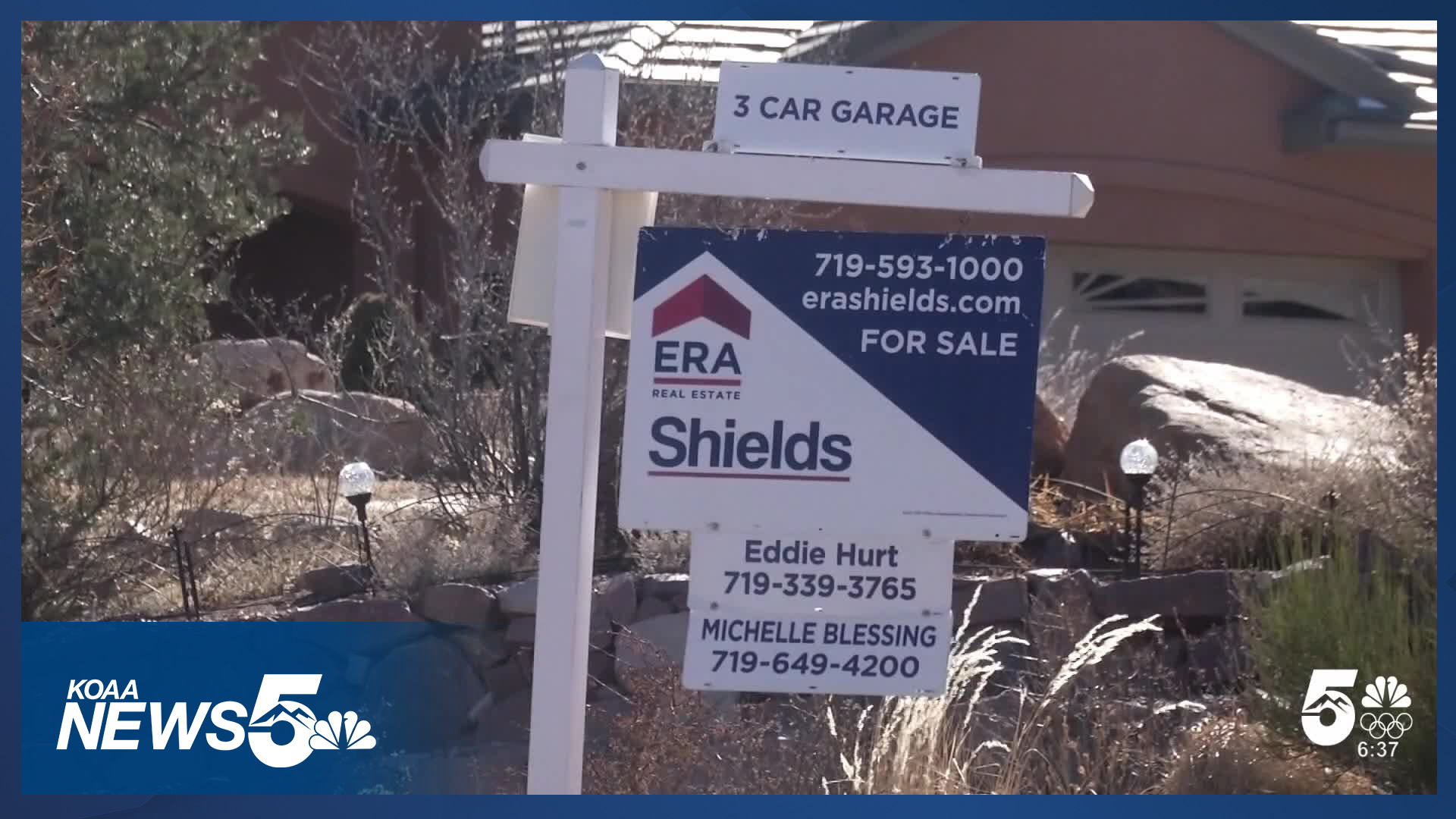


COLORADO (KOAA) — A new report from Becker & Poliakoff shows California is the "Coldest" real estate market in 2026. That same report marks Colorado as #21 for the hottest.
The report is based on factors including growth in home prices, rent, employment, new home purchases, construction permits, rental vacancies, house cost burden, and population relocation.
The hottest real estate market within Colorado, according to the report, is Colorado Springs. Click here for the full report.
According to a 2025 recap and outlook for the statewide market from the Colorado Association of REALTORS (CAR), higher inventory levels, longer days on market, and cost-sensitive buyers reshaped negotiations across the state, giving buyers more choice while forcing sellers to recalibrate pricing and expectations.
CAR spokesperson and REALTOR Cooper Thayer believes the outlook for 2026 will be similar to what the Centennial State experienced in 2025.
“2025 was two different markets,” Thayer explained. “We had the single-family market, which performed relatively well. We saw moderate levels of appreciation, increased new listings, and increased sales, and then we had the condo and townhouse market, which was a little bit slower.”
Looking ahead to 2026, Cooper said he expects conditions to resemble much of what played out in 2025.
“One thing that has remained consistent, and that is uncertainty,” Thayer said with a smile “Buyers right now are not incredibly motivated.”
Thayer pointed to a widening gap between the cost of buying and renting, with an influx of new rental units over the past few years that pushed rents down slightly and the cost of homeownership continuing to rise with factors such as home insurance and HOA fees.
“Unless we see significant changes in that cost to rent versus buy metric that we track, it’s unlikely that buyers are going to have a ton of motivating factors to move quickly,” Thayer said.
But Thayer believes the market in Colorado is healthy. He feels the report ranked Colorado lower than it should be when it comes to the hottest real estate markets, because there is a desire to move to Colorado and the data they use is from 2025.
“The biggest takeaway is that boring can be good,” Thayer stated. “Sometimes slow and stable is healthy, and we actually like to see that in the real estate market. Colorado continues to be and probably will be for a long time one of the best places to live in the world."
Thayer admitted he is a bit biased because he grew up in Colorado.
The following is a December "Snapshot" of the Colorado Housing Markets from CAR. Car basis their analysis from REALTORS working in markets across the state.
Aurora – Aurora, Centennial, Adams County, and Arapahoe County closed 2025 with a clear shift toward a buyer-friendly market. Pricing fell 5–8%, with some homes selling more than $100,000 below 2024 expectations. Inventory dipped seasonally in December but rebounded quickly in January, benefiting buyers. Interest rates in the low 6% range, builder incentives, and abundant townhome and condo supply add leverage, though rising HOA and insurance costs pose challenges. Sellers must price competitively and present move-in-ready homes as 2026 is expected to mirror 2025 with even more inventory.
Boulder and Broomfield counties – Boulder and Broomfield counties ended 2025 with muted results. Boulder saw a stagnant market, with flat home prices, longer days on market, and increased seller flexibility as buyers slowed late in the year. Negotiation returned as sale-to-list ratios dipped below 98%. Broomfield fared better, posting roughly 4% price growth and faster sales driven by more affordable homes. Condos and townhomes struggled, dropping about 10% amid new supply and rising HOA fees. Early signs suggest 2026 will remain balanced, with modest appreciation and steady activity.
Colorado Springs - The 2025 housing market frustrated everyone. Median prices fell 5.2%, listings rose 6.4%, and sales barely increased, creating an unpredictable, sluggish year with longer days on market and rising withdrawals. Condos and townhomes were hit hardest by HOA and insurance costs. Rate-cut hopes faded as buyers waited or rented and sellers misread conditions, even as short sales returned. Looking ahead, 2026 is expected to bring continued softening, weak demand, economic uncertainty, and potential volatility despite political and monetary intervention.
Denver Metro - The 2025 housing market proved frustrating across the board. Median prices declined 5.2%, active listings rose 6.4%, and sales saw only modest gains, resulting in a slow, unpredictable year marked by longer days on market and more withdrawn listings. Condos and townhomes suffered most due to rising HOA fees and insurance costs. Buyers delayed purchases amid fading rate-cut hopes, while sellers misjudged market shifts and short sales reappeared. Heading into 2026, expectations point to continued softening, muted demand, economic uncertainty, and heightened volatility.
Durango/LaPlata County – La Plata County’s 2025 housing market felt uneven month to month but proved stable overall, closely mirroring 2024. Buyer demand held steady while inventory rose sharply, extending days on market and giving buyers more leverage. Single-family sales edged up year over year, while condos and townhomes softened slightly. Well-priced, show-ready homes continued to sell, with urban Durango outperforming rural areas. Resort markets faced added pressure from high supply and dry winters. Looking ahead to 2026, expectations call for a balanced, resilient market with modest growth and continued competition.
Evergreen/Foothills - The foothills market ended 2025 with a typical December slowdown after a stronger fall, reinforcing a year defined by gradual rebalancing. Inventory improved, days on market lengthened, and pricing largely held steady, especially in Evergreen and Conifer. Buyer activity narrowed but remained committed, with no signs of distress. Mortgage rates easing into the low 6% range supported engagement despite affordability challenges. Well-priced, prepared homes continued to sell, while fatigue—not optimism—helped keep transactions moving. The market enters 2026 slower but healthier and well balanced.
Fort Collins - The Fort Collins real estate market closed out an unusually complex 2025 with overall stability despite political and economic uncertainty. December activity was calm, with modest price gains and limited sales typical of the holiday season. Single-family homes saw increased listings and sales year over year, while attached homes faced tighter inventory and slightly softer pricing. Overall performance earned a “satisfactory” grade. Looking to 2026, falling interest rates, shifting inventory levels, and renewed buyer confidence could turn recent market stability into sustained strength.
Grand County – Grand County ended 2025 in a cooler, more balanced market. Median listing prices fell about 8.4% to roughly $838,000, inventory increased, and days on market extended into the 87–100 day range, giving buyers more negotiating power. Winter Park and Granby reflected similar trends, with softer pricing and slower sales after a strong start. Higher mortgage rates and increased supply tempered demand, while premium properties held value. Looking ahead to 2026, expectations call for stability, modest price movement, healthier inventory, and a market driven by accurate pricing and buyer leverage.
Grand Junction/Mesa County – Mesa County ended the year largely unchanged from 2024, with flat sales and median prices. New listings and average prices rose due to increased inventory above $500,000, while homes under $500,000 remained scarce, pushing more buyers toward townhomes and condos. Interest rates continued to heavily influence buyer behavior, contributing to a quiet December as sellers delayed listings. Looking ahead to 2026, buyer demand exists, but affordability and monthly payment concerns remain key obstacles.
Gunnison/Crested Butte – The Gunnison–Crested Butte market ended 2025 slightly ahead of 2024, with total sales up nearly 8% and dollar volume up 3%, while average prices remained mostly stable. December closings were boosted by long-planned subdivision sales, masking softer underlying activity. Crested Butte saw modest sales growth and higher prices, especially for single-family homes, while Gunnison posted strong sales gains despite slight price declines. Heading into 2026, inventory is mixed, contracts are historically low, but improving interest rates are expected to drive increased buyer activity and steady pricing.
Pagosa Springs – The Pagosa Springs market ended 2025 slightly ahead of 2024 in total sales, despite a quiet December typical of the holiday season. Increased inventory, lower interest rates, and more realistic pricing supported buyer activity, though affordability remained a challenge for local, financed buyers. Cash and second-home buyers continued to drive much of the market. Annual median and average prices declined modestly, creating a more balanced environment. Looking ahead to 2026, proper pricing and preparation will be critical for sellers as inventory remains elevated.
Pueblo – Pueblo County ended December 2025 with a stable, balanced real estate market. Inventory stood at 4.6 months, offering buyers options while keeping prices steady. Single-family average prices rose 9.5% month over month, and condo prices increased both monthly and annually. New listings, pending sales, and active inventory declined, reflecting typical seasonal slowdowns. Homes sold for about 97% of list price, and days on market remained sustainable, positioning Pueblo for a solid start to the new year.
Steamboat Springs/Routt County – After a slow start, the Steamboat Springs market rebounded in late 2025 as buyer activity shifted into the fall, allowing single-family sales to finish 2.5% above 2024. Inventory tightened, prices held firm overall, and sellers adjusted to longer timelines and modest price concessions. Multi-family inventory expanded significantly, driven by new construction, though well-priced properties continued to sell steadily. Outlying Routt County markets saw mixed results but tighter year-end inventory. Entering 2026, a more balanced market and major resort-area development are expected to support continued stability.
Summit, Lake and Park counties -The Summit, Park, and Lake County markets closed 2025 with resilience as inventory growth brought better balance and buyers became more deliberate. Summit County led activity, with strong gains in single-family and modest growth in multi-family sales despite slight price declines. Park County saw fewer sales but higher prices. Luxury homes remained a major driver, with a large share of sales above $1 million and significant cash activity. Heading into 2026, the market appears stable, favoring informed buyers and realistically priced listings.
Telluride – The Telluride real estate market remained stable in 2025, posting $868 million in sales across 448 transactions—closely matching 2023 levels despite a decline from 2024. The market’s strength reflects a lasting shift that began in 2020, when affluent buyers sought remote resort communities like Telluride. These high-net-worth buyers, largely insulated from economic volatility, have brought long-term stability to the market. With strong equity performance and continued wealth-driven demand, Telluride is well positioned to remain resilient in 2026.
Vail – The 2025 real estate market remained stable overall, with consistent trends and a clear split between single-family/duplex and condo/townhome performance. Single-family/duplex sales outperformed both in December and for the year, while condo/townhome activity declined following the sellout of major developments. Market share continued to shift toward higher price points, particularly $5 million-plus homes, which dominated dollar volume and remained less sensitive to broader economic pressures. Looking to 2026, falling mortgage rates may help entry-level buyers, but limited inventory, population declines, and potential workforce changes could pose challenges.
___

Right to Hunt and Fish? Amendment 83
____
Watch KOAA News5 on your time, anytime with our free streaming app available for your Roku, FireTV, AppleTV and Android TV. Just search KOAA News5, download and start watching.