


May is Skin Cancer Awareness Month, and Colorado residents face a heightened risk due to the state's high elevation and abundant sunshine.
Skin cancer is the most common type of cancer in humans, but it is curable when caught early, according to Dr. Vinh Chung, a Mohs surgeon at Vanguard Skin Specialists.
"Early diagnosis leads to early treatment, leads to the highest cure rate,"
Colorado's outdoor culture compounds the risk, Chung said, pointing to three key factors: the state's high altitude, more than 300 days of sunshine per year, and an active outdoor lifestyle.
"We are about 1 mile above sea level, so we're 1 mile closer to the sun. There's just less UV protection at this high altitude," Chung said.
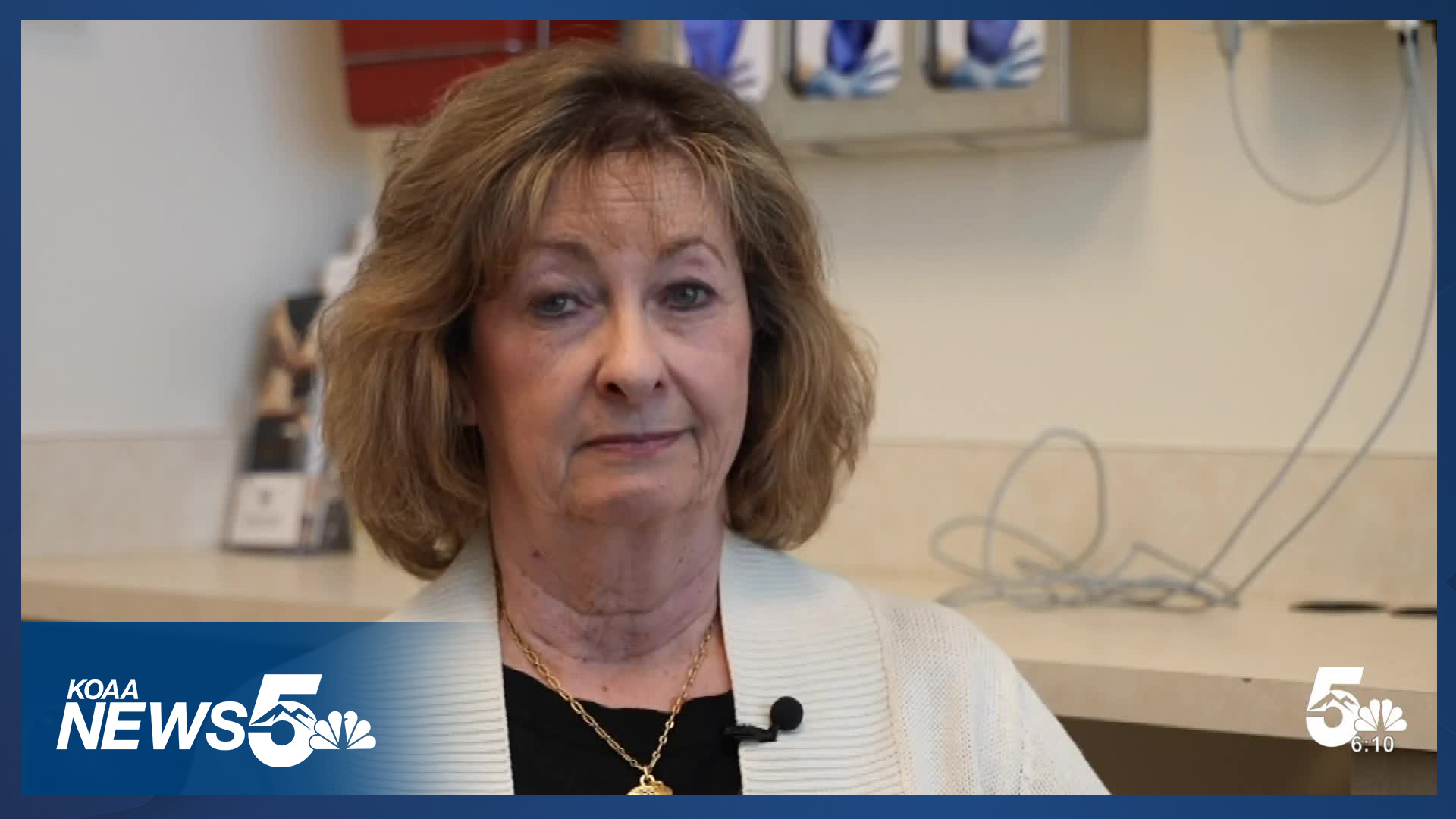
Susan Perry, a patient at Vanguard Skin Specialists, knows this danger firsthand. She is a skin cancer patient who also lost her sister-in-law to melanoma, and she hopes her story will encourage others to take action.
"I didn't know what it was. It was just a little red dot in my eyebrow and I kept thinking, ah, it'll go away, it'll go away. And it wouldn't go away. Use your sunscreen, get your checkups and you might save another person's life by just passing it on,"
Chung says people should watch for what dermatologists call the ABCD's of melanoma when examining a mole or spot:
- A — Asymmetry: One half of the mole looks different from the other.
- B — Border: There is no clear line between where the mole starts and where it ends.
- C — Color: The mole looks significantly darker than others.
- D — Diameter: The mole is larger than 5 millimeters, roughly the size of a pencil eraser tip.
"The reality is that melanomas can be tricky. If you see any mole that is changing, that is acting weird, that looks different from the other moles, if it bleeds for no reason, have it checked out." Chung said.
When a concerning spot is found, Chung says the first step is a biopsy, performed under local anesthesia in the office. Results typically come back within a week. If the spot is benign, patients get peace of mind. If it is cancerous, treatment begins as soon as possible — and in most cases, it can be handled in the office.
For melanoma specifically, Chung says the goal is to treat it within that same week.
To reduce risk, Chung recommends wearing SPF 30 or higher sunscreen, a hat, and UV-protective clothing when outdoors. He also advises going outside before 10 a.m. or after 2 p.m., when the sun is less intense.
Chung urges everyone to get a full skin check — from head to toe — at least once a year, either with a primary care doctor or a board-certified dermatologist.
"If you catch something early, it is completely curable," Chung said. "That's why it's important for us to have a skin cancer check every year."

Right to Hunt and Fish? Amendment 83
____
Watch KOAA News5 on your time, anytime with our free streaming app available for your Roku, FireTV, AppleTV and Android TV. Just search KOAA News5, download and start watching.
