



COLORADO SPRINGS, Colo. (KOAA) — Before the glitter. Before the jumps. Before the overhead lifts. Figure skating was about survival, and the skates looked nothing like they do today.
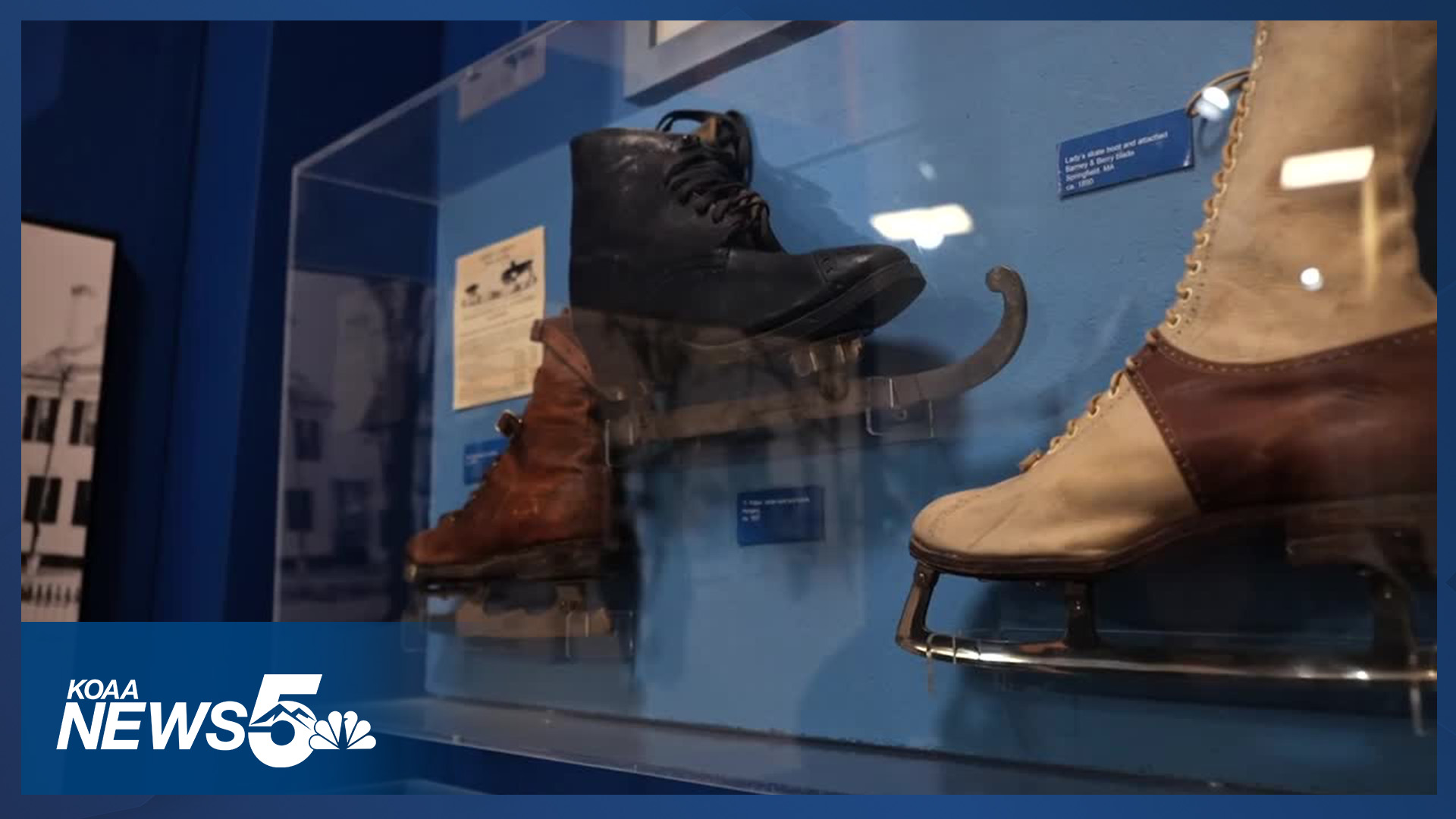
At the World Figure Skating Museum and Hall of Fame in Colorado Springs, rows of historic boots and blades trace the sport’s transformation from frozen utility to Olympic spectacle.
From Bones to Steel
“The bones of deer, sheep, and elk, the shank bones, and they were greased with hog lard,” says museum archivist Karen Cover.
Early skaters strapped greased animal bones to their feet to glide across ice. By the 1400s, Dutch steel blades introduced edges, allowing skaters to push and glide with control.
But even into the 20th century, blades were built for tracing figures, not flying through the air.
“These blades over here were for the compulsory figures, so they're more flat, and the toe pick is less prominent, so they didn't involve messing up your figures,” says Cover.
As the toe pick became sharper and more defined, everything changed.
“As the prow became less and less prominent and the toe pick came into more with the teeth, that's when the skaters started doing more spins and jumps and doing more difficult things rather than recreational skating,” Cover explains.
A tiny strip of metal made modern figure skating possible.
When Dresses Reflected the Discipline
Equipment wasn’t the only thing evolving.
“The girls used to wear very long dresses, and that's because they didn't do any jumps or spins,” Cover says.
In early pair skating, lifts barely left the ice.
“The guys didn't lift the girls up very high… They just kind of picked them up in front of them and just held them,” she says. “They didn't put them above their head and do all the fancy spins and throw jumps that they do today.”
As jumps grew more daring, skirts grew shorter — not for fashion, but for function.
“As that evolved, then the girls' skirts got shorter so that they were able to do the jumps and the spins and side-by-side tricks that they do with their pair partners.”
And the risk level climbed.
“The jumps got riskier and so did the lifts, and they got higher and more complicated as time went on,” Cover says.
Different Blades for Different Disciplines
Not all skates are built the same.
Dance blades, for example, are shorter — designed for two skaters moving in close proximity.
“These blades are used for dance since two people were skating together doing ice dance moves; they were shorter, so they'd have less chance of tripping each other,” Cover explains.
Ice dance itself didn’t become Olympic until decades later.
“Ice dance did not become a part of the Olympics until 1976,” she notes.
Boots Through the Decades
From stiff leather lace-ups to today’s reinforced, lightweight designs, boots evolved alongside the sport’s demands.
“These would be the boots that you would have seen back in the 1940s, 1950s… up to the present time. They just evolved in the way they've made them with the innovations that they've come along with skating boots and blades.”
Among the museum’s historic pieces is a ladies’ boot from the Barney and Barry Company of Springfield, Massachusetts, circa 1890, a reminder of how far technology has come.
There are even skating stilts used in shows in 1948, where performers strapped into elevated blades to create dramatic height on ice.
Olympic Icons Preserved
The museum also houses artifacts from Olympic champions, including costumes and medals from:
- Scott Hamilton (1984)
- Kristi Yamaguchi (1992)
- Tara Lipinski (1998)
- Sarah Hughes (2002)
“Sarah Hughes, our 2002 Olympic champion, wore this when she won her championship in Salt Lake City,” Cover says.
From a survival tool to olympic spectacle, the sport keeps evolving, faster, higher, and more daring with every generation.

Renovations Wrap Up At Fox Run Regional Park
____
Watch KOAA News5 on your time, anytime with our free streaming app available for your Roku, FireTV, AppleTV and Android TV. Just search KOAA News5, download and start watching.