

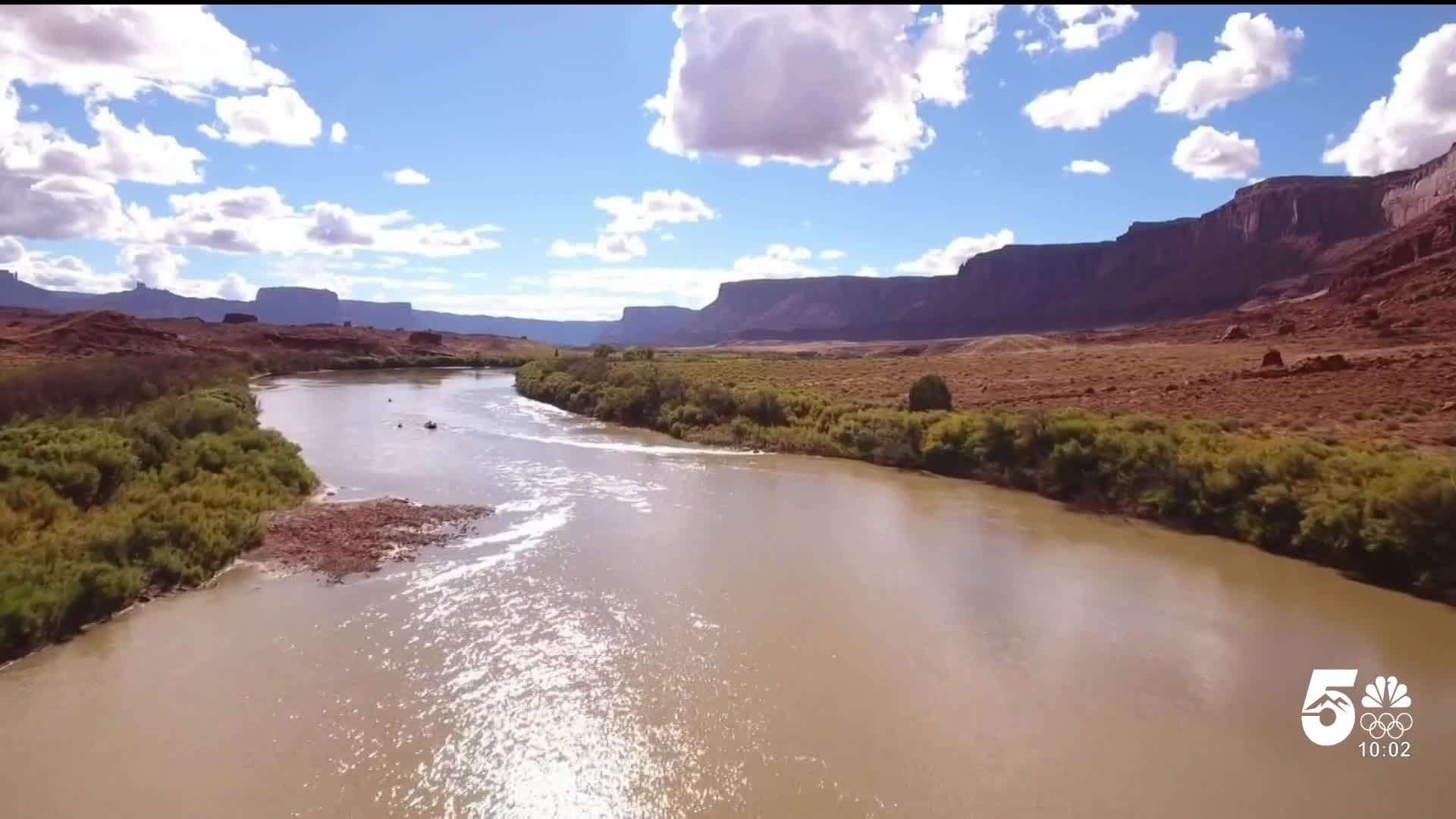


COLORADO SPRINGS, Colo. (KOAA) — The seven basin states failed to reach an agreement on new operational guidelines for the Colorado River. The most recent deadline to avoid possible federal intervention was February 14th, following an initial deadline of November 11, 2025.
40 million people rely on the Colorado River Basin. It spans seven states, 30 tribal nations, and parts of Mexico. Colorado Springs gets about 50% of its water supply from the Colorado River and closer to 70% when water reuse is accounted for.
Abby Ortega is general manager of infrastructure and resource planning with Colorado Springs Utilities. She says despite another failed Colorado River negotiation, Colorado Springs will manage.
“We have our sustainable water plan where we took into account Colorado River risks and it’s why we have a diverse portfolio with our water storage," Ortega said. "We have our water shortage ordinance if our demands get too high.”
Colorado Springs Utilities' 2017 Integrated Water Resource Plan addresses risks to the city's Colorado River supplies by diversifying its water portfolio, expanding storage, enhancing reuse mechanisms, and developing Arkansas River Basin supplies through agricultural partnerships.
“We’re going through that process right now to make those sources of supply legally available," Ortega said. “We’re seeing less water come to our rivers because of the snow pack and the way it runs off, so we’ve accounted for that. It amounts to about a 20% reduction in Colorado River supplies.”
Zaiden and Caleb Wertz are farmers based in the Arkansas Valley. They have maintained a water sharing partnership with Colorado Springs Utilities for a few years now, expanding their efforts through cotton farming for the last two years.
“We needed a crop to conserve water and allow us to more efficiently steward the water resources we’ve been given," Caleb said.
According to Colorado Springs Utilities, 87% of the water in Colorado is used by agriculture. Through agricultural water sharing, the agency says that the installation of pivot irrigation on previously flood-irrigated fields makes water available for Colorado Springs while preserving the economics of the farm it is partnered with. Colorado Springs Utilities can acquire water from the parcel "corners" that are no longer being irrigated.

Child Shot Thursday Morning in Colorado Springs, Suspect Arrested
“In years where we have excess water, we’re able to lease it to farmers for agricultural use on the Lower Arkansas Valley," Ortega said. "In years where we need it, like we expect 2027 will be, we’re able to give that injection water back into our system to help increase the resiliency for our customers.”
Ortega says at the start of negotiations, Lower Basin states (Nevada, Arizona, and California) accounted for the evaporation of major reservoirs as cuts to their water supply — a possible sticking point between Lower and Upper Basin states (Colorado, Wyoming, Utah, and New Mexico). Although federal intervention is now on the table, Ortega does not expect it in Colorado Springs due to the way the Colorado River Compact is structured. The city owns its water rights, managed by the State Division of Water Resources.
"California, Arizona, and Nevada, they really rely on the Bureau of Reclamation to release water out of Lake Powell to Lake Mead for their use," Ortega said. "Whereas in Colorado, Utah, Wyoming, and New Mexico, we're governed by our Division of Water Resources. We all hold our own individual water rights and we get what Mother Nature gives us every year."
Ortega emphasized the efforts Rebecca Mitchell, Colorado’s commissioner to the Upper Colorado River Commission, throughout these negotiations.
"We are standing with Commissioner Mitchell," Ortega said. "We know that she is negotiating to the best of her ability to maintain our water rights and keep water in the state of Colorado, not make a short-term deal because of short-term political gains, but really looking out for the longevity of the Colorado River."
The Department of Interior will finalize operating guidelines for Colorado River reservoirs by October 1, 2026.
Email Senior Reporter Meghan Glova at meghan.glova@koaa.com.
Follow Meghan Glova KOAA on Facebook.
Watch KOAA News5 on your time, anytime with our free streaming app available for your Roku, FireTV, AppleTV and Android TV. Just search KOAA News5, download and start watching.
