

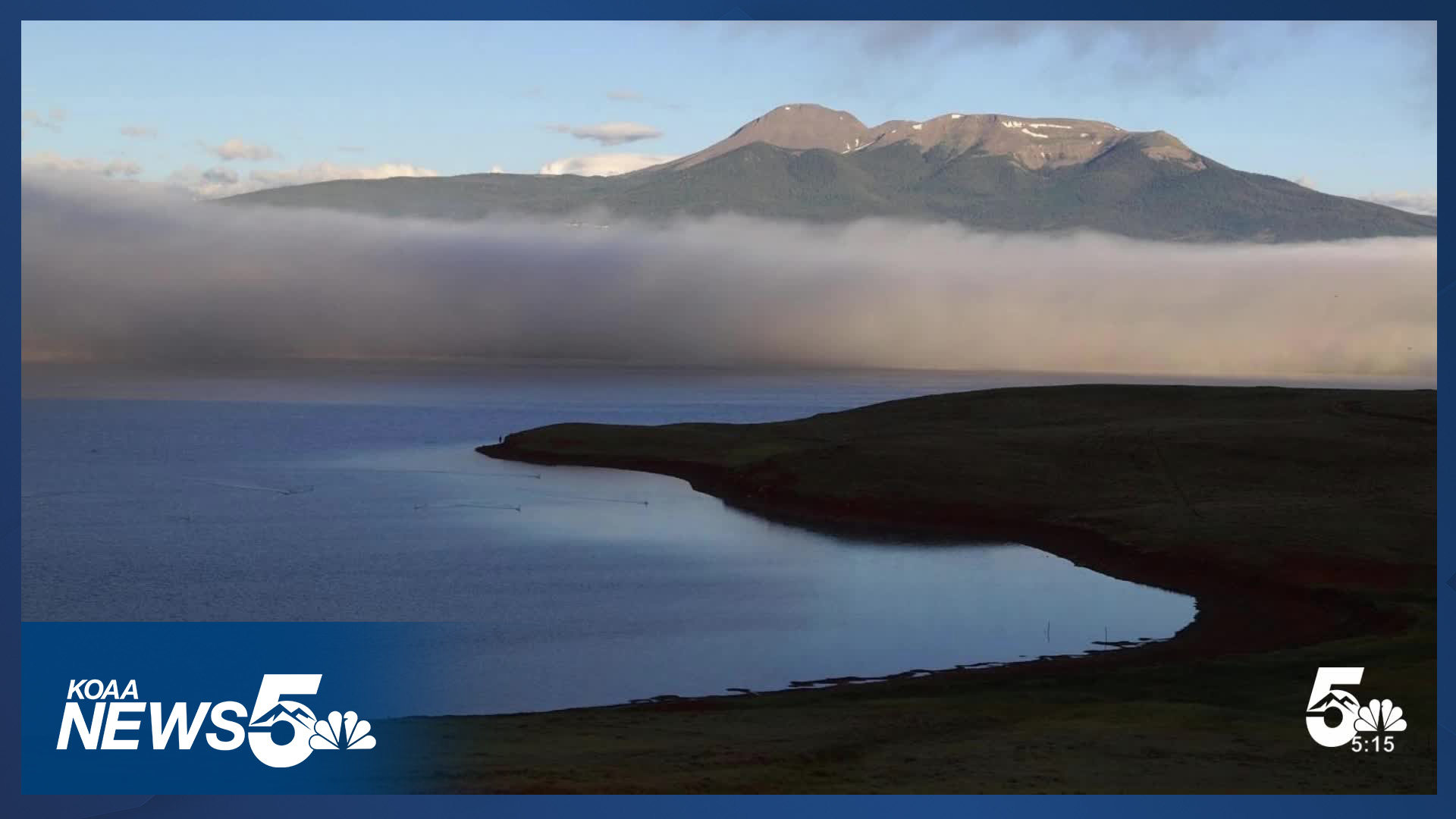



PARK COUNTY, Colo. (KOAA) — A Colorado reservoir will shut down all recreation, including camping, as part of ongoing drought response efforts.
Denver Water will start moving water out of Antero Reservoir to Cheesman Reservoir in the coming weeks to reduce evaporation and conserve the water supply. Antero Reservoir is located in Park County between Buena Vista and Hartsel, north of Highway 24.
Officials said Antero has the highest evaporation rate in the Denver Water system. Moving the water could save about 5,000 acre-feet of water, which is roughly a quarter of the reservoir's capacity.
- Learn more about the closure in the video player below
All recreation at the reservoir will close after fish are relocated.
The closure will impact businesses like The Call of the Wild Outdoor Adventures, which posted the following to social media on Monday:
"Denver Water has officially announced that Antero Reservoir and Williams Fork Reservoir will be closed to all recreation for the 2026 season as part of their drought‑response operations.
Because of this, all The Call of the Wild Outdoor Adventures trips scheduled for Antero or Williams Fork in 2026 will be rescheduled. We’re already working with every client to get new dates and new locations lined up.
We’re fortunate to have solid backup options through our good friends at Pikes Peak Fishing Charters, Mountain Home Reservoir, so your trips will go on — just in different waters.
That said, we want to be upfront: We are deeply disappointed in Denver Water’s timeline and the way this information was released. Guides, anglers, and local businesses were left in the dark, and many of us learned about the closure through word of mouth before any official communication was made.
We also want to directly apologize to everyone who was hoping to fish Antero or chase trophy musky next season. Based on Denver Water’s own statements, it is likely that a significant portion of the trophy‑class fish will be relocated or removed, which will have long‑term impacts on the fishery. This is heartbreaking for all of us who care about these waters.
We’ll continue to keep everyone updated as more details come out. Thank you for your understanding, your patience, and your continued support of our veteran‑owned guide service."
A full news release from Denver Water can be read below:
"In the coming weeks, Denver Water will begin moving water from Antero Reservoir to Cheesman Reservoir, as part of the utility's drought response.
Antero Reservoir has the highest ratio of evaporation to storage of any of Denver Water’s reservoirs, and moving the water to Cheesman Reservoir will prevent about 5,000 acre-feet of water (about 25% of the reservoir’s storage capacity) from evaporating. One acre-foot of water equals the annual water use of about three to four single-family households a year.
“A lot of forethought and planning went into our collection system and reservoirs,” said Nathan Elder, manager of water supply for Denver Water. “Antero is a drought reservoir, designed to provide water to our customers during a severe drought. Consolidating this water into Cheesman will help us make the most of the water we have.”
Denver Water is working closely with Colorado Parks and Wildlife to minimize the loss of fish during this process and to allow the public to use the reservoir for a brief period before it eventually closes. Following the fish relocation process, there will be no recreation, including camping, allowed at Antero Reservoir in 2026. More details about this plan will be announced when it is finalized.
The decision also allows Denver Water to use more water from its South Platte River Basin supplies, reducing the need to pull as much water from sources west of the Continental Divide, which are also below normal levels following an abysmal snowpack and runoff season.
In a standard year, the water lost to evaporation is recovered by the next runoff season. Because of the historically low snowpack levels in 2026, the water lost this year would not have been recovered.
Drought conditions will determine when the reservoir can be refilled. The reservoir was also drained to assist with water management during the 2002 drought. There were plans to drain the reservoir as a drought response in 2013, though a series of late-season snowstorms allowed Denver Water to continue storing water in the reservoir. The last time Antero Reservoir was emptied was in 2015 for a dam rehabilitation project."
This is not the first Colorado reservoir to have struggles this early in the season. Colorado Parks and Wildlife announced the closure of the Two Buttes Reservoir in Baca County back in March.
- WATCH: This Southeast Colorado Reservoir Completely Dried Out
This story was reported on-air by a journalist and has been converted to this platform with the assistance of AI. Our editorial team verifies all reporting on all platforms for fairness and accuracy.

Right to Hunt and Fish? Amendment 83
____
Watch KOAA News5 on your time, anytime with our free streaming app available for your Roku, FireTV, AppleTV and Android TV. Just search KOAA News5, download and start watching.
