



COLORADO SPRINGS, Colo.(KOAA) — Colorado families with disabled loved ones are facing continued uncertainty about proposed cuts to paid caregiving hours, as state officials go back and forth on a controversial 56-hour weekly cap.
The Colorado Joint Budget Committee initially voted Wednesday night to maintain the current 112 paid hours per week for caregivers. However, the Department of Health Care Policy and Financing asked lawmakers to reconsider the decision Thursday afternoon, keeping the proposed 56-hour cap on the table.
The Joint Budget Committee voted Thursday night to revisit the potential cut in the future, leaving families and caregivers in limbo.
"It's pretty much up in the air on if is it like is it really denied or is it gonna be implemented because it looks like HCPF is still pushing through," Paisley Cawiezell said.
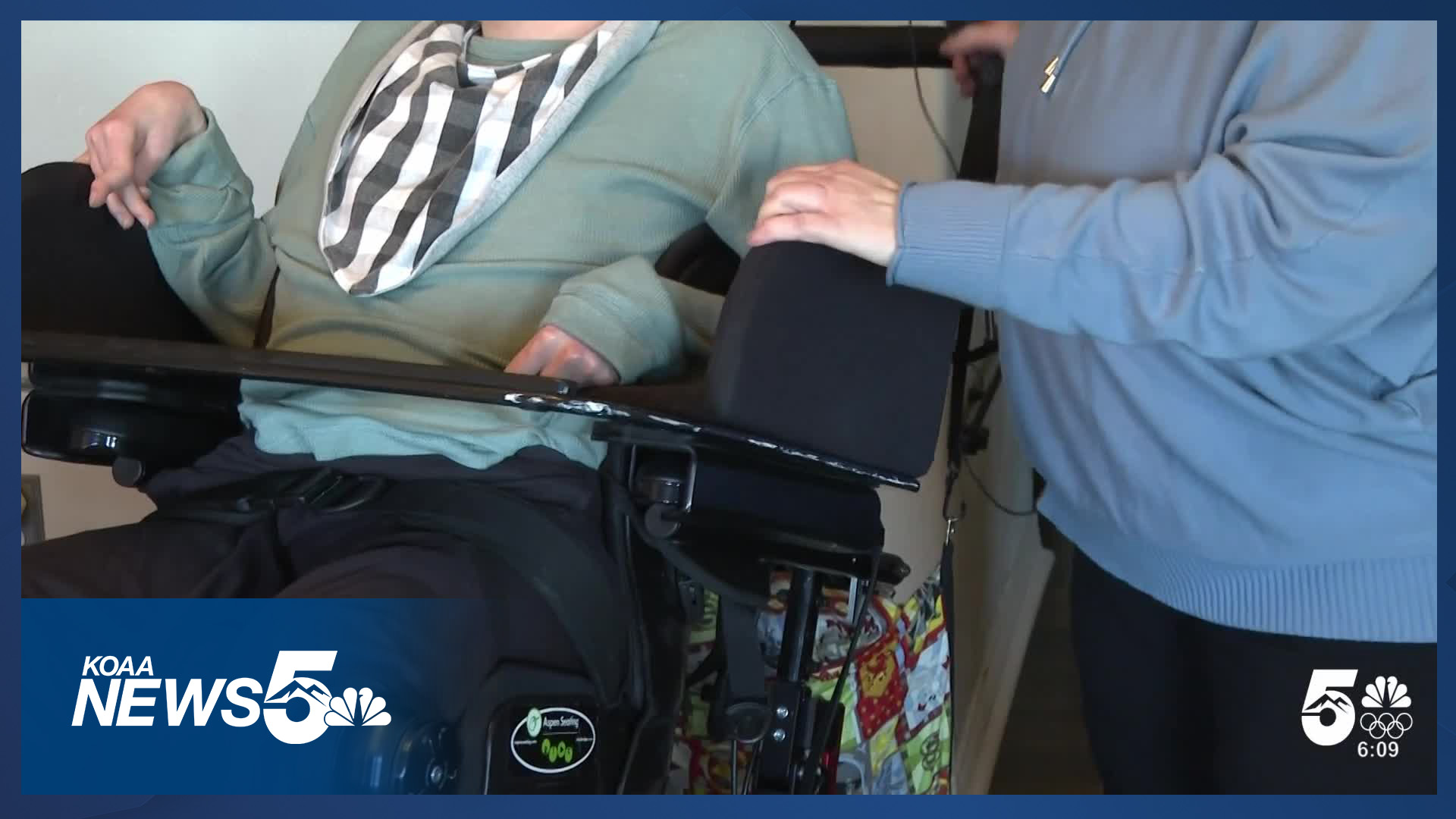
Cawiezell is a full-time caregiver and mother of her six-year-old daughter, Marisela, who is completely blind and has complex medical and developmental disabilities. She tells News5 the uncertainty is exhausting for families, like hers, who depend on these services.
"Not knowing should they still speak at a hearing, should they still submit public complaints, should they still be advocating and the question to that is yes, absolutely, until the wheels fall off, until we have no more words to say, we should be advocating," Cawiezell said.
Cawiezell was interviewed before the updated decision from the comeback Joint Budget Committee meeting. She has sent News5 and an updated response.
These policies create serious safety risks for people with disabilities and will directly harm children like my daughter.
If burnout prevention were truly the objective, then this policy should be applied equally across the healthcare system. Surgeons, physicians, hospital nurses, emergency room staff, rehabilitation therapists, and CNAs working in nursing homes and hospitals routinely exceed 56 hours per week. There is no statewide proposal to cap their hours at 56. There is no claim that limiting physician schedules is necessary to protect patient safety through budgetary restriction.
The 56-hour caregiver cap and soft caps do not protect families. They destabilize care, increase abuse risk, intensify caregiver burnout, and shift financial burden onto households already carrying extraordinary responsibility.
If these caps are adopted, the consequences will not be theoretical. Reduced supervision, fragmented care, and forced caregiver turnover will increase the risk of abuse, preventable injuries, unnecessary hospitalizations, and long-term trauma for medically vulnerable children and adults. Policymakers must ask themselves whether a budget strategy that knowingly elevates these risks is acceptable.
Children with disabilities already face extraordinary challenges. My daughter carries the burden of her medical conditions every day. She, and thousands of other children like her, should not be forced to live with additional fear and instability because of policy decisions that prioritize short-term savings over human safety and dignity. Care should not become unpredictable for the most vulnerable members of our community.
Colorado has the opportunity to lead with compassion, evidence-based policy, and fiscal responsibility by preserving individualized, medically necessary home care. I respectfully urge lawmakers to reject these caps and protect the safety and dignity of human beings with disabilities and the families who care for them.

Under the new proposal from the Department of Health Care Policy and Financing, the cap would not be implemented until July 1.
They also offered up a "stair-stepped implementation plan". In a comeback request document, it said on July 1, 2026, an 80-hour weekly cap would begin. Phase three would begin September 1, 2026, with a 63-hour cap in place. The originally proposed 56-hour cap would then be implemented on November 1, 2026. This plan has not been approved by the Joint Budget Committee, but was suggested in the comeback meeting on Thursday.
ALSO READ | State proposes cutting paid caregiving hours from 112 to 56 per week for Colorado families
Susan Root, a mother who spoke about the issue last week, expressed her concerns after the Joint Budget Committee meeting.
I extend my gratitude for the Joint Budget Committee's pivotal vote on January 28, 2026, rejecting the HCPF's proposed 56-hour caregiver cap for 2025-2026 fiscal year. This decision was a critical affirmation of support for our disabled community.
However, I am deeply troubled by HCPF's indication during today's JBC meeting (January 29, 2026) that they intend to reintroduce this same 56-hour limitation. This cap would fundamentally undermine medically necessary, sustained care for countless individuals, including my daughter, who requires 24/7 specialized support.
I must vehemently oppose HCPF's intent to reintroduce the 56-hour caregiver cap. This proposal, directly jeopardizes the critical 24/7 care my daughter, and many others, desperately need. Implementing this hour limit, without a viable workforce strategy, is not only irresponsible but dangerous for the developmental disabilities community. We need sustainable solutions that safeguard essential care rather than dismantling them and putting our family members at risk of not having trained care providers. Without proper trained care providers the potential for loss of life and institutionalization is greatly increased.

"It is just leaving a lot of us providers in the dark," Cawiezell said.
The decision is complicated by the fact that the proposed cap stems from an executive order by Governor Jared Polis, which means he could veto any decision made by the Joint Budget Committee. The committee will revisit the issue, but it remains unclear when a final decision will be made.
News5 reached out to the Governor's office for comment.
Governor Polis is proud that today the Joint Budget Committee approved the majority of what he proposed in his budget. Governor Polis submitted a balanced budget proposal that protects education and public safety funding. Medicaid is one of the fastest growing parts of the budget and the Governor's proposal protects coverage for Coloradans while also slowing the rate of growth.
News5 reached out to other parents and asked for their statements following the decision to revisit the 56-hour weekly cap in the future. Here are those responses.
___

Right to Hunt and Fish? Amendment 83
____
Watch KOAA News5 on your time, anytime with our free streaming app available for your Roku, FireTV, AppleTV and Android TV. Just search KOAA News5, download and start watching.
