


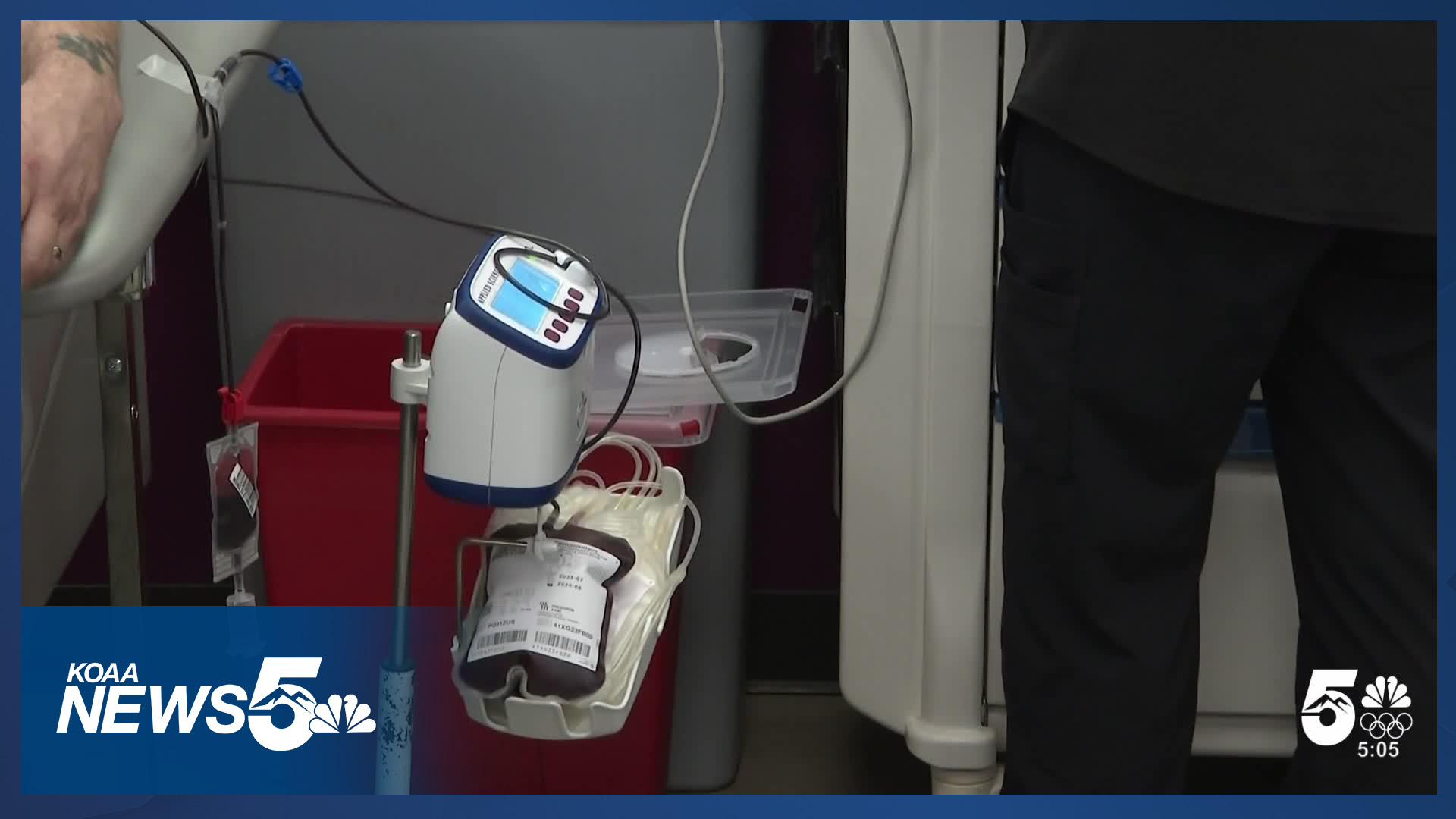

COLORADO SPRINGS, Colo. (KOAA) — As the holidays wrap up and routines begin to settle, blood banks across Colorado are facing one of their toughest stretches of the year.
According to Vitalant, blood donations typically dip from Thanksgiving through early January, a time when the state still needs about 600 donors every single day.
Travel, school breaks, and fewer organized blood drives all contribute to the slowdown, even though emergencies and medical needs don’t take a break.
“This two weeks at the end of the year is when we see the most dip in those donors coming in,” said Tori Robbins, communications manager for Vitalant.
Blood banks aim to keep at least four days of supply on hand to serve hospitals and respond to emergencies. Right now, Vitalant says they’re hovering closer to three to three-and-a-half days, a margin that leaves little room for error.
“We’re doing okay,” said Robbins. “But consistent donations are what’s keeping us there. If usage starts outpacing donations, that’s when we say it’s critical.”
Blood now reaches patients before they reach the hospital
That supply has become even more important for first responders.
The Colorado Springs Fire Department was the first in the state to begin carrying blood on ambulances, allowing crews to administer transfusions before patients ever reach a hospital.
“Before this, we were helpless,” said Lt. Brian Ebmeyer. “All we could do was try to get patients to the hospital fast, where they could get blood.”
In 2025 alone, the department administered about 95 units of blood to 83 patients, a move Ebmeyer says helped save more than 50 lives.
“The earlier you give blood, the less they need later,” he said. “It improves their chances of surviving and shortens their time in the ICU.”
Type O blood, especially O-negative, is particularly critical in these situations. It’s often used when time is of the essence and there’s no opportunity to blood-type a patient before transfusion.
Most blood is used every day not, just in emergencies
While traumatic injuries draw attention, Vitalant says the majority of blood transfusions are planned and ongoing, supporting cancer patients and people with chronic medical conditions who rely on regular treatment.
“Blood is good for 42 days, and it rarely ever reaches that point,” said Robbins. “So few people donate, and so many people need it.”
That reality is what motivates donors like Conrad Munster, who has been donating platelets since 1994. He gives at least once a month, sometimes twice, primarily to help cancer patients.
“It’s bad enough to have cancer,” said Munster. “It shouldn’t be added to a problem of looking to see if you get platelets and somebody to help you out through that journey.”
Munster says he doesn’t donate for recognition. Instead, he sees it as a personal calling.
“No one has ever sent me a letter saying thank you,” he said. “But I give myself a check plus. I figure I did my good deed for the day.”
Donors give for people they may never meet
For Yvette Burney, donating platelets is a way to honor her mother, who passed away from cancer. This year alone, she’s donated 15 times, even though platelet donations can take several hours.
“It makes me feel good that I’m helping somebody,” said Burney. “I don’t know who gets the platelets, and it doesn’t matter. That’s the beauty of it, it can go to anyone.”
Lori Bradford began donating blood in college and says her motivation became deeply personal after her mother suffered a stroke and she herself faced complications during childbirth.
“I remember them saying, ‘Get a blood transfusion ready. She may need it,’” said Bradford. “That was really scary. What if there wasn’t something ready for me?”
For her, donating is a simple way to help ensure blood is available for someone else.
“It takes about 30 minutes out of my day,” she said. “And it just makes you feel good knowing something you did might help somebody tomorrow or next month.”
A constant need and a simple way to help.
Both Vitalant and first responders say the message is simple, blood and platelet donations save lives, but they only work if people continue to show up, even during the busiest times of year.
“There’s no substitute for blood,” said Ebmeyer. “Nothing can replace what it does for another human being.”
For donors like Munster, Burney, and Bradford, that knowledge is enough.
“It’s helping somebody,” said Burney. “And that’s what matters.”
___

Child Shot Thursday Morning in Colorado Springs, Suspect Arrested
____
Watch KOAA News5 on your time, anytime with our free streaming app available for your Roku, FireTV, AppleTV and Android TV. Just search KOAA News5, download and start watching.