

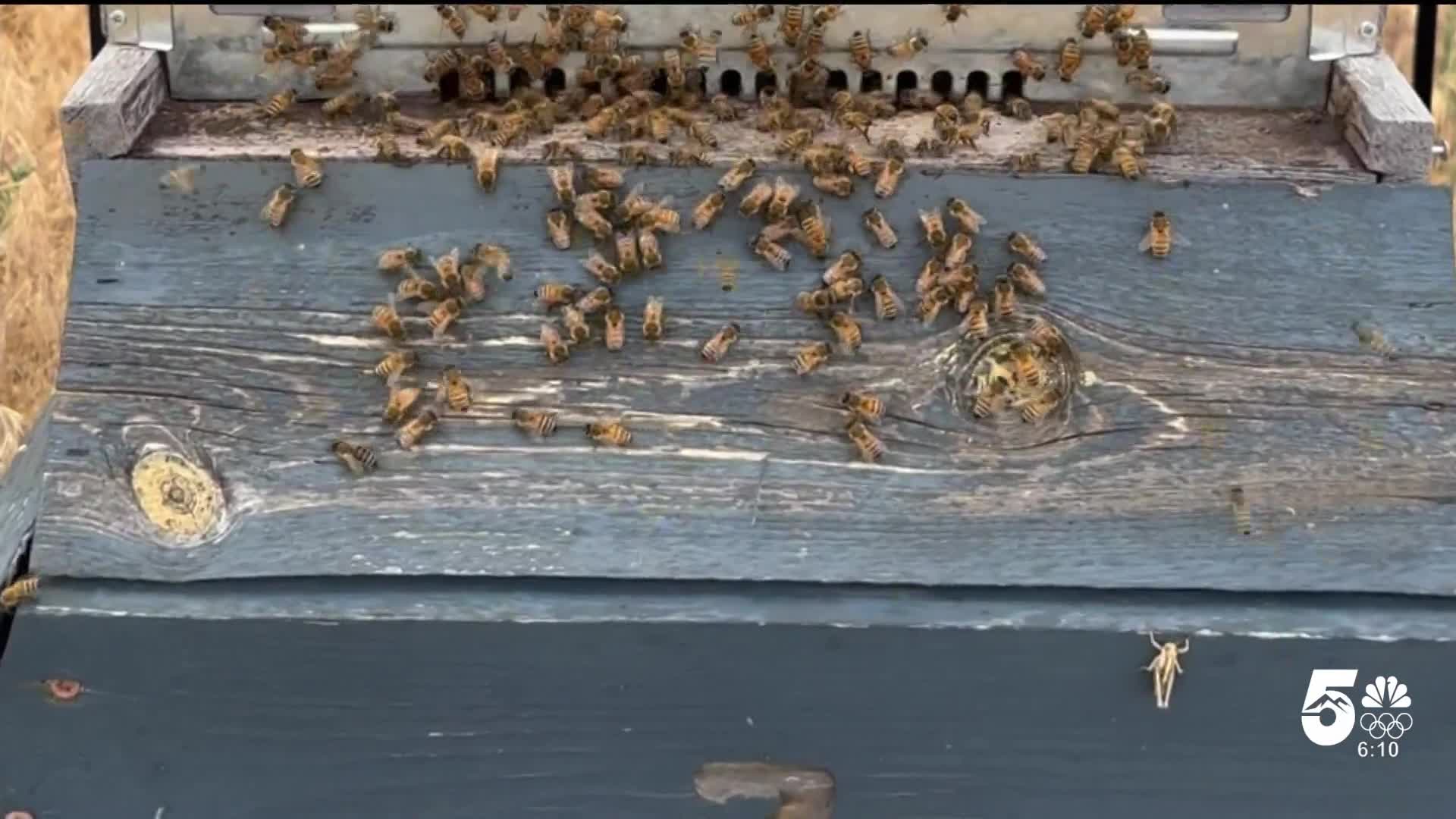


COLORADO SPRINGS — A couple of local beekeepers who also teach the skill report bee colonies are dying because of all the warm days this winter. There is concern more will be lost in the months ahead.
"The bees this time of year should be in a tight cluster, keeping themselves warm riding out the winter," said Leonard Rickerman, a local beekeeper.
"We want them to go into winter with about the equivalent of about 120 pounds of honey stores, which would be two of these big boxes on this hive," said Dolly Rickerman, who has been raising bees since she was a kid.
"Most domesticated honeybees will break cluster and they start flying about 45 degrees," Leonard said.
Leonard and Dolly Rickerman have been raising bees for decades. It's expanded into teaching others how to do it, along with a small beekeeping business called Rocky Mountain Bee Supply.
Through January and the start of February they are seeing too many of bees they raise, outside their hives. It is the result of Colorado's extra warm winter.
"Because they're out flying so much, they're consuming all the resources that are normally in the hive for them. And the big fear is this month and next month there's a high probability of hives starving out," Leonard said.
All the movement burns energy. Finding more to eat is rare because most vegetation is still dormant. Back at the hive, bees eat a higher amount of their stored honey.
"What is disconcerting about this winter is that people are coming in with their dead hives a lot earlier," Dolly said.
This day the Rickermans have already worked with another beekeeper who came to their shop for what is called a hive autopsy following the discovery of all the bees in a hive dead. In this case, they determined that starvation is the likely cause.
"They [the bees] just didn't have enough resources to survive the winter," Dolly said.
"The big fear this month and next month is there's a high probability of hives starving out just because they've eaten all their resources," Leonard said.
Extra warm days are also confusing queen bees. Some are laying eggs months early. If cold days hit, or more bees continue to die from lack of food, the odds are higher those young bees will be lost.
"There's not enough nurse bees there to take care of them, they are going to die, and they have to be kept warm and fed and things like that, so it's a huge thing," Dolly said.
Beekeepers will be keeping a close eye on their colonies over the next six to eight weeks. What they want to see is dandelions coming out, as that is one of the first early food sources for bees.
This story was reported on-air by a journalist and has been converted to this platform with the assistance of AI. Our editorial team verifies all reporting on all platforms for fairness and accuracy.
___

Right to Hunt and Fish? Amendment 83
____
Watch KOAA News5 on your time, anytime with our free streaming app available for your Roku, FireTV, AppleTV and Android TV. Just search KOAA News5, download and start watching.
