



DENVER, Colo. — The Denver Department of Public Health and Environment (DDPHE) is sharing how the current Colorado drought is impacting water quality at popular spots around the city.
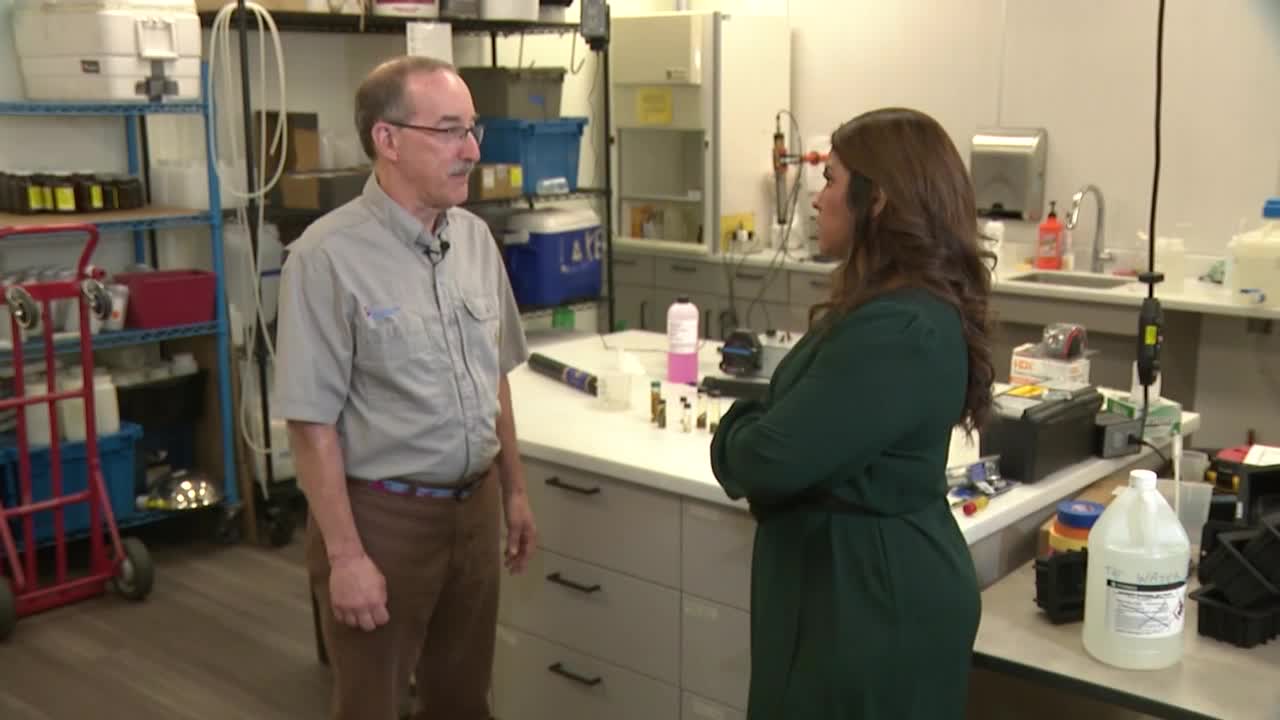
Scripps News Denver met Jon Novick, with DDPHE, in the city's water quality testing lab. He is hoping to get people's attention about both E. coli and blue-green algae.
- Watch the full story in the video player below.
"Water levels are extremely low for this time of year, Novick said. "That means water temperatures are higher than normal, because there's less water in streams and lakes. We're seeing higher levels of nitrogen and phosphorus. And that means that as we get later into the summer, we're going to probably see more algae blooms, in particular, harmful algae blooms. E. coli levels are probably going to be higher than normal, which is important for public health."
Novick also explained that runoff from wastewater treatment plants, people watering their yards, plus other sources are less diluted.
The DDPHE testing is already showing some elevated levels for E. coli.
"So people are wading, or swimming, or boating in our streams, or boating in our lakes that could be a public health concern," Novick said.
Earlier this month, there was a summer kick-off event at Garfield Park. However, the city decided not to offer water activities because the water levels were low and high levels of E. coli.
The city monitors 14 to 16 lakes around the city. Because blue-green algae levels could be higher, he wants pet owners to be particularly careful.
"Blue green algae is actually not an algae, it's a bacteria. When it dies, the cells break open and release a toxin, which can be really harmful to pets in particular. If your dog gets in the water, it's swimming, it's going to drink it, then it comes back and cleans itself, so it's getting a really high dose," Novick said.
These are Novick's requests for Coloradans:
- Pick up after your pets.
- Don’t litter.
- Try not to fertilize before it’s going to rain.
- If fertilizer ends up on your sidewalk, sweep it back onto your yard so it doesn't end up in storm gutters.
Novick also said the city is regularly testing water quality and has multiple systems in place to protect water quality as well.
"If we know that there are people getting into the water somewhere, we're going to be monitoring, and this time of year through the summer, we'll be out there every week collecting samples, trying to keep up on what the conditions are, and in addition to that, we're starting to install some instruments that can give us real-time results or E coli," Novick said.
