

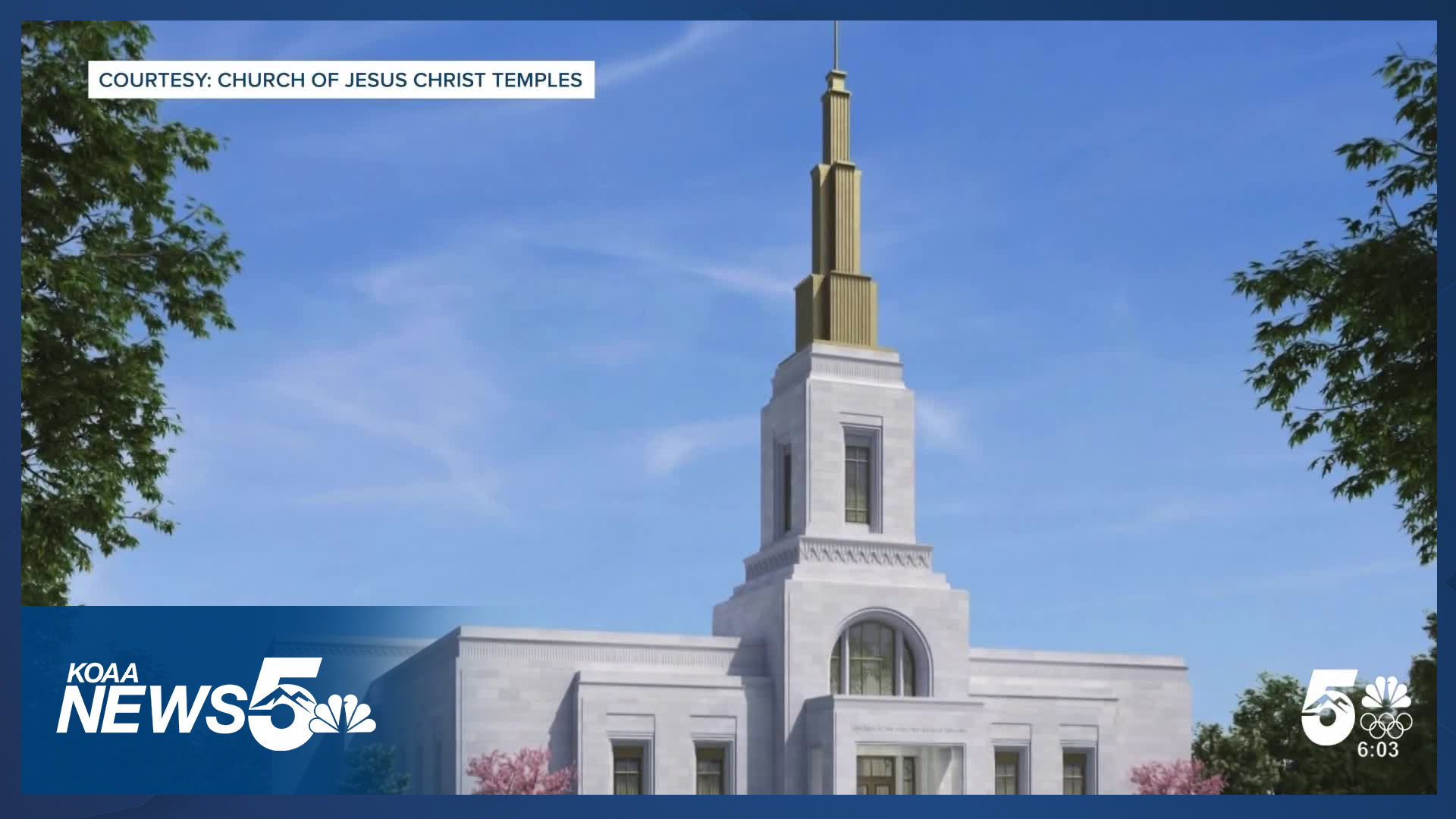


COLORADO SPRINGS, Colo. (KOAA) — The Colorado Springs City Council unanimously voted to approve the construction of a temple built by the Church of Jesus Christ of Latter-day Saints.
The vote was 8-0 with Tom Bailey absent from the council. The final decision comes after a lengthy appeals process.
Many residents opposed the now-approved construction plan for the temple. It will be built on a vacant 43,000 square foot lot in the Flying Horse neighborhood, between Flying Horse Club Drive and Veneto Way.
The council was asked to determine whether the proposed construction was too invasive for the neighborhood. In particular, residents took issue with the height of the temple and its 24-hour illumination.
“Our primary concerns center on ensuring that it's built in compliance with the UDC, the Unified Development Code,” says Mike Kuhn, a Colorado Springs attorney, and the first to file an appeal against construction.
Kuhn lives in the neighborhood and believes the constant lighting will be disruptive. He also believes the temple would stick out in the neighborhood.
The site for temple construction resides in a Mixed-Use Neighborhood zoning district. Per the city’s Unified Development Code, the max height for buildings in this zone is 45 feet.
The proposed church is expected to be just over 140 feet tall.
However, religious institution spires are exempt from this ordinance, provided the largest horizontal cross-section of the spire or tower does not exceed 5% of the footprint of the primary structure from which it rises.
The temple is projected to be 33,000 square feet. Per this ruling, the spire could be legally built up to 1,600 feet above the structure, which is expected to stand at 39 feet.
“We had considered a two-story temple. In discussions, we determined to shorten that to a one-story temple out of respect for our community,” says Mike Law, Comms Director for the LDS Church in Southern Colorado.
Still, Kuhn maintains that though the height may be legally sound, a building built beyond the maximum height must be designed or screened to minimize visibility, per the city code. He claims records contain no documentation that changes were made to visibility.
He worries the 4,000k lights used to illuminate the temple 24 hours a day closely resemble daylight, and would be abrasive with homes just feet away.
The Church says the steeple material was chosen to avoid high levels of reflection, and that “98% of the light will be absorbed.” It says some lights, which will point upwards at a 90-degree angle, will be outfitted with canopies to keep light from beaming into the air.
Additionally, in a letter to the City Council, the Church maintains that, “Restricting the lighting of the steeple would impose a substantial burden on the Church’s religious exercise, which is not justified by any compelling governmental interest.”
Two government agencies, both the FAA and the U.S. Air Force, reviewed and approved the church’s plans, suggesting the lighting would not distract pilots.
Still, Kuhn believes that once the spire reaches its proposed height, minimizing the effect cannot be undone.
With the project now greenlit, the Church’s next step will be to officially break ground.
___

Child Shot Thursday Morning in Colorado Springs, Suspect Arrested
____
Watch KOAA News5 on your time, anytime with our free streaming app available for your Roku, FireTV, AppleTV and Android TV. Just search KOAA News5, download and start watching.
