

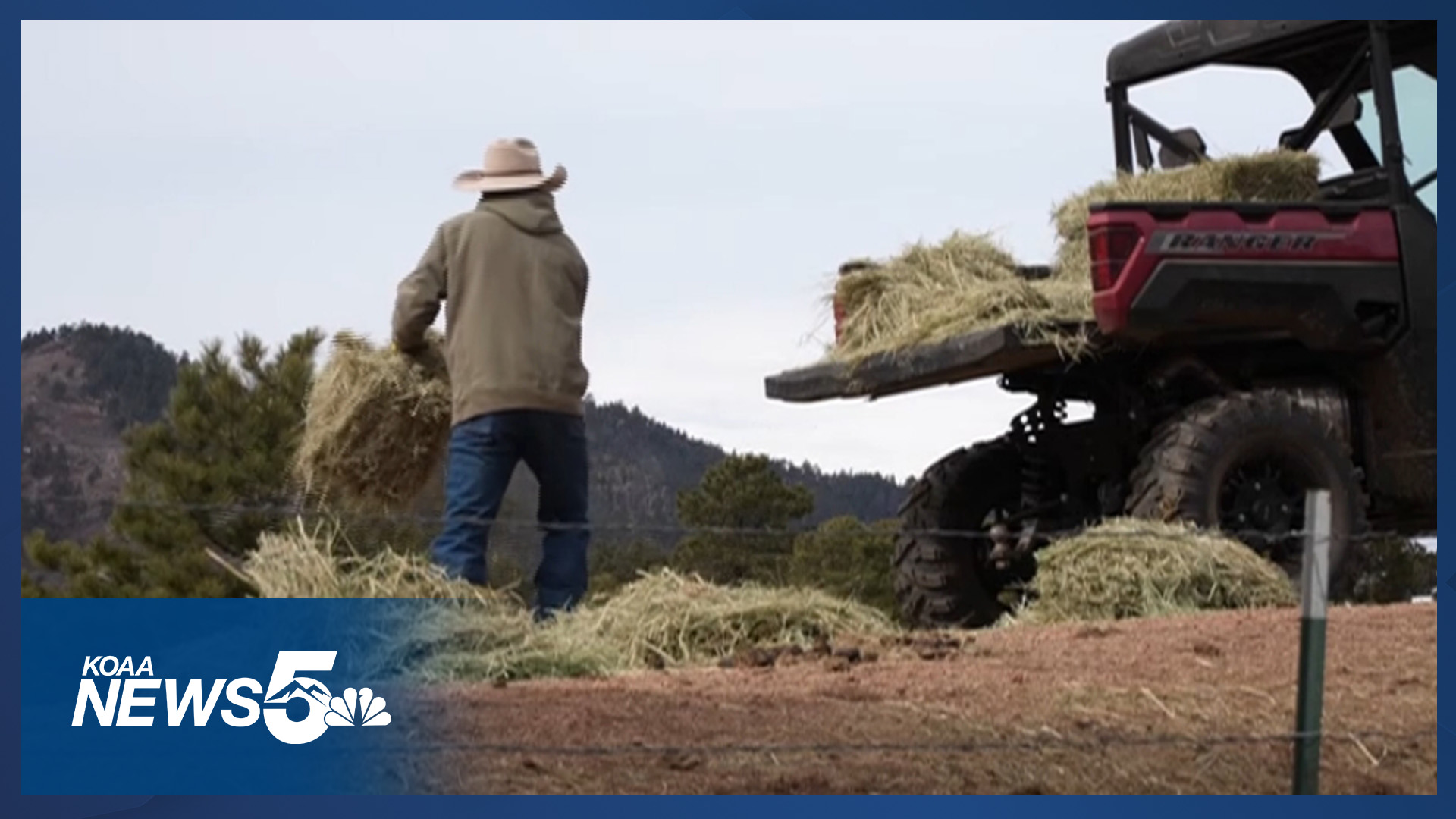


GREEN MOUNTAIN FALLS, Colo. (KOAA) — Hay and livestock feed prices in Colorado are expected to rise significantly in the coming months as the state faces one of its worst snowpacks in recent history, with industry experts warning customers to prepare for substantial cost increases.
Chad Young, barn manager at Colorado Horse Hay in Green Mountain Falls, said current hay prices range from $220 to $260 per ton, but he expects those costs to rise well above current levels.
"We're kind of warning our customers right now, expect to see a jump in prices," said Young. "I'm expecting it to climb."
The price surge stems from severe drought conditions affecting over 31% of Colorado, compared to just 7% at this time last year. The state's snowpack ranks third-lowest in nearly a century, creating challenging conditions for water-dependent crops like alfalfa.
"Any time that water is not there, the price of the hay is gonna skyrocket because the supply is not gonna be there," Young said.
During the 2023 drought, hay traded at upwards of $300 per ton, translating to retail prices "that no one really wants to talk about," according to Young. If prices reach similar levels this year, consumers could pay over $400 per ton, with small 60-pound bales costing at least $15.
The drought's impact extends beyond simple supply shortages. Dry soil conditions mean that even when moisture arrives, the ground absorbs it quickly before it can reach irrigation systems.
"The soil is so dry that it sucks it all up," said Young. "It's gonna get all stuck in the mountains, and our mountains are so dry right now that they're gonna take whatever's there."
The situation creates a double challenge for hay producers and consumers. Not only is less hay being produced, but quality concerns also arise during hot, dry growing seasons.
High temperatures and limited moisture can increase sugar content in hay, making it unsuitable for horses with insulin resistance, Cushing's disease, or laminitis.
"Hot and dry years can definitely up those numbers, which then makes it hard for people to find the hay that they need for their horses," Young said.
Colorado Horse Hay has built relationships with suppliers holding senior water rights, allowing the company to maintain inventory even during drought years. However, the business must source hay from as far away as Oregon and Washington when local supplies run short.
"We've worked really hard to build up our supply chain," said Young. "I know that we've pulled hay and some of our suppliers, they pull hay from Oregon, Washington, just anywhere that they can kind of get it."
The company typically sells about 75% Colorado-grown hay, supplemented by other states. During low-yield years, the business focuses on serving local customers first before considering out-of-state sales.
Young noted that low-yield years paradoxically benefit his brokerage business, as smaller local farmers struggle to produce adequate supplies.
"In the years where there's a good hay yield, we sell less, and that's because the little guy, the farmer that puts up 20 acres and can sell it to his neighbor, the dry land hay, it's all there," said Young.
The situation particularly affects Front Range horse owners, many of whom live on small acreages without adequate pasture and must feed hay year-round. Colorado's arid climate means these properties cannot support the same grazing capacity as more humid regions.
"We're the ones that have to sell it at the high price, which means we look like the bad guys," said Young. "But people have to feed."
While spring storms could provide some relief, Young remains pessimistic about a significant improvement in supply conditions for the upcoming growing season.
"I don't think we're gonna rectify it," said Young. "I think we're gonna see a low supply and a pretty high demand, which is gonna drive prices up."
___

Right to Hunt and Fish? Amendment 83
____
Watch KOAA News5 on your time, anytime with our free streaming app available for your Roku, FireTV, AppleTV and Android TV. Just search KOAA News5, download and start watching.
