

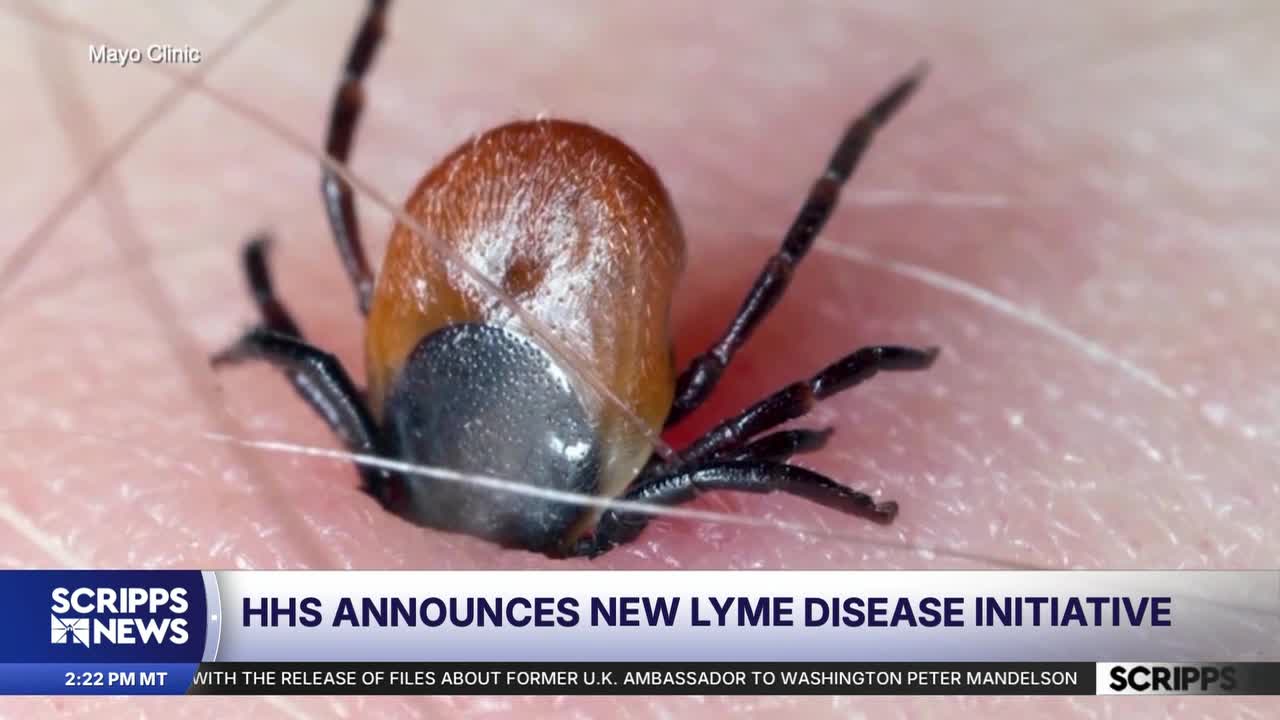


The federal government is implementing a plan to fight a disease that impacts millions of Americans each year.
HHS Secretary Robert F. Kennedy Jr. announced a multimillion-dollar pilot program focused on battling Lyme disease. The program’s efforts include tick control, innovation challenges, funding for researchers to combat Alpha-gal syndrome, and a public-private collaboration to help patients connect with experienced providers.
Lyme disease is one of the nation's fastest-growing health threats. More than 476,000 people are diagnosed with Lyme disease in the United States annually, and recent data show emergency room visits for tick bites have reached their highest numbers in a decade.
RELATED STORY | Tick season seems to be off to a fast start, some worry about future illnesses
Most infections occur through tick bites during the spring and summer months. According to the Centers for Disease Control and Prevention, an estimated 31 million people in the U.S. are bitten by ticks each year.
In May, the CDC issued an early advisory to the public to guard against ticks.
"Tick season is here and these tiny biters can make you seriously sick. The good news is you have options to help prevent tick bites when you spend time outdoors: You can wear EPA-registered insect repellent and permethrin-treated clothing, do tick checks, and remove attached ticks as quickly as possible," said Alison Hinckley, PhD, epidemiologist and Lyme disease expert with CDC's Division of Vector-Borne Diseases. "These simple steps can go a long way in protecting you and your family from diseases spread by ticks. And if you develop a rash or fever in the days to weeks after a bite, or after being in an area with ticks, seek medical care promptly."
“Millions of Americans battling Lyme disease and other tick-borne illnesses have spent years searching for answers, treatment, and support,” said Secretary Kennedy. “The Trump Administration is launching one of the most ambitious federal efforts ever to combat Lyme disease by accelerating research, expanding innovation, and improving care for patients and families. We are going after this disease at its source, driving faster diagnostics and new prevention strategies, and delivering the urgency and action Americans deserve.”
The department’s goal is to reduce Lyme disease cases by 25% by 2035.
