



Oil giant Chevron confirmed that it will expand its operations in Venezuela, just days after President Donald Trump announced an ambitious deal to develop the nation’s oil reserves and give the Pentagon a stake in the profits.
Chevron, the only U.S. oil company that has a major presence in the country, said Wednesday that it has been assigned additional acreage in the Orinoco Belt, where the company has an established position. Joint venture plans include investing more than $7 billion over the next five years, more than doubling production to approximately 600,000 barrels a day compared with 2026.
“Chevron’s history in Venezuela spans more than a century, and our expanded position reflects our confidence in the country’s deep resource potential and its ability to compete for investment within our portfolio for decades,” CEO Mike Wirth said in a prepared statement. “With improved terms and additional acreage, we are strengthening a portfolio that we believe can deliver attractive low-cost oil growth, support energy supply and create differentiated long-term value.”
Venezuela holds the world's largest proven reserves, totaling more than 303 billion barrels of crude oil, according to OPEC's 2025 Annual Statistical Bulletin. Saudi Arabia is a distant second with 267 billion barrels. However, Venezuela's current oil output is only about 1.1 to 1.2 million barrels per day, due to factors such as political instability and international sanctions.
The announcement comes a day after a U.S. official, who briefed reporters on the expected announcement, said that Chevron officials and Energy Secretary Chris Wright were expected to visit Venezuela on Wednesday when the new investment would be formally unveiled. The official spoke on condition of anonymity under ground rules set by the White House for the call.
RELATED STORY | Trump meets with oil executives at White House in push to lower gas prices
Chevron, the second-largest U.S. oil company, has had a presence in Venezuela since 1923. Its joint ventures Petroindependencia and Petropiar, S.A. operate extra-heavy oil projects in the Orinoco Oil Belt, while Petroboscan, S.A. is located in the Zulia State in western Venezuela.
The White House confirmed on Monday that it is partnering with North American Blue Energy Partners as part of Trump ’s push to tap into Venezuela’s oil industry.
The sweeping agreement has been met with skepticism from analysts who say it will take years to revive Venezuela’s oil industry, which is in disarray after years of neglect.
Energy experts also have questioned whether Venezuela’s acting President Delcy Rodríguez has the legal authority to give the company 100-year rights over 17 oil fields with reserves of 65 billion barrels — and whether future Venezuelan or American administrations would overturn the agreement.
Trump has had his eyes on Venezuela’s oil since the capture of Nicolás Maduro, and his aides call it a path away from reliance on oil from the Middle East. Trump has been pressing to get U.S. businesses to restore a presence in the country, and suggested Monday that other oil companies were readying for business in Venezuela. “We have Exxon going in, we have Chevron going in. We have our big oil companies going in,” he said. Trump in January said he was inclined to leave Exxon out of Venezuela after CEO Darren Woods called the country “uninvestable.”
A spokesman for Exxon said Tuesday, however, that “nothing has changed” on the company’s position regarding Venezuela.
Venezuela's government nationalized its oil industry in 1976, and it created the state-owned company Petroleos de Venezuela SA. A second nationalization happened in 2007, with President Hugo Chavez pushing foreign oil companies into state-owned joint ventures or seizing the assets of those companies that did not agree to the joint ventures. While Chevron agreed to become part of a joint venture, others like Exxon and ConocoPhillips refused, and Venezuela took their assets.
Asked about Chevron’s announcement during an interview on Wednesday, Treasury Secretary Scott Bessent said, “No American firm knows how to operate in Venezuela better than Chevron.”
RELATED STORY | Trump announces deal to secure billions of barrels of Venezuelan oil for the US
Bessent told Fox News Channel’s “Fox & Friends” that Trump is “creating assets for the American people” with the deal and that the arrangement “is going to push down oil prices, push up production” to benefit U.S. consumers and the Venezuelan economy.
Trump has said that the agreement with Venezuela would “substantially lower” gasoline prices in the U.S. However, experts have repeatedly warned that Venezuela’s dilapidated oil infrastructure will require years of restoration work and tens of billions of dollars to resuscitate.
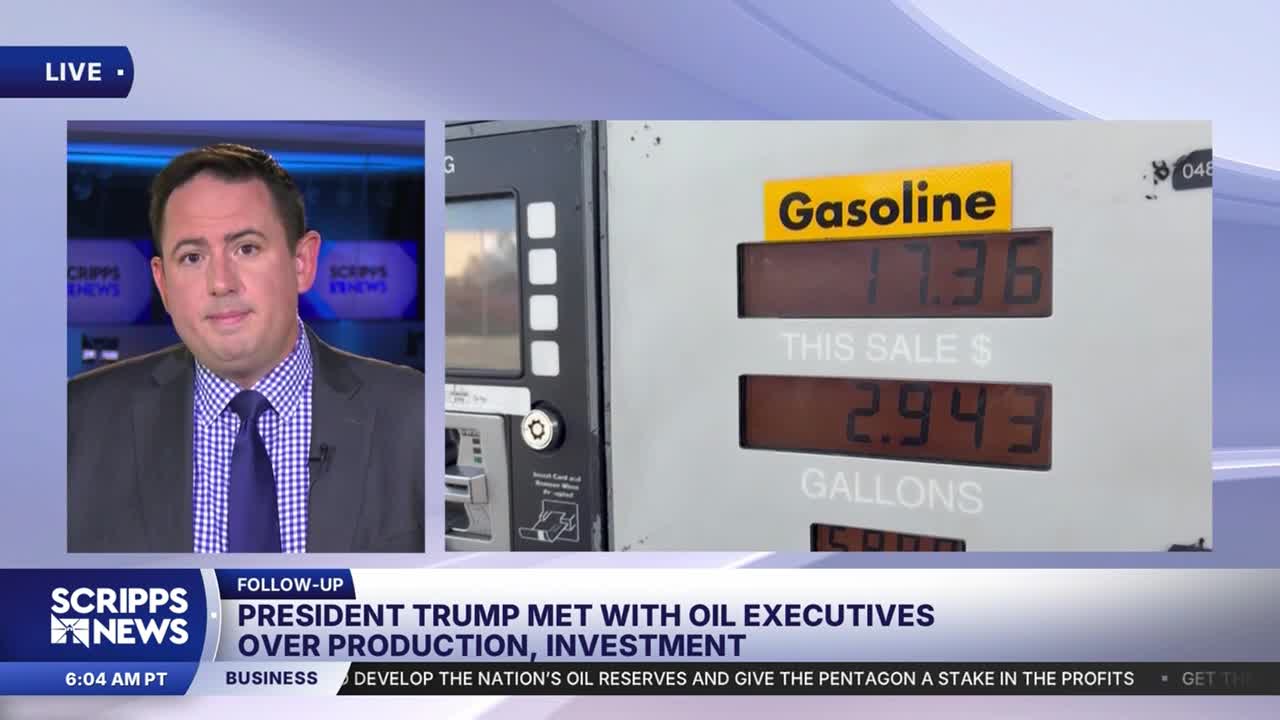
Meanwhile, the national average price for a gallon of regular gasoline jumped overnight to $4.12, according to the motor club AAA. That's 93 cents more than it cost at this point last year.
