


Winter weather is wreaking havoc across the Great Lakes region, with a massive pileup on Interstate 81 in New York State near Syracuse sending seven people to the hospital Thursday.
The multi-vehicle crash near Lafayette involved around 30 vehicles, including three tractor-trailers. At least two people suffered serious but not life-threatening injuries. Police believe weather conditions contributed to the crash.
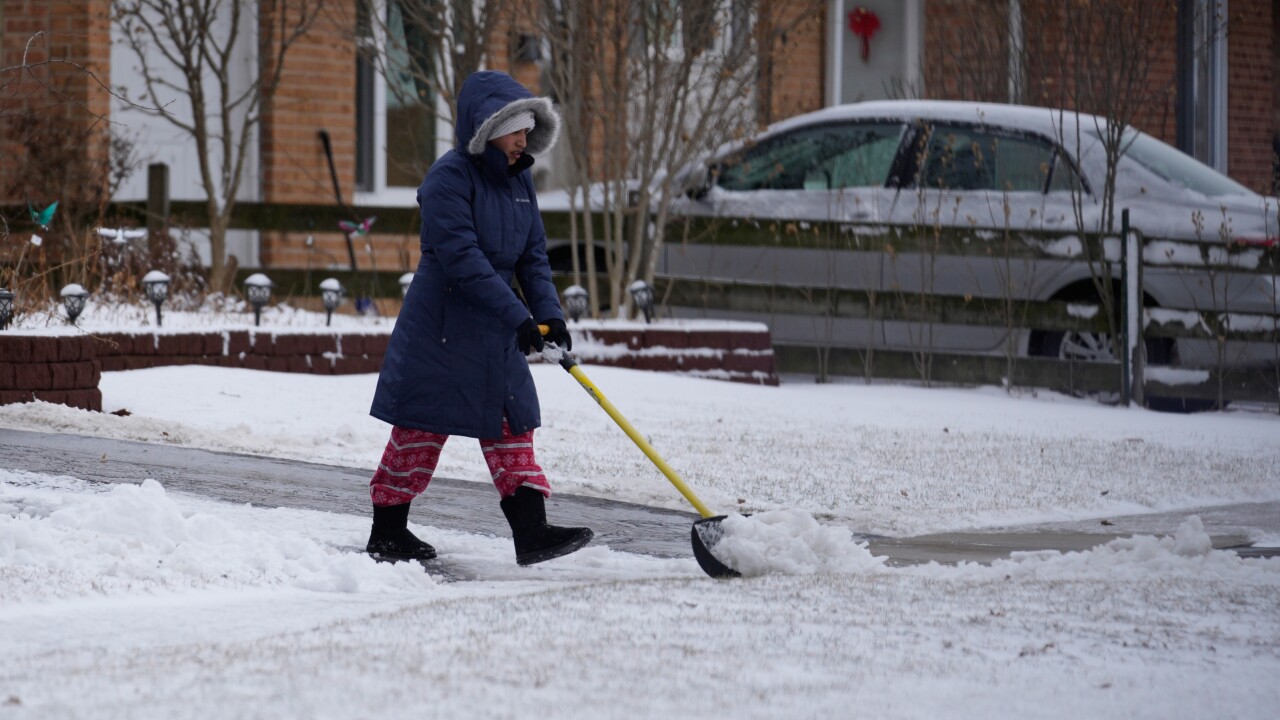
Ohio was not spared from the snowy blast, with some areas around Cleveland receiving over a foot of snow. Temperatures dropped to 18 degrees in Cleveland's Edgewater neighborhood, where residents are digging out and shoveling through the mess.
Main roads in Cleveland appear to be in good condition thanks to countless plow trucks and crews working around the clock. However, sidewalks and side streets remain problematic. The weight of the snow, coupled with changing temperatures, created a layer of ice underneath everything, bringing down tree branches throughout the area.
Private plow companies are facing a significant salt shortage despite state and local municipalities, including the Ohio Department of Transportation and the city of Cleveland, maintaining adequate supplies. The shortage stems from the high volume of snow over recent days and several recent snow events, combined with salt production being much lower than in previous years.
RELATED STORY | Atlantic hurricane season ends with three Category 5 storms, but no US landfalls
Crews are prioritizing salt allocation, focusing on entry points, exit points and handicap spots rather than spreading it liberally across all areas. Salt prices have doubled from $180 per ton to $360 per ton, forcing contractors and governments to do more with less.
The cold temperatures prevent road pretreatment because salt becomes ineffective in extremely cold conditions. Traditional Cleveland residents appear to be taking the conditions in stride, though there is frustration among those in the snow belt who received 12 to 18 inches of snow.
This Arctic outbreak is just getting started and will affect millions of Americans over the next week. While Cleveland saw improvement from yesterday's below-zero wind chills, single-digit temperatures persist across much of northern Ohio.
The freeze extends far south, with freeze warnings encompassing southern Georgia through Valdosta, Tallahassee and the Florida panhandle down to Lake Okeechobee. Tallahassee feels like 29 degrees, Augusta feels like 20 degrees, and even South Florida is experiencing wind chills in the upper 30s and lower 40s.
A parade of clippers continues to move through the region. A clipper is bringing additional snow from Milwaukee through Michigan's Upper Peninsula and down through Cleveland, where another two to three inches are expected by evening.
The cold air pattern encompasses the eastern two-thirds of the country, but conditions will worsen this weekend. Temperatures could drop 20 to 25 degrees below normal from Omaha to St. Louis.
Early next week, a piece of the polar vortex will break off from areas near the North Pole, potentially affecting Minnesota and clipping parts of the Great Lakes. This will bring dangerous cold to Milwaukee, Chicago, Detroit and Cleveland.
Wind chills by Monday night and Tuesday morning could reach 40 degrees below zero in Minnesota and Wisconsin, with some of that brutal cold spilling into the Ohio Valley and Great Lakes region.
