

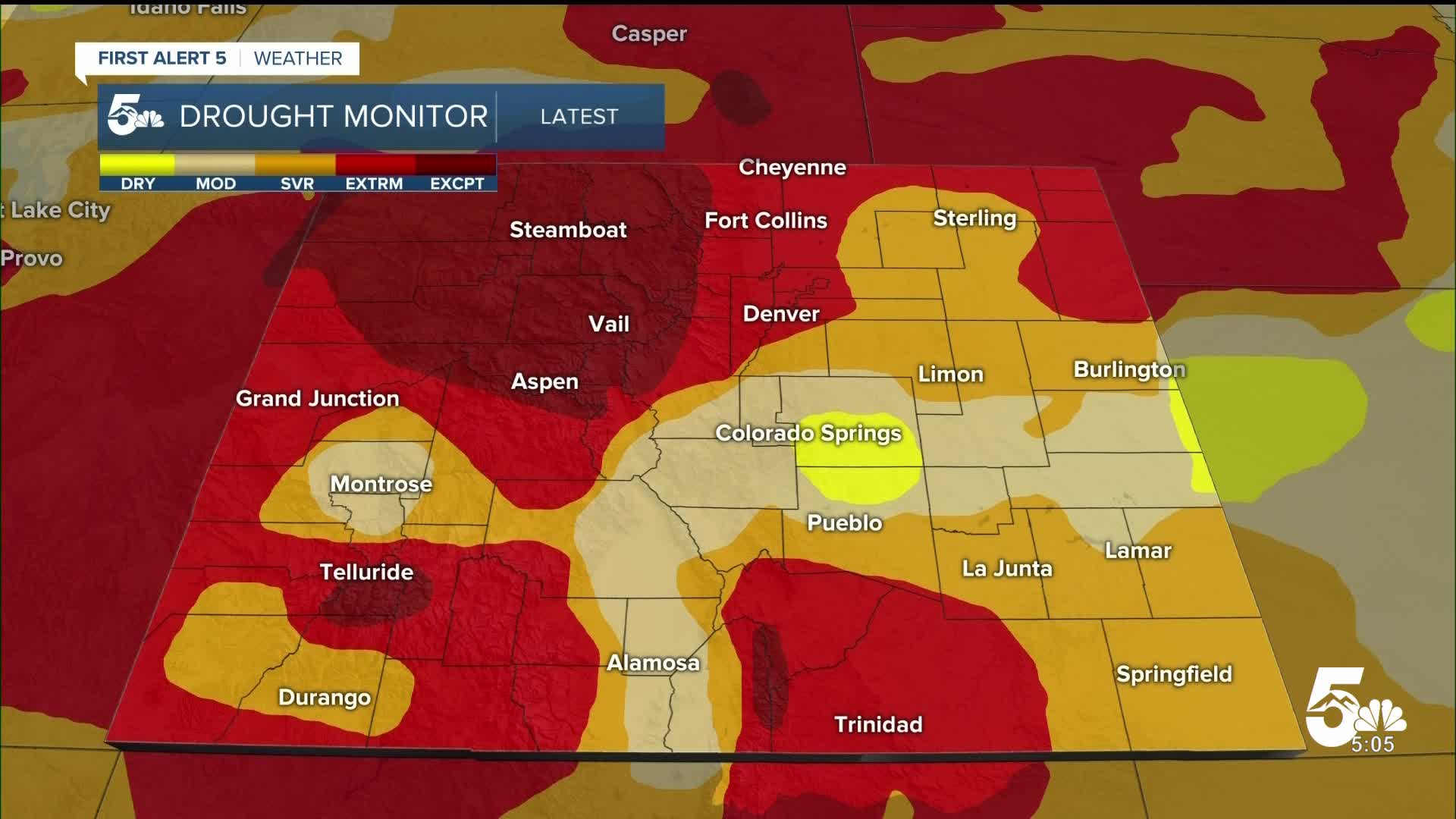


COLORADO (KOAA) — It's no surprise how much of the state is experiencing drought conditions after the winter season that we just had. There are five different levels of drought and they can cause very different impacts to Colorado specifically.
These classifications are set up to help officials and first responders determine what actions need to be taken.
The scale starts at D0 or "abnormally dry" conditions. This is when conditions will transition into drought and irrigation will begin sooner than normal.
This can slow down the planting process, and create create deficits. This is what we are experiencing across parts of El Paso and Pueblo counties.
D1 or "moderate drought" can start to cause damage to crops and can even start to impact the ski season. Wildfires become more common with this level of drought.
D2 or "severe drought" will likely cause crops to be lost. Our snowpack starts to take a hit and can cause more problems in the long-term forecast.
D3 or "extreme drought" can cause major crop loss, and wildfires become more common. Fires can be hard to control due to the ground being so dry. In 2022, a fishery along the Yampa River had to close due to these conditions. Rafting, fishing, hunting, and skiing are reduced. Fish and other wildlife will be affected. This is usually when water restrictions are put into place.
Finally, D4 or "exceptional drought" is the worst kind of drought that we can experience. It causes major disruptions and our snowpack this year was a clear example of that. Currently, 22% of the state is experiencing these conditions. Dust storms and large wildfires become more common.
____
Have a question or story idea you would like the First Alert 5 Weather team to consider? Email: weather@koaa.com
Watch KOAA News5 on your time, anytime with our free streaming app available for your Roku, FireTV, AppleTV and Android TV. Just search KOAA News5, download and start watching.
