

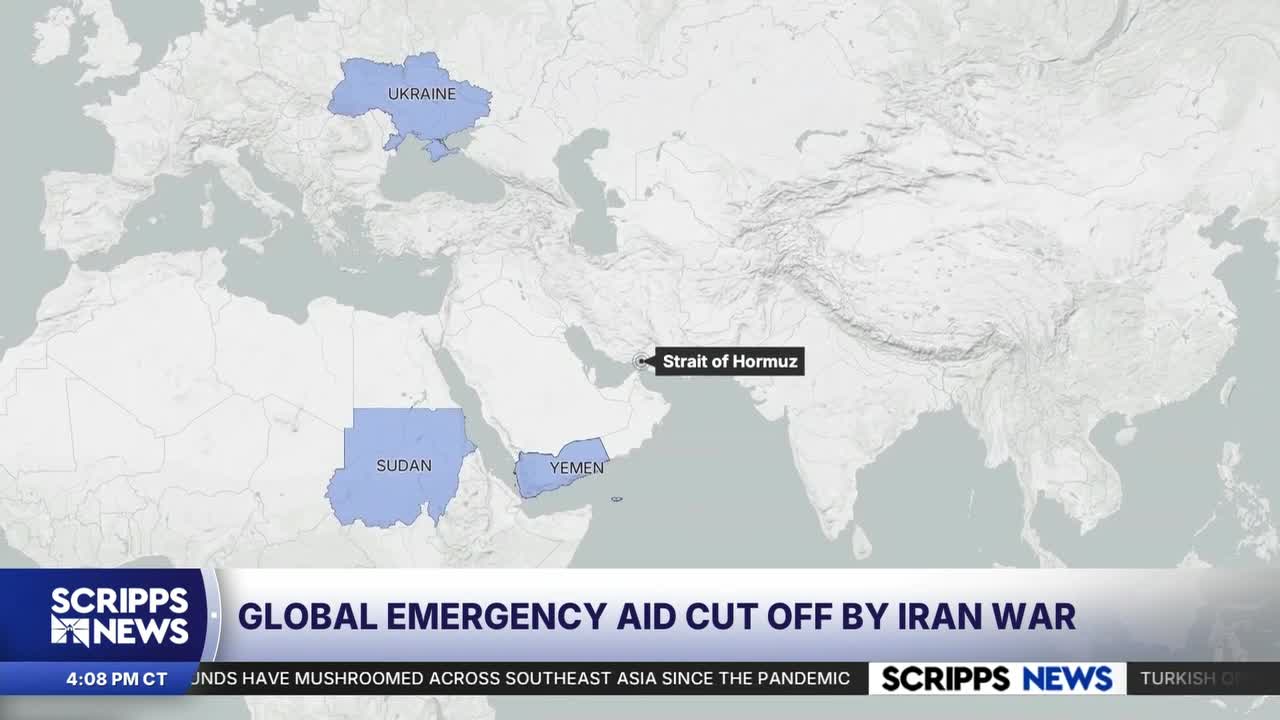


As the war in Iran continues to limit shipments through the Strait of Hormuz, humanitarian groups say things like fertilizer for farmers, aid supplies and food has also been cut off — slowing response efforts to crises around the globe.
"What we now have to face with is not just a spike in humanitarian need in the Middle East — in Iran and Lebanon, in particular, where civilians are bearing the hardest brunt of the conflict," said Ciaran Donnelly, senior vice president of crisis response, recovery, and development at the International Rescue Committee (IRC). "But also a knock-on effect in crisis zones around the world."
RELATED STORY | Trump warns ‘a whole civilization will die tonight’ as Iran deadline looms
Donnelly says those crisis zones include Sudan, Yemen and Ukraine, as well as many others. As the work continues with no end in sight, groups like the IRC struggle to distribute aid as they're faced with costly alternative routes or supplies stuck in limbo.
"In Dubai we have supplies ... to provide health care for about 20,000 people in Sudan," Donnelly said. "Those supplies are stuck in Dubai. We're not able to get them shipped. We have food supplies in India that are destined for Somalia — enough to save lives of over 1,000 malnourished children. We're not able to get those shipped."
The IRC says these constraints caused by the Iran war are creating a "ticking food security timebomb." If the Strait of Hormuz is not reopened soon, the group estimates there could be a "sharp rise" in world hunger by June.
IN CASE YOU MISSED IT | Russia and China veto watered-down UN resolution aimed at reopening the Strait of Hormuz
Sam Vigersky is an international affairs fellow at the Council on Foreign Relations, and he said the blockade is impacting people already on the brink of starvation.
"If the conflict escalates or continues into June, that would be an all-time record of people just on the food security side — and that's the global level," Vigersky said.
"The longer this crisis goes on, the deeper and wider the impact is going to be," Donnelly added.
More than 300 million people around the globe currently face a hunger crisis, according to the World Food Programme. That number could balloon by an estimated 45 million people if the conflict in the Middle East continues.
