
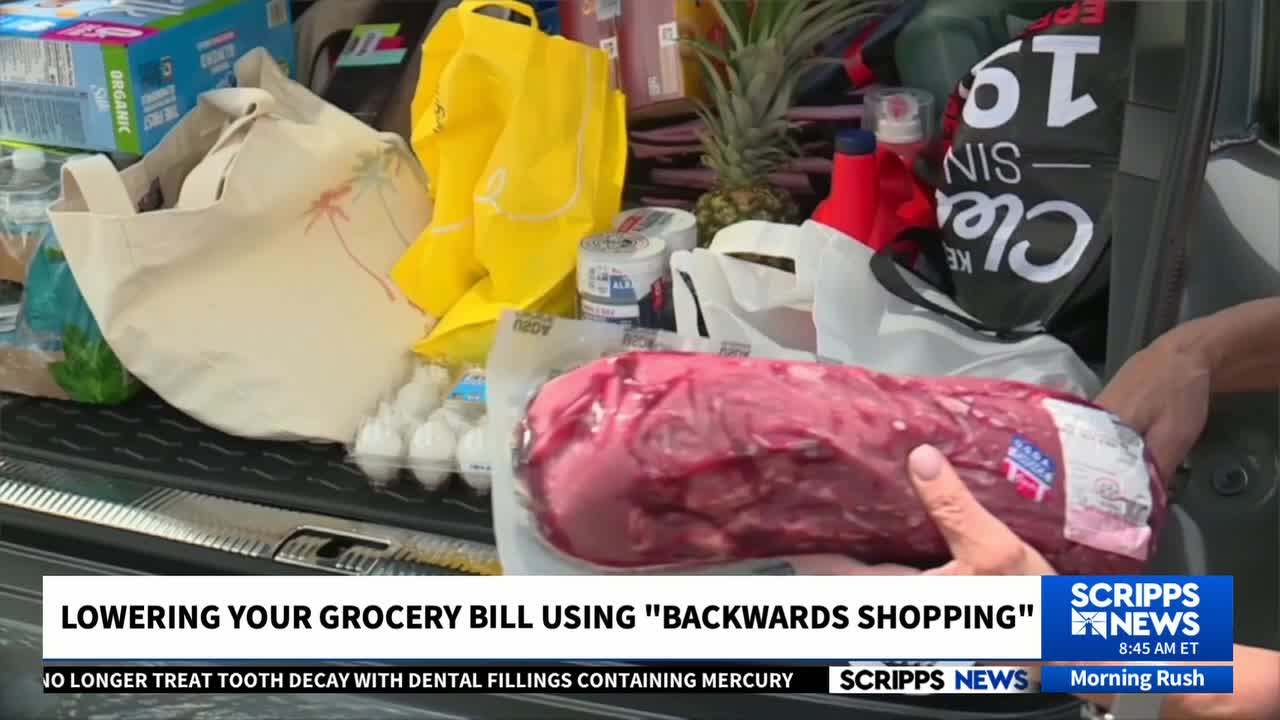


We're always looking for ways to save you money on groceries, and recently discovered a strategy called "backwards shopping" that could help cut costs significantly.
This approach isn't about walking backwards through the store or starting from the opposite end. Instead, it's a smart planning method that focuses on intentional purchasing.
The concept gained attention after a recent report by Realtor.com. Executive Editor Charlie Lankston explained the strategy.
"Backwards shopping is a bit of a buzz phrase," Lankston said. "Essentially, when you go to the grocery store, you should know what gaps in your kitchen, in your pantry, in your fridge you have — to put it very simply, only shop for what you need."
RELATED STORY | The 9 biggest wastes of money at the grocery store
The method makes sense for shoppers looking to avoid overbuying. It builds on the familiar rule of making a list and sticking to it, but takes the approach further.
"I think a lot of us, even if we're very diligent about sticking to a shopping list, we aren't necessarily thinking in meals, we're thinking in items, so when you are backwards shopping, you are effectively working backwards from your desired meal," Lankston said.
According to the Realtor.com article, this strategy can save as much as $50 per week. However, it requires discipline and eliminates impulse buying.
IN CASE YOU MISSED IT | These 10 grocery stores top the list for value, consumers say
One shopper the Scripps News Group spoke with acknowledged the challenge of avoiding unplanned purchases.
"That's the fun of it. I'm here every day; I go for one thing and come out with 20 things," the shopper said.
The backwards shopping method requires resisting that temptation.
Food and Wine Magazine also released a list of produce items to buy for maximum grocery savings, with potatoes ranking near the top of money-saving options.
This story was originally published by Matt Sczesny with the Scripps News Group in West Palm Beach.
