


Data centers powering artificial intelligence are driving a surge in electricity demand, and that's forcing utilities and regulators to make some big, and expensive, choices.
City councils across the country have had meetings addressing these concerns from eastern Oklahoma, to Montana, and Wisconsin. In addition to environmental concerns are electric bills.
"Every utility in the U.S. I think right now is trying to figure out what is their strategy to accommodate AI and data center demand," said Mike O'Boyle, acting policy team director at non-partisan think tank Energy Innovation.
"Because these demands are so large and the increase is so rapid, there are big expenditures that are needed to meet this demand and then on the other side, there's a lot of uncertainty about when it's going to show up," O'Boyle said.
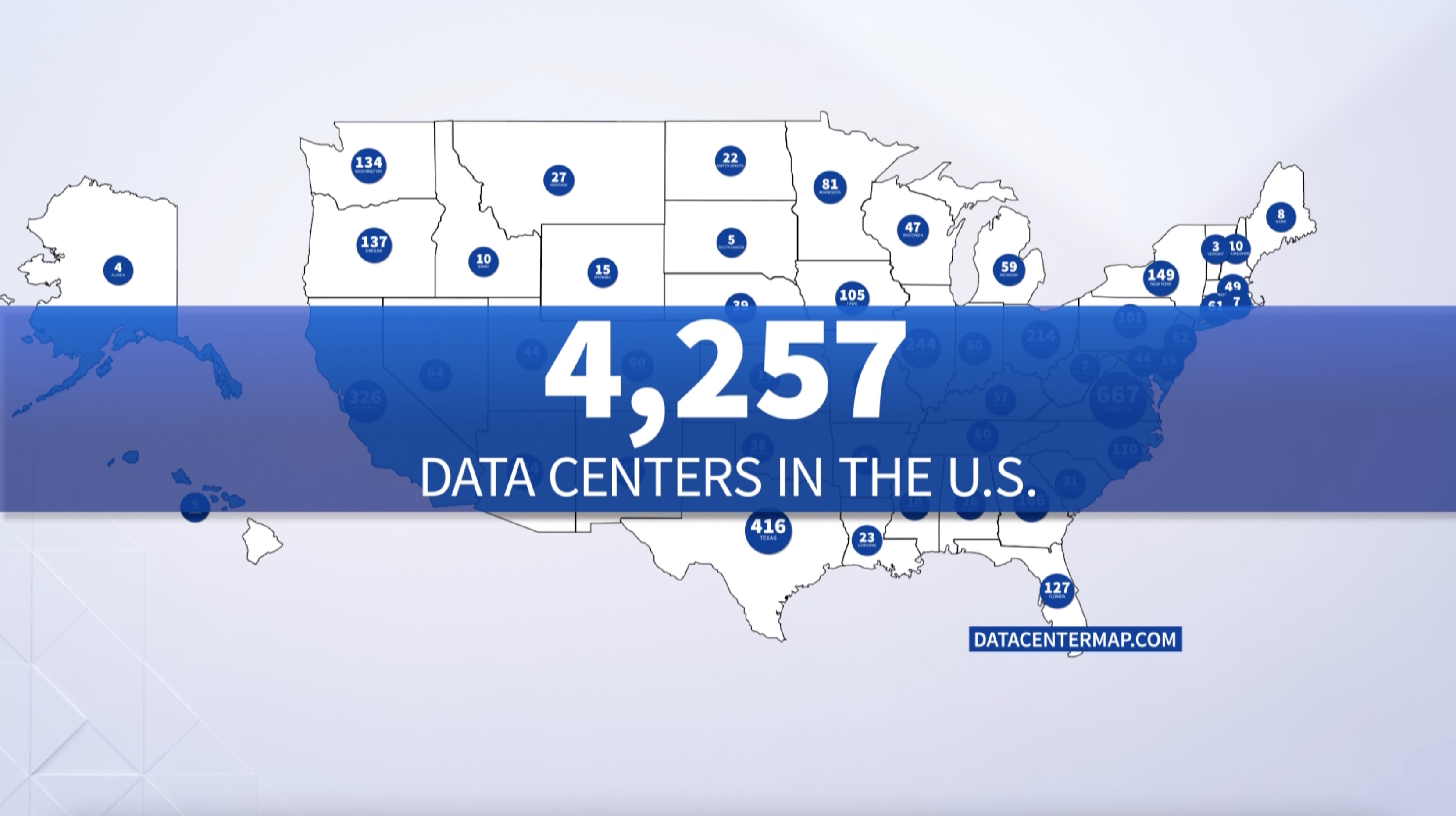
There is no federal registration requirement for AI data centers, making the total number difficult to estimate. But online database Data Center Map estimates there are more than 4,000 across the country. The most are in Virginia, Texas and California.
"Over the last 20 years or so we hadn't seen any demand growth. Now is just sort of a return to what used to be business as usual in the utility industry. And we're really struggling I think against rules that have changed quite a bit and are not as orientated towards being open to building new infrastructure," O'Boyle said.
Ultimately, who pays what will depend on each state's rules and their utility authority.
RELATED STORY | As electric bills rise, evidence mounts that data centers share blame
"If the data centers don't show up, the existing customers are going to foot the bill. So how do we make sure things are lined up so that there's less and less risk on existing customers and it's put on those that are causing the cost?" O'Boyle said.
The demand for power and need for infrastructure impacts electric bills. Add in increased material costs, natural gas more expensive and weather demands — it's the perfect storm for higher bills.
According to data from the Energy Information Administration, the average household electricity bill is up 9.5% this year. And in some states, it's more than double digits:
Missouri +38.3%
North Dakota +33.6%
New Jersey +28.6%
Iowa +27.5%
Montana +25.3%
This is adding more pressure to already strained consumers.
"The reason we're having these data centers pop up all over the United States is because all of us are demanding all this AI, all this information, right now, right now, and I'm just as guilty as anyone else wanting it right on my phone like that," said one Oklahoma farm owner.
The pressure is becoming evident as more people are falling behind on their electric bills.
Americans behind on their bills jumped 9.7% over the summer, compared to last year, according to new data from The Century Foundation and advocacy group Protect Borrowers. The jump in past due bills overlaps with a 12% average jump in monthly energy bills during the same time frame.
