

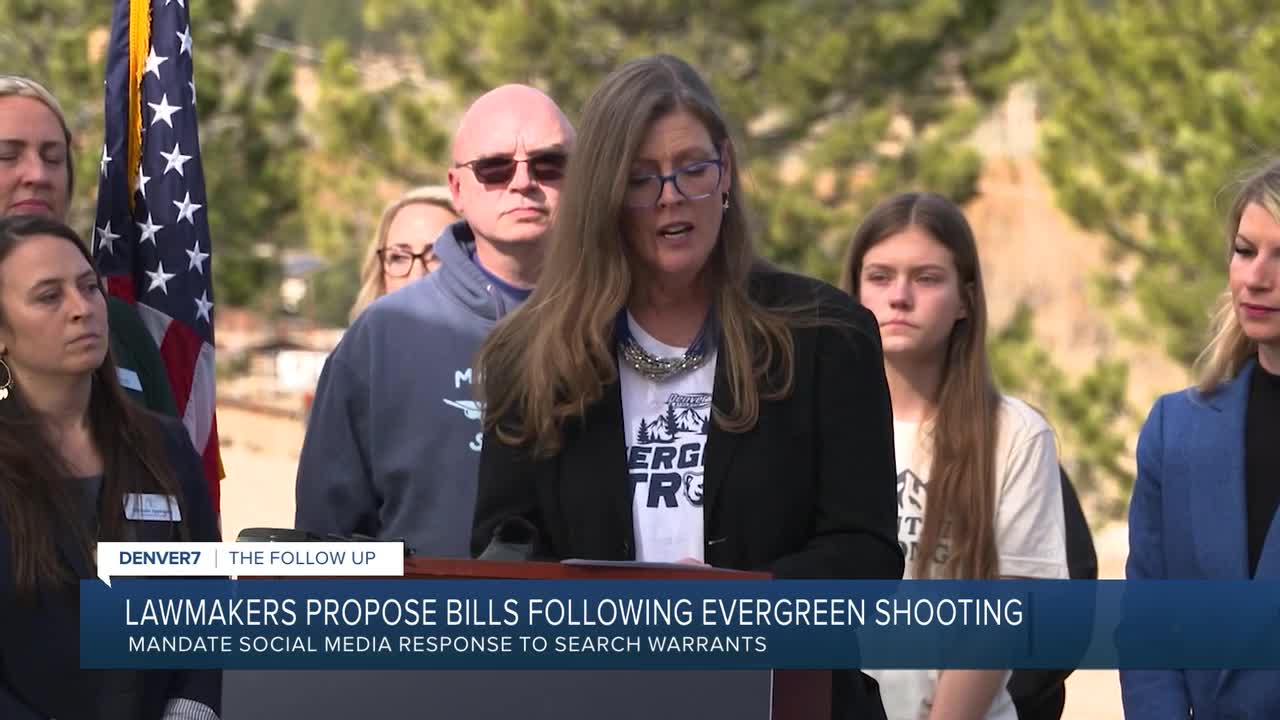


EVERGREEN, Colo. — Colorado lawmakers are proposing new legislation in response to the circumstances that led up to the Evergreen High School shooting. Leaders at both the state and federal levels are working on bills that would mandate social media companies respond to warrants and subpoena requests within 72 hours.
They currently have 30 days. The Jefferson County Sheriff's Office said that is often extended, and it can take up to 90 days.
Colorado Congresswoman Brittany Pettersen is spearheading the Evergreen Community Safety Act in Washington, D.C., while State Rep. Tammy Story is leading the charge in the Colorado General Assembly. They both gathered at the Wulf Recreation Center in Evergreen on Monday morning to speak on the effort.
- Watch the full press conference in the video player below:
They said the Federal Bureau of Investigation (FBI) was looking into a concerning social media post, reported by the Anti-Defamation League (ADL) in New York, two months before the Evergreen High School shooting occurred.
ADL reported the video threatening Evergreen to the FBI on July 5, and the FBI requested multiple search warrants that didn't yield information until hours after the high school shooting had already happened.
Rep. Story said she plans to introduce the bill at the state level to the Colorado General Assembly in the coming weeks.
"It does not ask companies to take down posts or shut down websites. It just asks the information moves fast enough to save lives," Rep. Story said.
Two other pieces of legislation were announced, too.
The Community Firearm Safety Act would "create a permissible use under the Byrne Justice Assistance Grant Program within the Department of Justice (DOJ) to allow grants for localities to procure and distribute safe firearm storage boxes to community members," according to Petterson's office.
The Community Risk Training and Response Act would "create a grant program through the Office of the Attorney General for up to $500,000 for localities to provide technical assistance and training to law enforcement, prosecutors, judges and court staff, healthcare providers, educators, and agencies designated to coordinate Extreme Risk Order Implementation and to develop standardized extreme risk protection order training and curriculum nationwide," Petterson's office said.
