

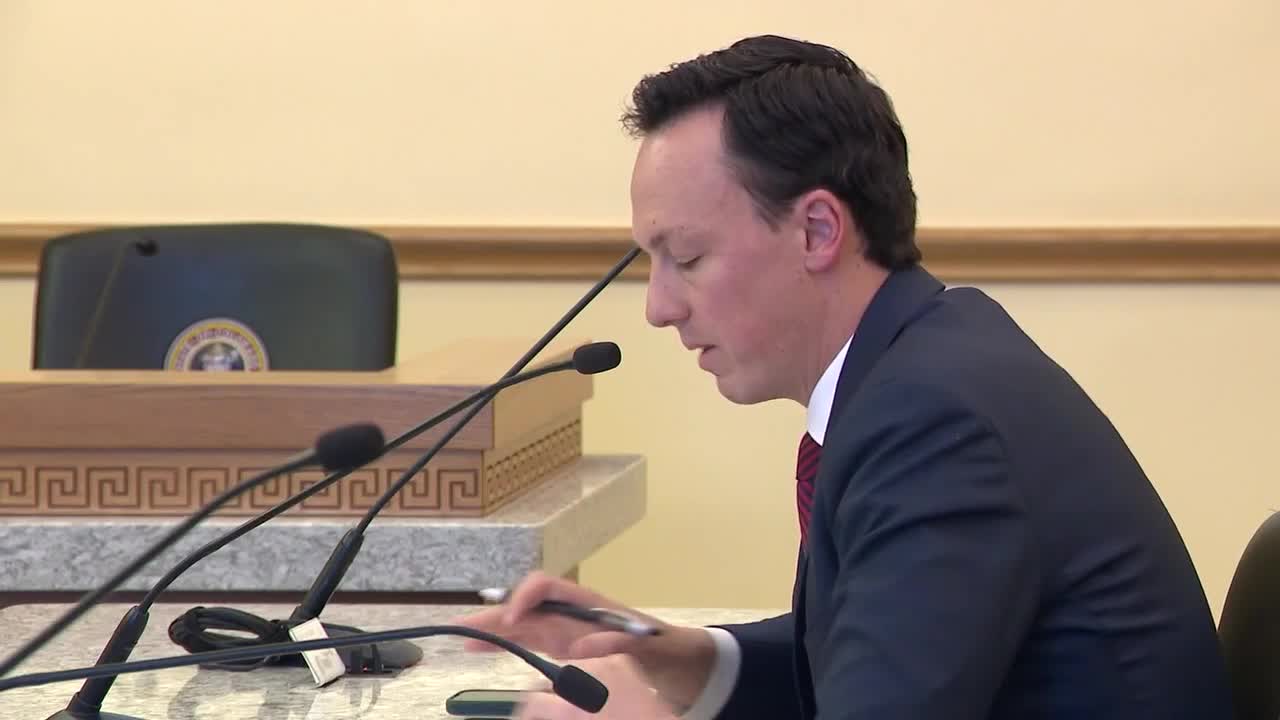


DENVER — Ensuring Coloradans can live and work in the same community is the goal of a bill moving through the state legislature, according to those in support of the idea.
Senate Bill 26-001 (SB26-001) advanced out of the Senate Local Government and Housing Committee on Thursday afternoon, following a 4-3 vote along party lines.
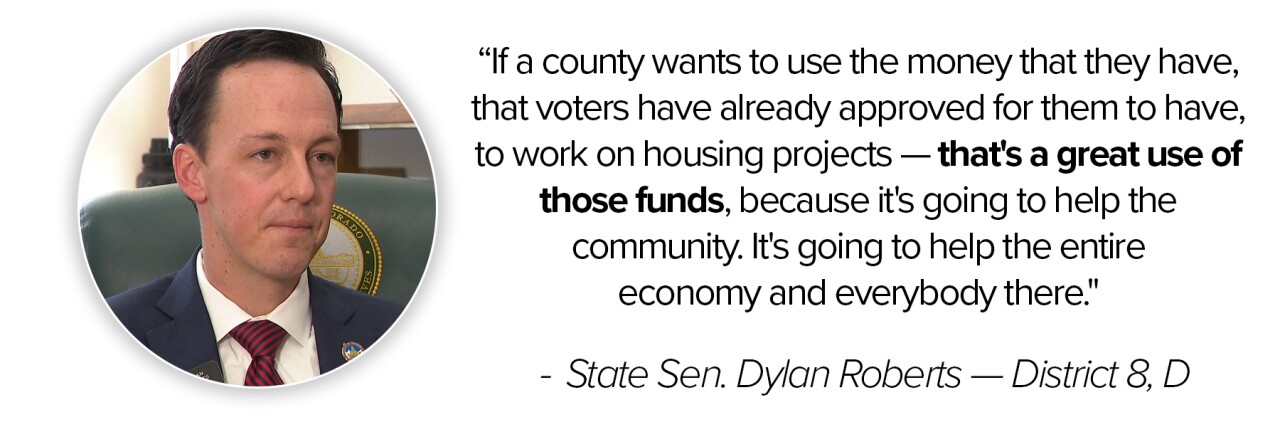
The bill is sponsored by State Senator and Majority Caucus Chair Dylan Roberts, D — District 8, who told Denver7 the concept for the legislation came directly from his constituents.
“The biggest thing that we're facing in every community, whether it's a mountain town or a rural community, is our lack of housing that people can afford in order to stay living and working in those communities," Roberts said. “Building housing in the communities where these jobs are, where people want to be, is a big goal of here at the state legislature."
Roberts, who represents a number of mountain communities, said SB26-001 would allow a Board of County Commissioners to use existing tax revenue to primarily support workforce housing.
“Counties collect ad valorem tax revenue primarily through property tax. This bill is not raising anybody's taxes. This is only giving the flexibility to counties to use existing tax revenue that they have to pursue housing projects," Roberts explained. "They were not allowed to do that under state statute, and we found that, and we said, 'Hey, we need to fix that.'"
In addition, the legislation would give local governments the ability to sell, lease, or acquire property for workforce or affordable housing. It also creates a tax exemption for construction materials used on workforce housing projects.
"This is unlocking financing options for counties to consider more affordable housing developments," Roberts said. "It's going to allow local municipalities more access to their land assets to build housing for their communities, and giving housing authorities more flexibility on how they bring entire communities into the process of building housing."
In addition, the bill aims to "update" the state's Middle-Income Housing Tax Credit, which would make it possible for such credits to be transferred to individuals, firms, or corporations who do not have interest in the project.
"It's cutting red tape. It's giving them flexibility. It's giving them assets," Roberts said. "There's no specific restrictions in this bill. The counties and municipalities and housing authorities can still pursue different types of housing product that they want to build, whether it's home ownership for full time residents or rental opportunities that is more seasonal, or a combination of both.”
- Senate Bill 26-001, explained:
During the hearing on Thursday, Republican senators pushed back on the legislation, with all three members of the committee ultimately voting against the bill.
The three senators had questions about how this bill would change the allocation of resources within communities, and took issue with the government being involved in housing.
State Senator Janice Rich, R — District 7, said she was a "no for today" when she voted. State Senator Larry Liston, R — District 10, cast a "safe no" vote.
However, SB26-001 has a Republican sponsor already signed onto the bill in the Colorado House of Representatives.
“This is about giving local communities more resources and empowering them to make these decisions and pursue these projects on their own. And so, I think that's why it has bipartisan support," Roberts said. "It's very pro-local control, which is something that we take pride in here in Colorado, it's letting communities make their own decisions."
The bill has no cost associated with it, which is critical to note in a year where lawmakers are wrestling with a roughly $850 million budget deficit.
SB26-001 heads to the Senate Floor next. If it passes out of the Senate, it will then go to the house.
