


COLORADO SPRINGS, Colo. (KOAA) — Teller County Commissioner Dan Williams said it’s not normal for the chipmunks to be out roaming his property this early in the year.
“We actually had chipmunks out in February, which means the bears will be out not too long as well,” said Williams from his home between Divide and Cripple Creek. “So everything comes out a little too early. One of the concerns is when mammals like that come out of hibernation too early, should we have a cold snap, that could hurt them as well.”
As he observed the surrounding mountains from his remote ranch, Williams noted the several inches of snow that hit the region just the day before were largely melting off already. (Something likely to repeat again with warmer temperatures forecasted once again after another round of snow on Friday).
Williams said his concerns for the summer are manifold.
He noted the Forest Service layoffs last year, which came during the height of Elon Musk’s Department of Government Efficiency, seemed to have left the federal agency still understaffed, though it’s been difficult to determine exactly how many employees were let go.
- Watch News5's coverage on the Forest Service layoffs below:
“I'm still concerned that there's not enough assets from the federal level. At the state level they're doing very well, but as you know, we still have not been reimbursed from the fire last year,” said Williams, referring to President Trump’s rejection of Major Disaster Declaration requests for last year’s Lee and Elk Fires. “And I heard the other day that the appeal for that was also denied. So, we're going into fire season I believe undermanned–we've got great attitudes, we have good equipment–but we're undermanned and we're probably underfunded.”
With those concerns, Williams said his worst case scenario this summer are multiple wildfires happening simultaneously across the state, spreading the resources and assets too thin.
“A fire in a county like this can bankrupt a county in two or three days, especially with aviation assets,” he said.
The state’s snowpack was 61% of median for this time of year as of Thursday. Some basins are worse off than others.
Brian Domonkos, the Colorado Snow Survey Supervisor, isn’t hopeful that the typically snowy months of March and April will be enough this year.
“The optimism is limited at this point. There is a chance that things could get better,” said Domonkos. “I don't put it as a likely chance that our snowpack or our water supply can get much better.”
Last week, Domonkos said the Snow Water Equivalent, or SWE, had creeped just past the same point in 2002, which was the state’s record low snowpack year in the modern era.
But as of this Thursday, it had dropped back below 2002 once again. Data showed 2002 had 8.4 inches SWE at this point compared to 8.1 inches for the present season. The Friday storm data is likely to bump that higher.
Domonkos stressed the importance of Colorado’s snowpack not just for the Centennial State, but for many surrounding states as well.
“Most years that snowpack winds up being the vast majority, or 80%, of the water that we use in Colorado and downstream,” he said.
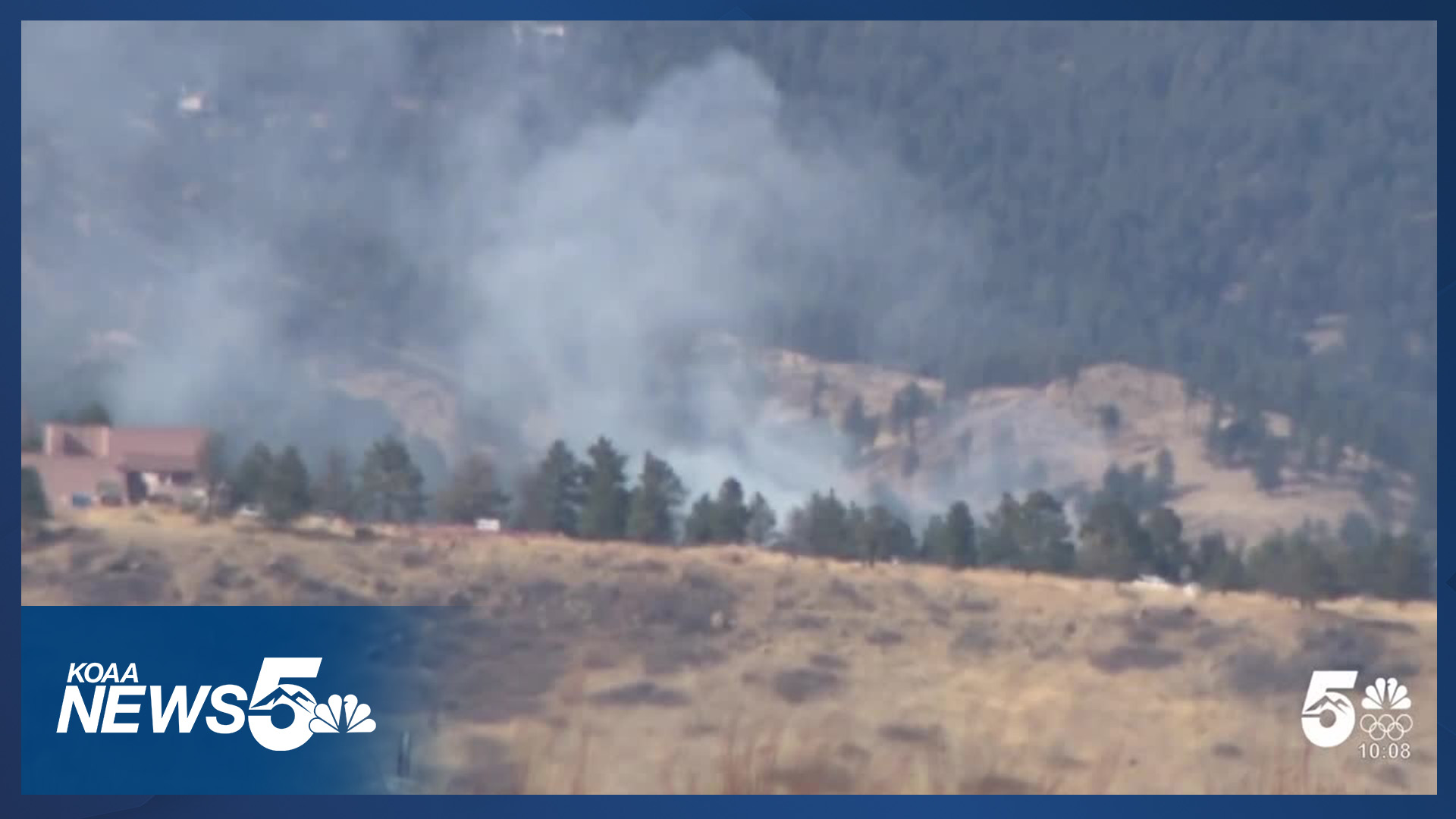
Colorado has already seen multiple wildfires break out in the past couple weeks alone; and though most experts recognize the state’s fire season is year round at this point, they still have great concern for the upcoming core summer fire season.
The Colorado Division of Fire Prevention and Control has already been busy moving its resources around the state to the highest need areas this year. Last week, one of their $25 million Firehawk helicopters was spotted dumping water on the Bluebell Fire in Boulder.
“We've seen an unprecedented drying trend this winter and no one really knows when that's going to end,” said Jeff Rasmussen, branch chief of fire planning for the Division of Fire Prevention and Control. “So just being prepared, and having a plan, and be ready for a long summer.”
He said they do what they can with the resources they have, but added it’s always a big interagency effort between local and federal partners as well.
“This is an all year round thing, so right now we're focused mostly on the eastern side of the state and the areas below 7000 ft until green up, right?” said Rasmussen. “Those fuels will be available as long as there's no snow on the ground, which we've seen a lot of.”
Climate scientists and climatologists signaled the long-awaited moisture that hit Colorado this week is likely too late to meaningfully move the needle.
“From what I’ve heard from my colleagues, we've literally missed the boat for enough snowpack to hold us through safely till next year,” said Lauren Gifford, an affiliate faculty member with Colorado State University’s Department of Ecosystem Science and Sustainability.
Gifford said this warm winter is a sign of things to come.
“This winter's low snowpack and lack of precipitation is not a one-off event. It's not a fluke,” she said. “We've known for decades that climate change was going to mean unpredictable and more extreme weather patterns, and that's precisely what we're seeing right now.”
Gifford said the likely implications for the summer are no water days and the loss of landscaping. But she also noted concern from farmers and ranchers losing access to water if they don’t have subsurface groundwater rights, especially those out further on Colorado’s eastern plains.
The potential for a long and looming fire season is also bringing worry into the insurance industry, which is already battling a state affordability crisis to keep premiums lower and prevent carriers from leaving.
Carole Walker, the executive director for the Rocky Mountain Insurance Association, said the state has a “fire year” and noted that Colorado’s most devastating wildfire, the Marshall Fire, happened in a warm December. But she still described this year’s conditions as a “tinderbox” and “scary.”
“They can pray to Mother Nature, but really, I think that that makes us double down on what we need to do for risk mitigation and risk reduction,” said Walker.
That’s something Commissioner Dan Williams said his Teller County neighbors are already doing well, not only to secure home insurance, but to protect their livelihoods should a wildfire sweep the area.
- Watch News5's coverage on securing home insurance below:
“Because of the weather being what it's like now, we're actually able to do mitigation right now,” said Williams. “On the downside, we can't burn right now. One technique is to burn those slash piles. When it's this dry, we're not going to allow it. Or the high winds. So you got the good and the bad together with that.”
___

Two CSP troopers being treated at local hospital after early morning shooting
The CSP troopers injured in the shooting self-transported to the hospital and are being treated, according to the Teller County Sheriff's Office spokesperson.
____
Watch KOAA News5 on your time, anytime with our free streaming app available for your Roku, FireTV, AppleTV and Android TV. Just search KOAA News5, download and start watching.
